What Makes A Bath Sculptural
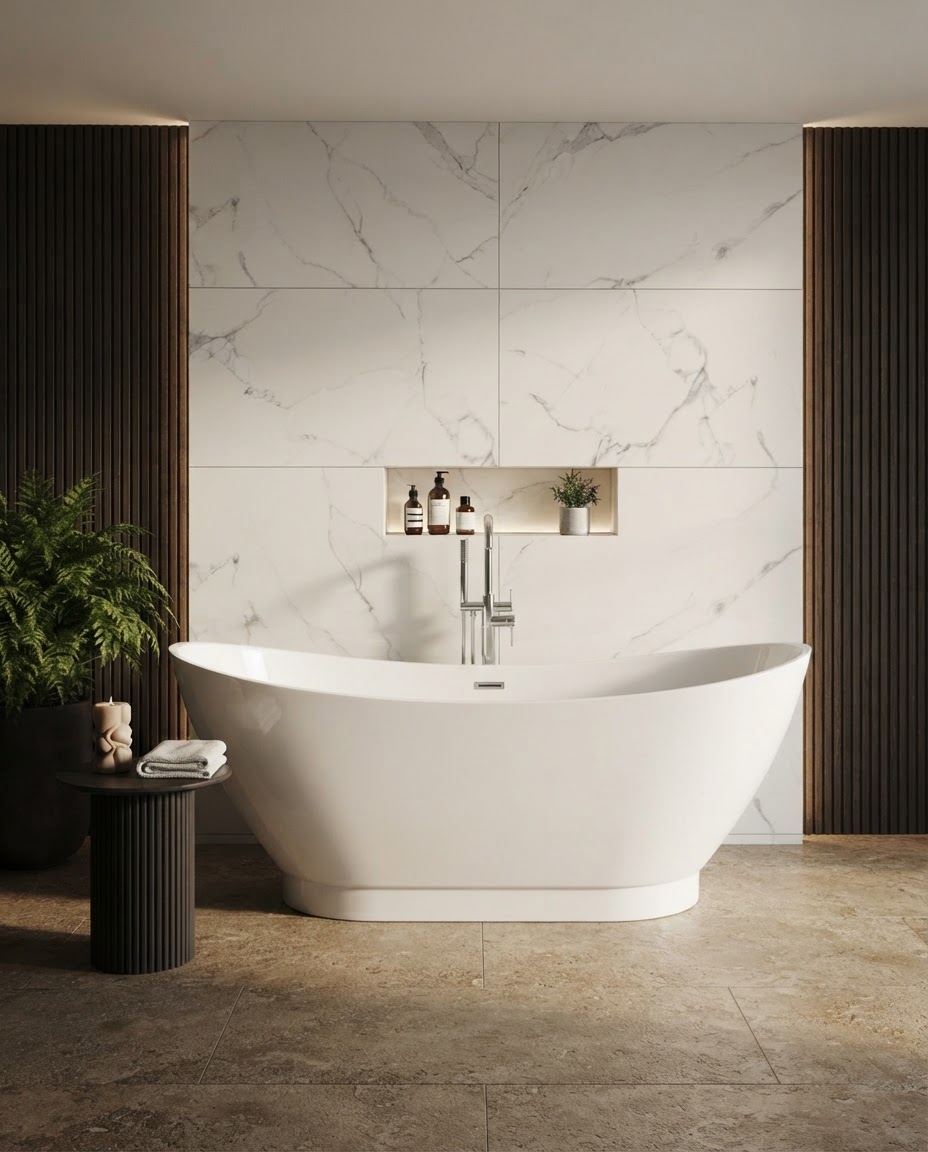
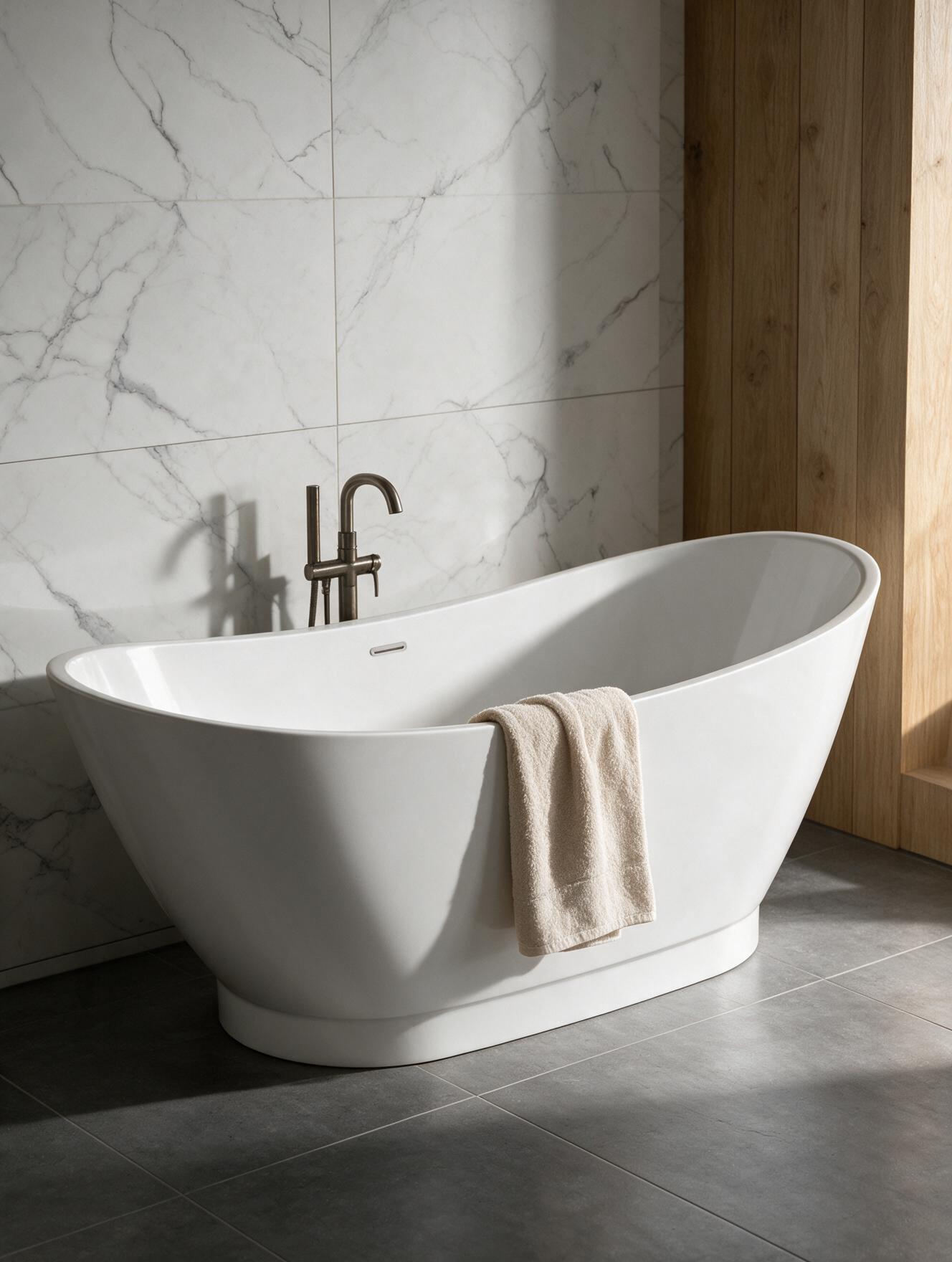
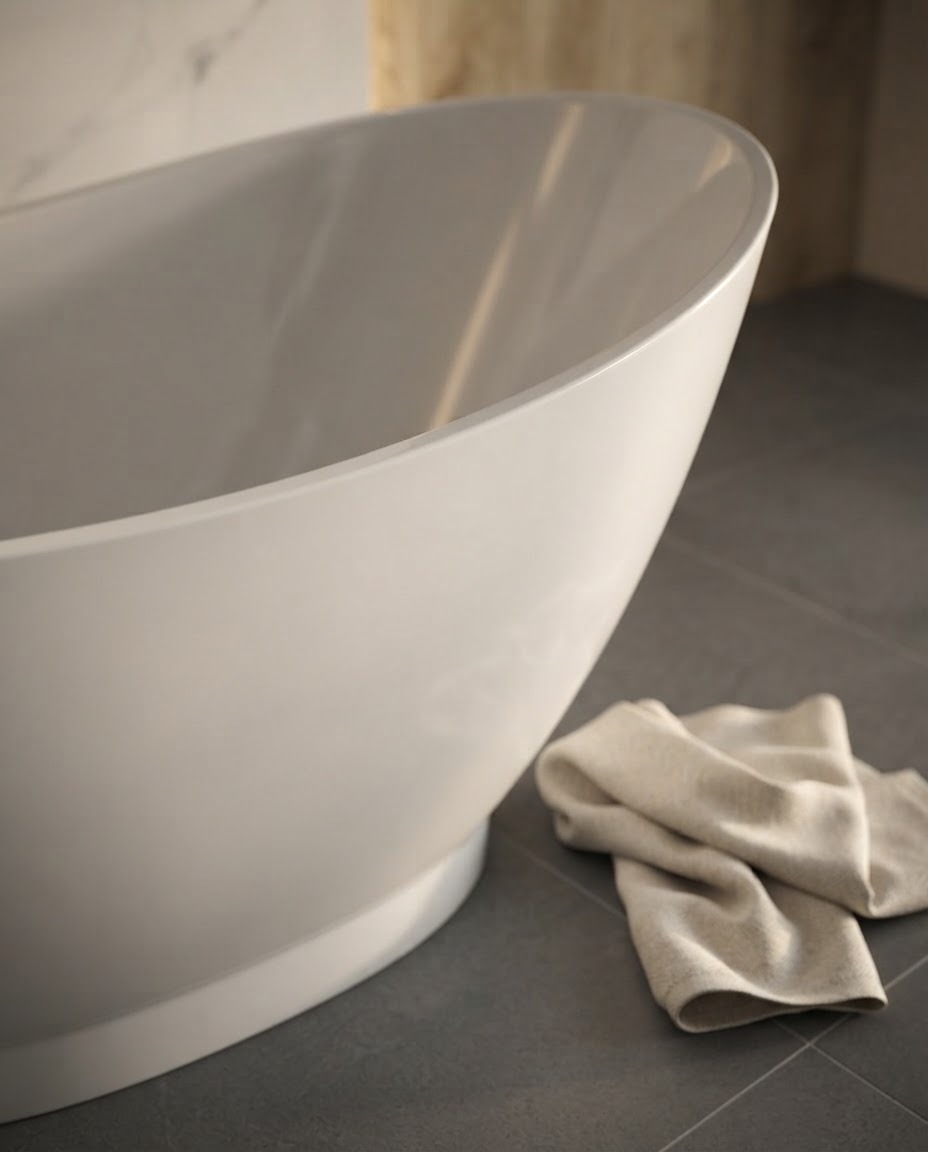
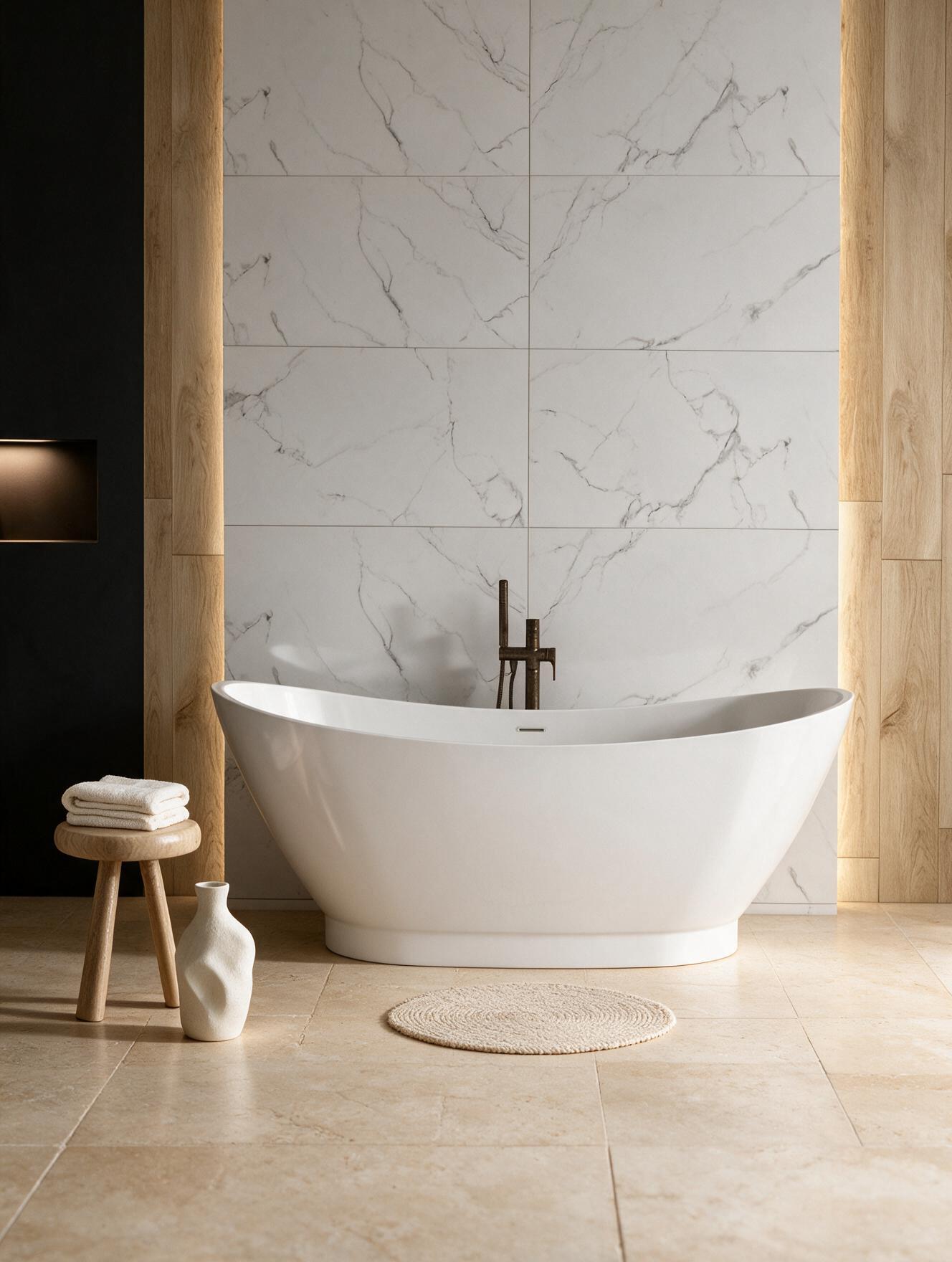
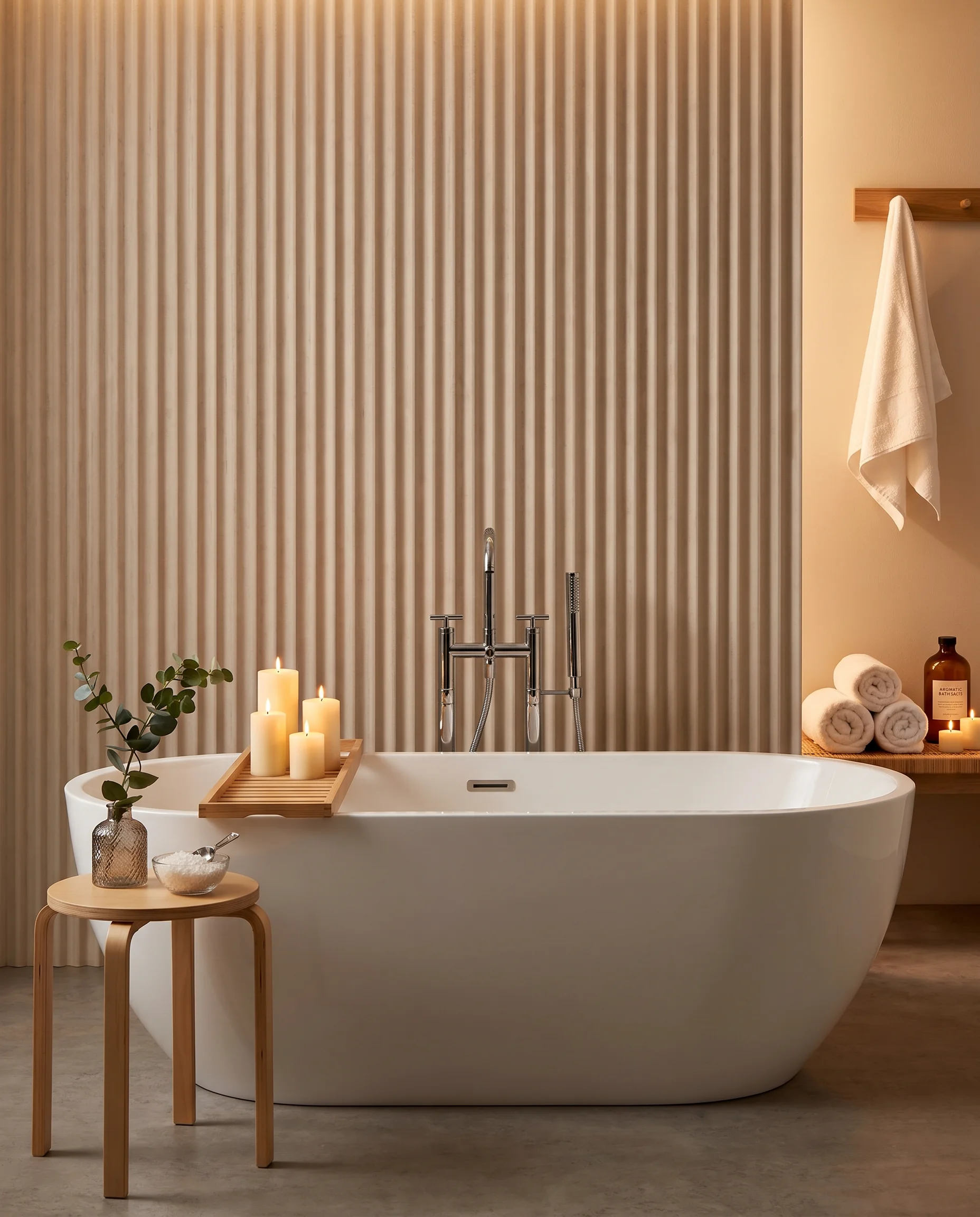
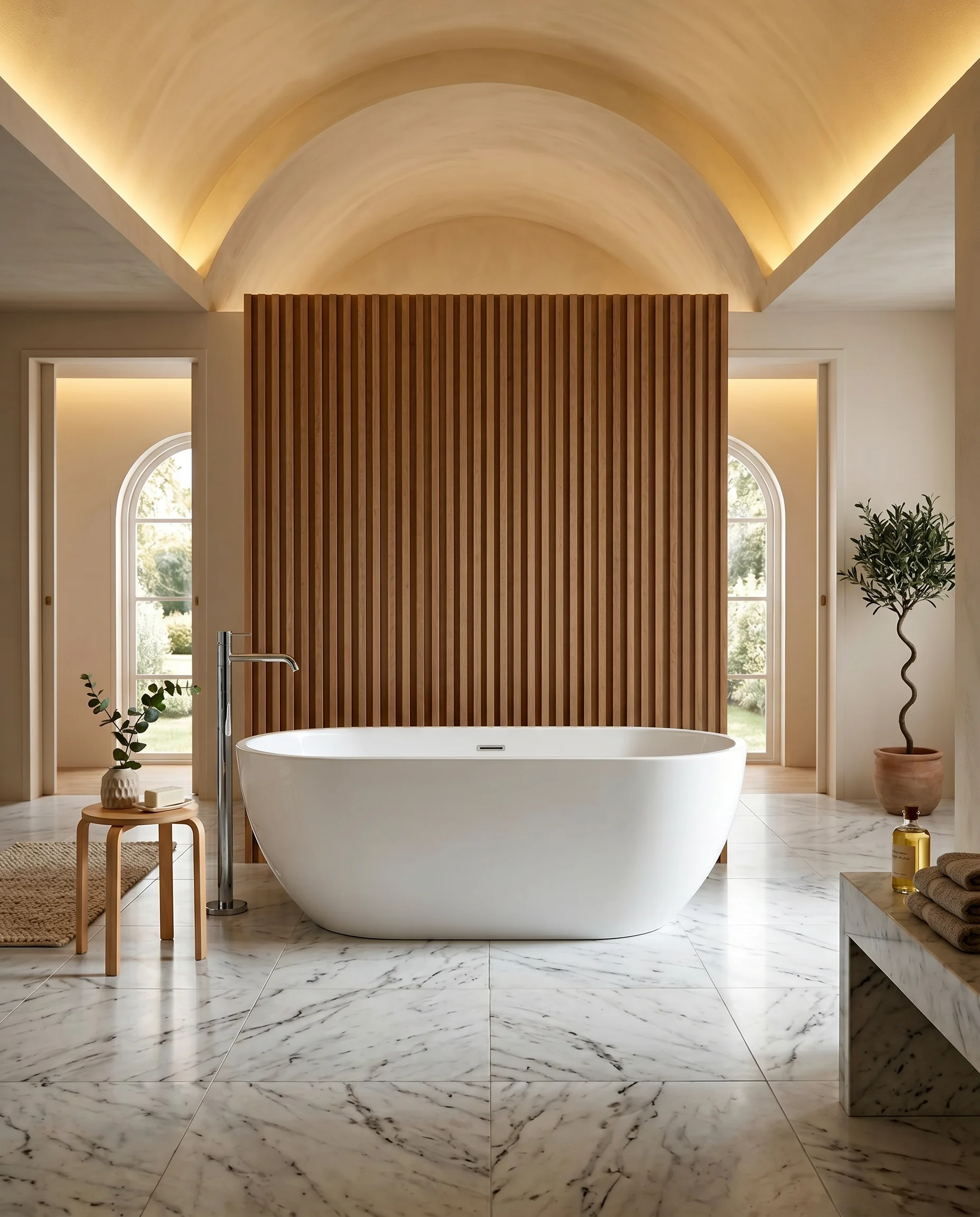
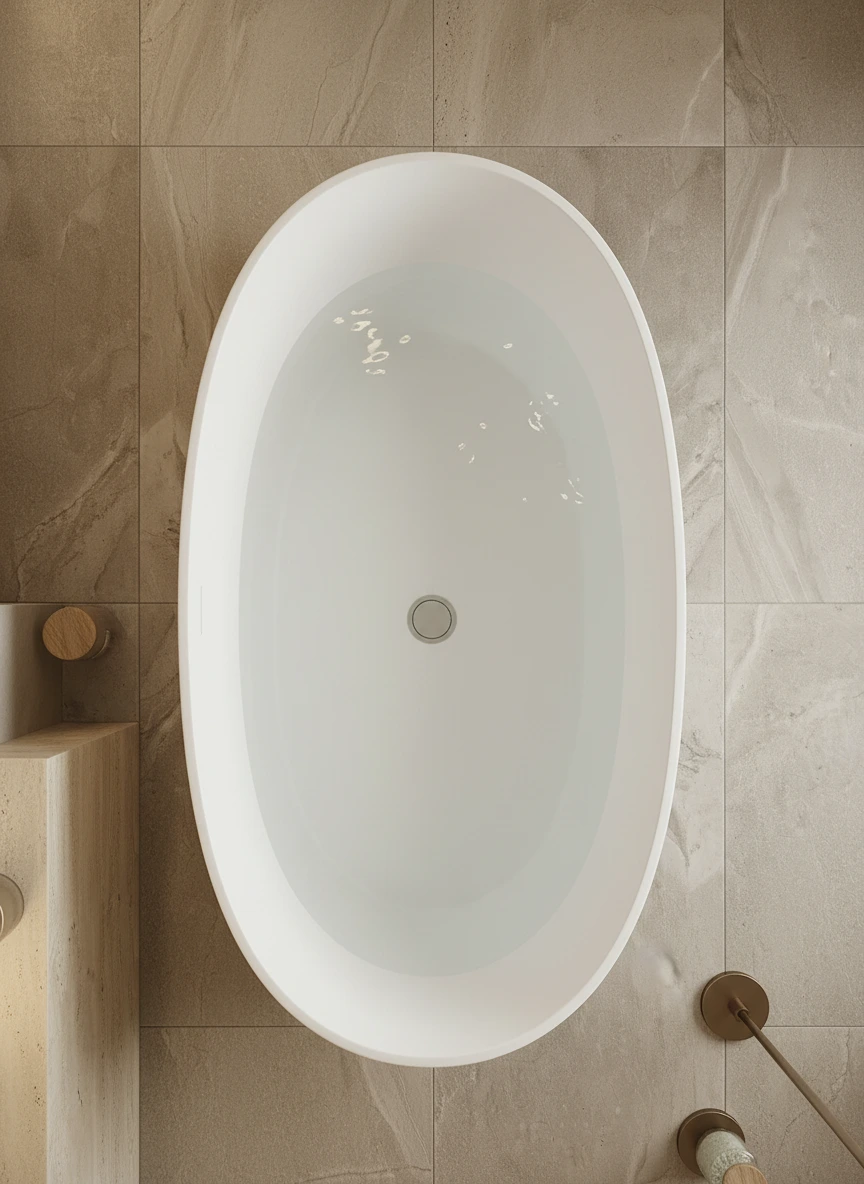
Most freestanding baths are a slightly softened oval that nobody looks at twice. A sculptural bath is bought the other way round — the silhouette is the reason it is in the room, and everything else is arranged to let it be seen.
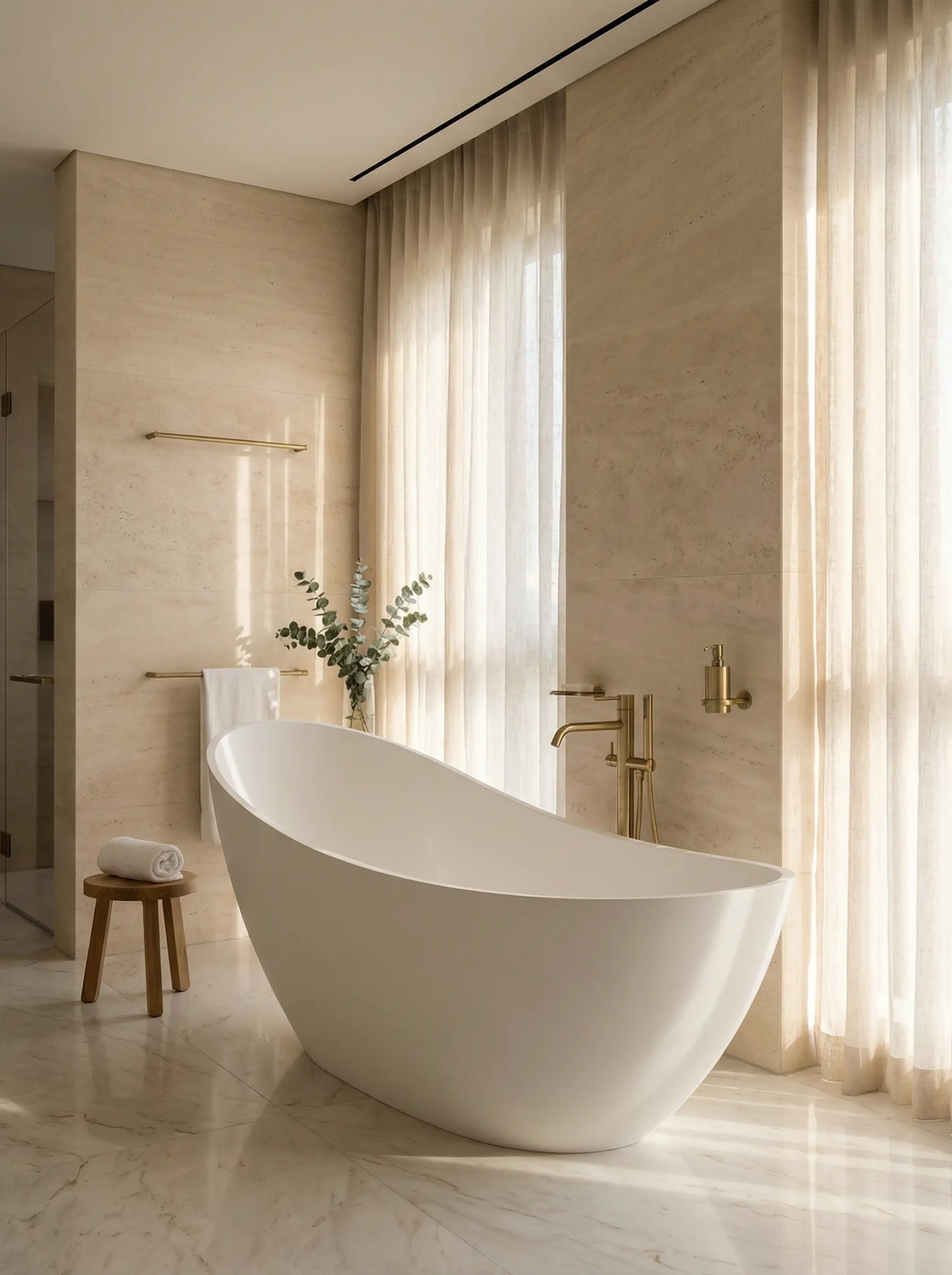
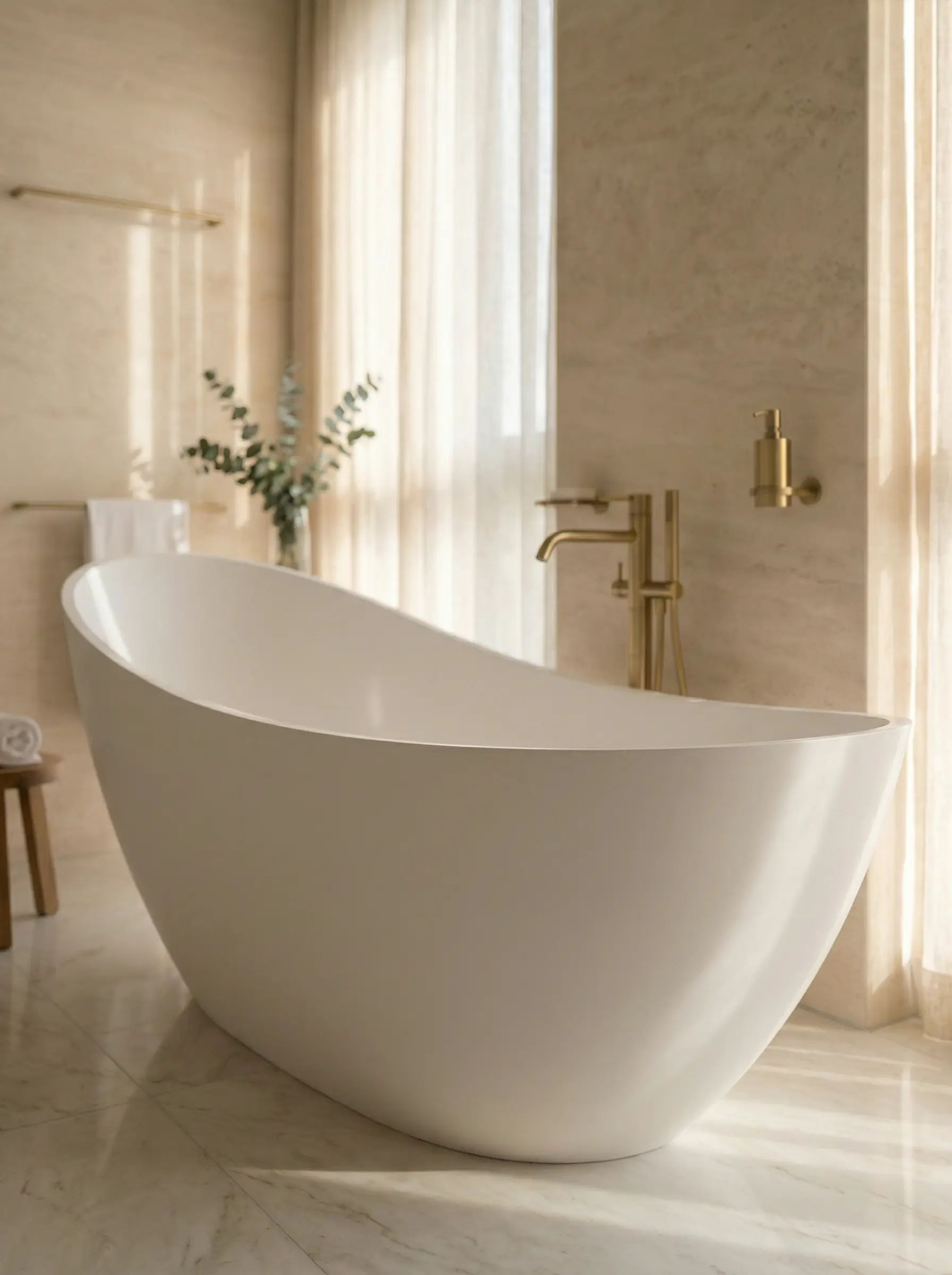
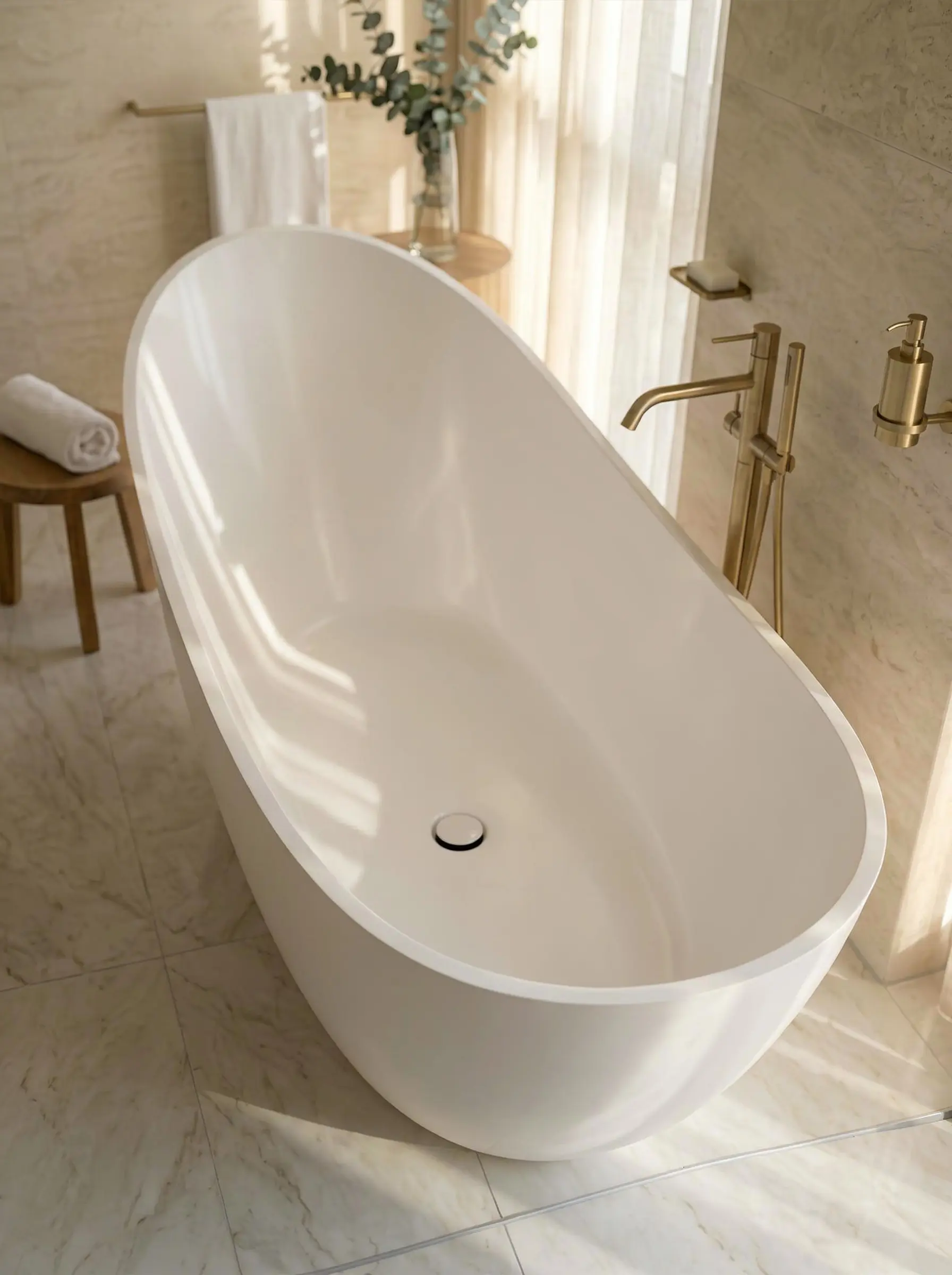
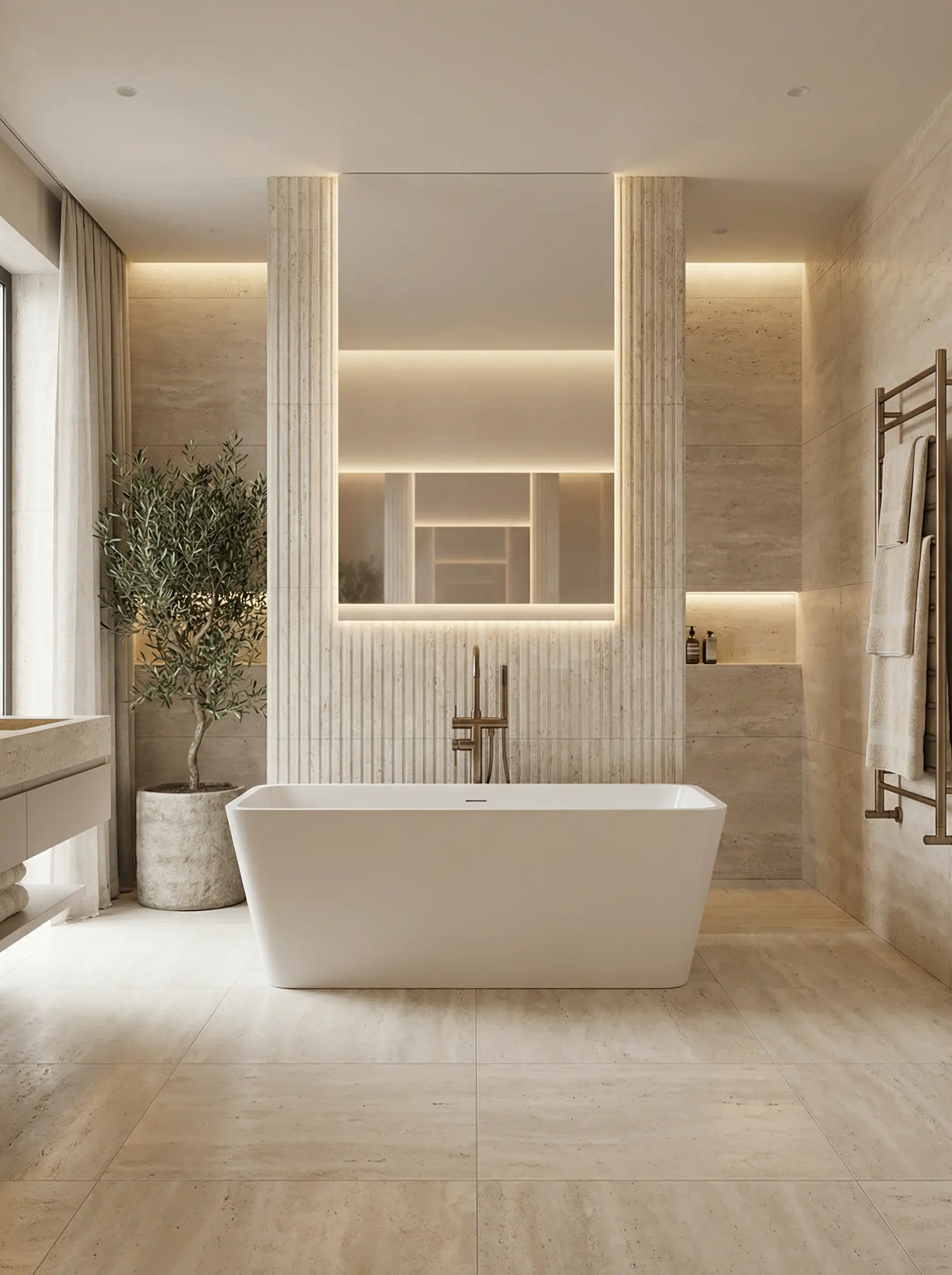
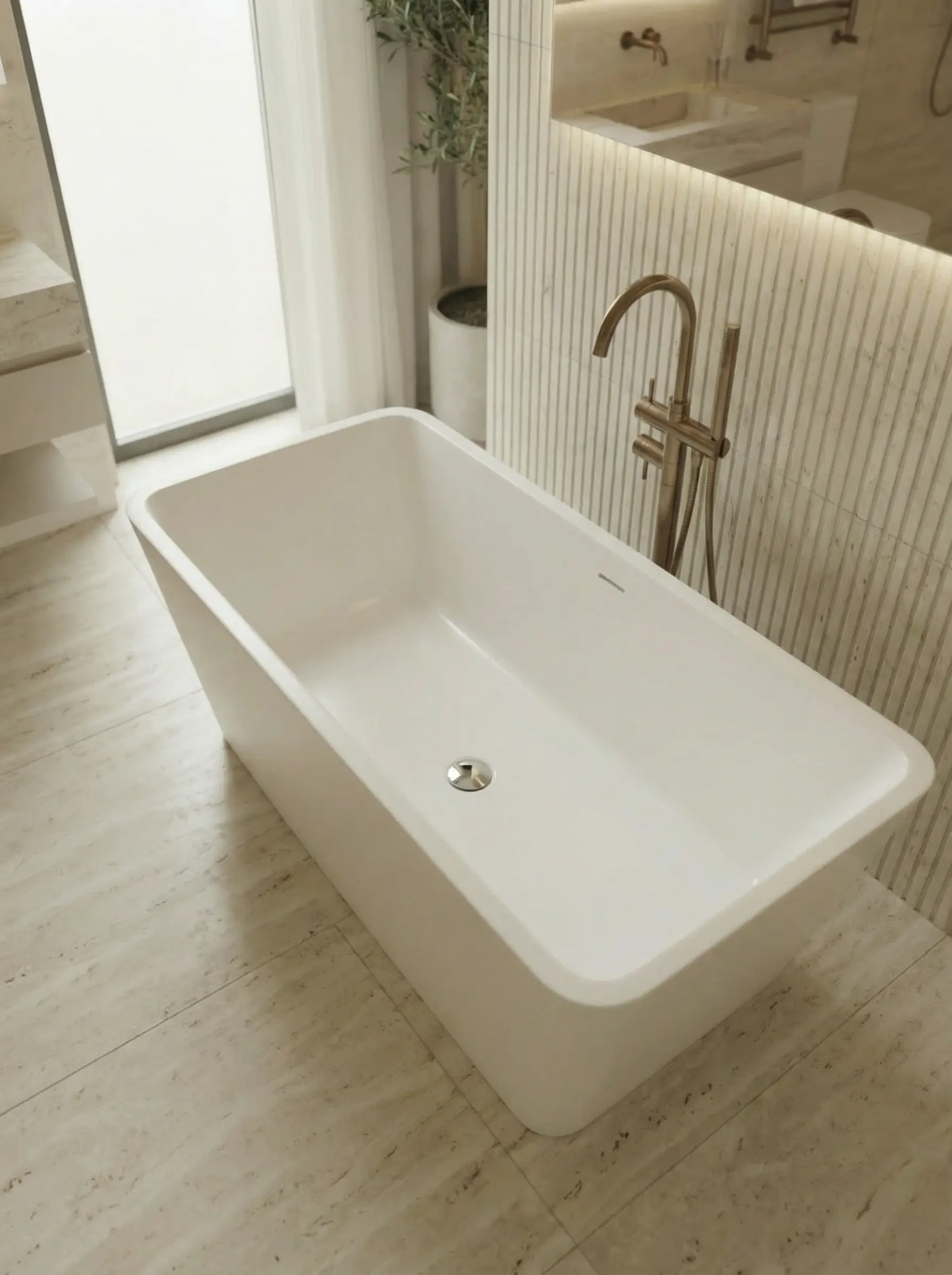
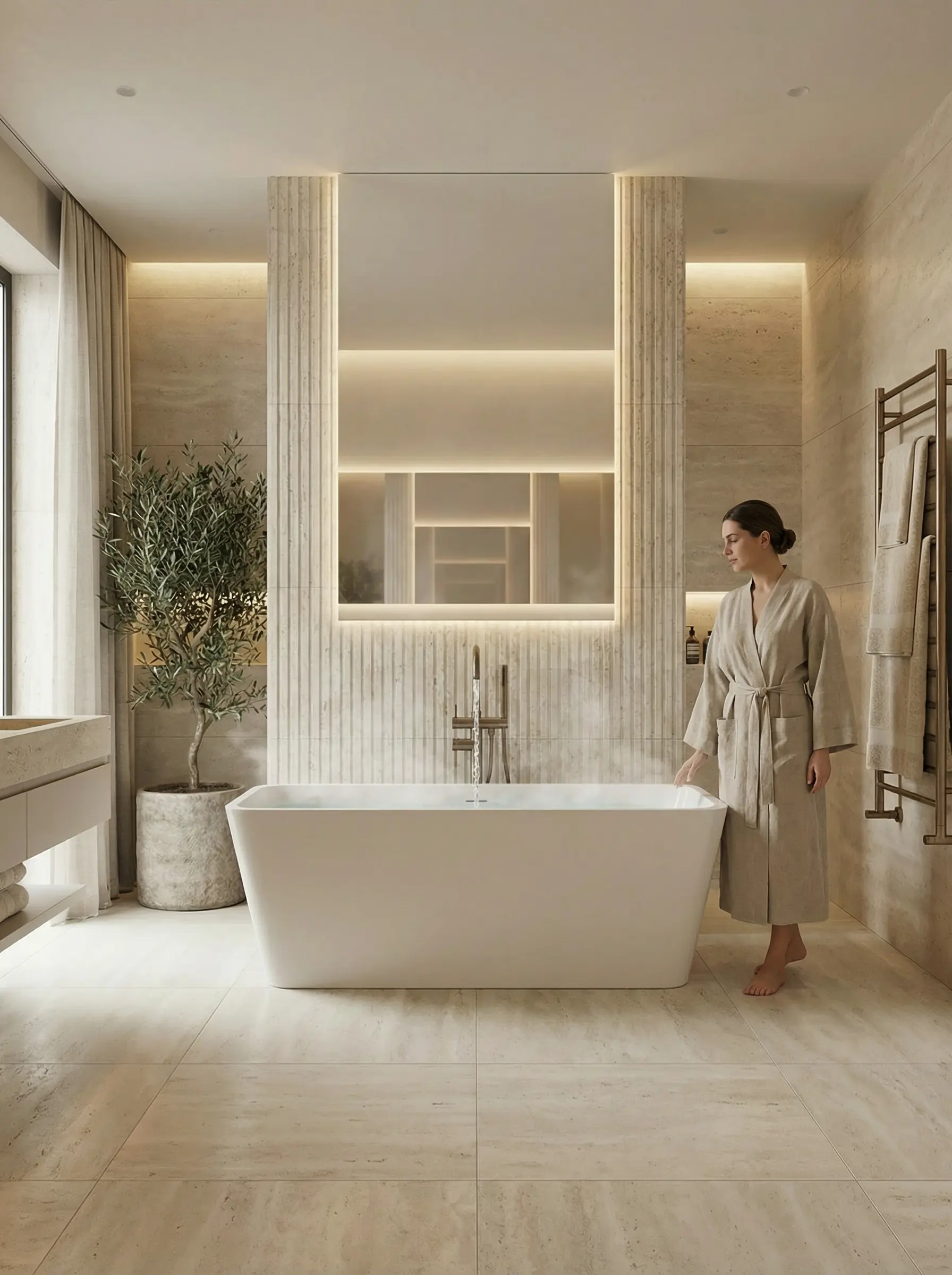
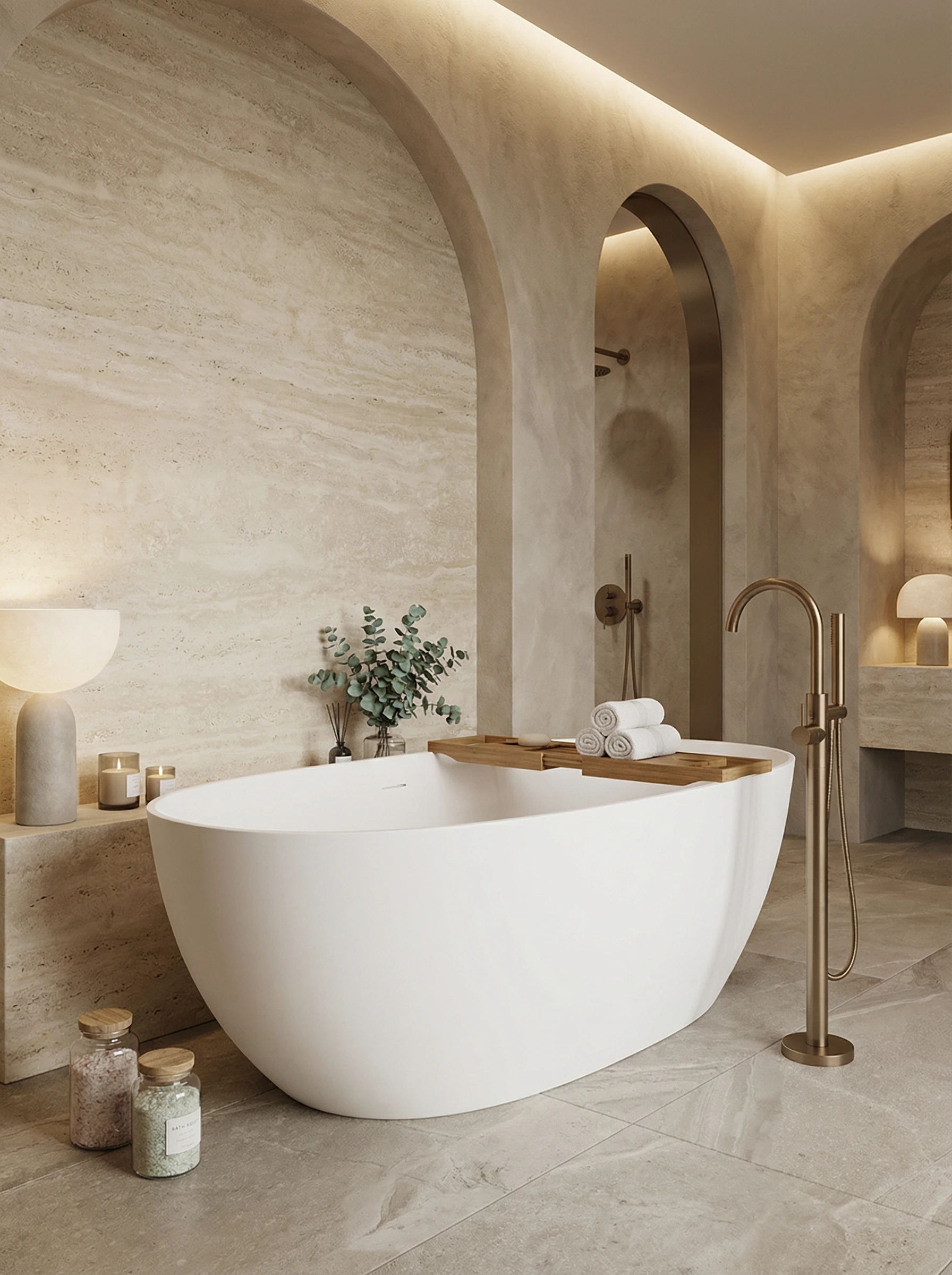
That covers two quite different families. Organic forms are flowing and often asymmetric, so the shape changes depending on where you stand — the Forme and Lune work this way. Architectural forms go the opposite direction: hard geometry, straight sides, sharp returns. The Linear is a precise rectangle; the Lumen and Solis sit between the two.
Both are statements. They just make opposite ones — an organic bath softens a hard room, and an architectural bath sharpens a soft one. Which you want depends on what the rest of the bathroom is already doing.
It Decides The Room, Not The Other Way Round
This is the part people underestimate. A plain oval can be pushed against a wall and ignored. A form-led bath cannot — it usually has a correct orientation and a wrong one, and getting that wrong makes an expensive bath look like a mistake.
In practice three things get decided by the bath rather than the room: where it sits, which way it faces, and where the tap goes. Basin position, storage and the towel rail all follow from those.
If it is going into an existing bathroom with fixed plumbing, work out whether the bath can actually face the right way before ordering. It is the most common regret.
How Much Space It Needs
More than the footprint. A sculptural bath needs air around it to be read as a shape at all — crammed into a corner it is just an odd-looking tub.
As a working minimum, allow clearance on at least two sides and a clear sightline from the door. Around 700mm on the approach side is the usual comfortable figure, and under 400mm on any visible side starts to look wedged in. The full set of measurements is in How Much Space Do You Need For A Freestanding Bath?
If the room cannot give it that, a back-to-wall bath is the more honest answer — it is designed to sit against something, so it does not look compromised when it does.
The Tap Question
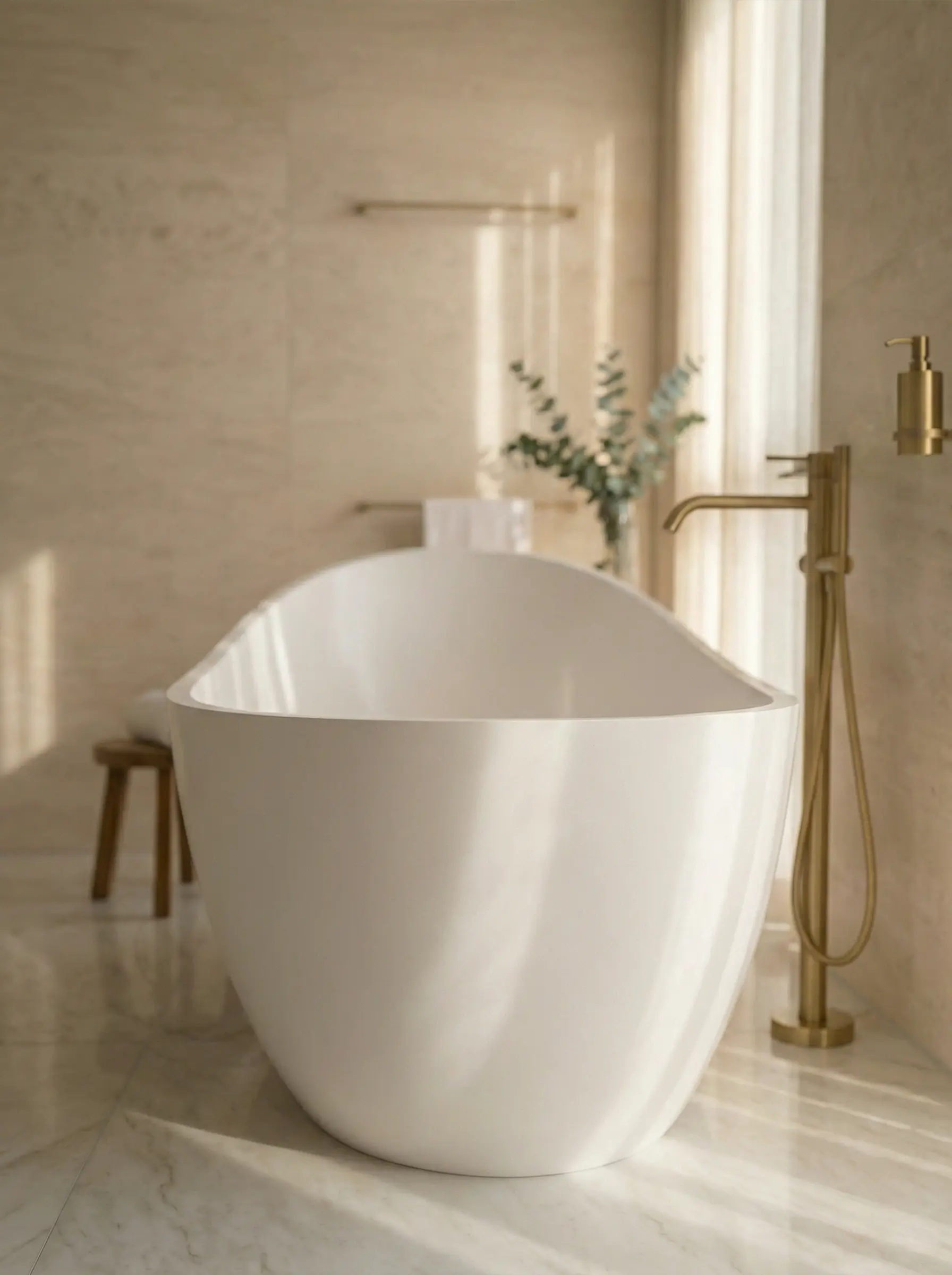
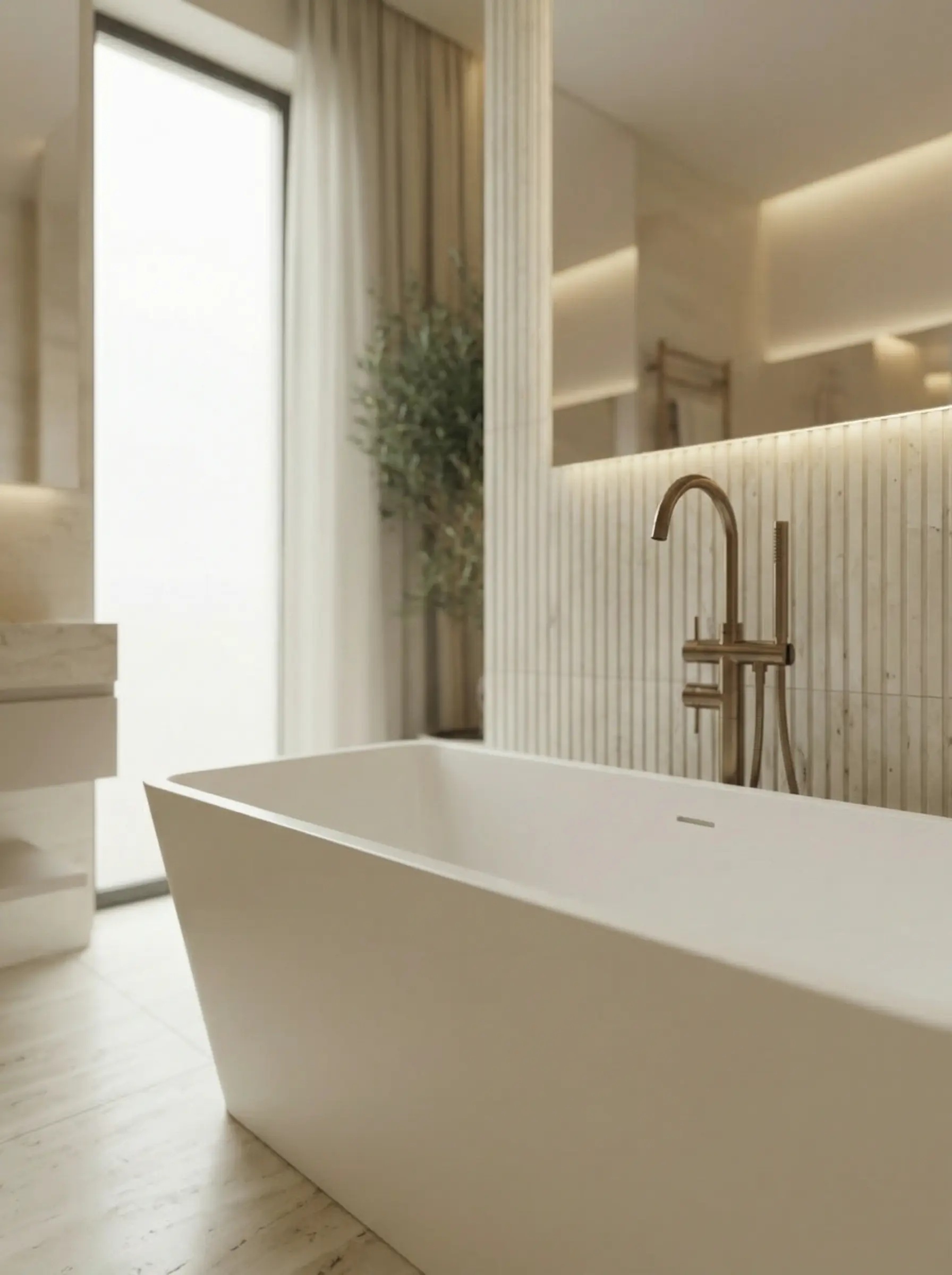
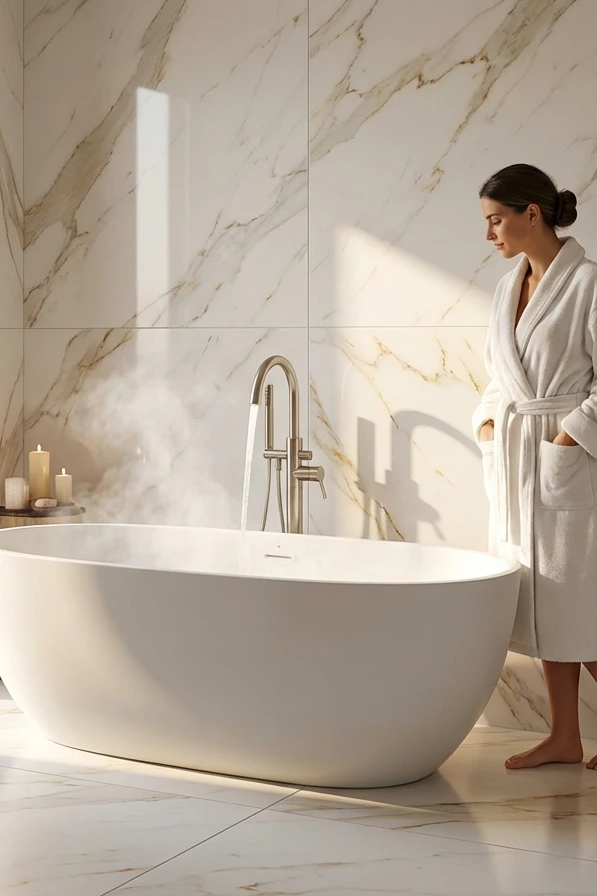
These baths are not drilled for a tap, which is deliberate — a deck-mounted tap on the rim would interrupt the line, which is the thing you are paying for.
That leaves a floorstanding filler or a wall-mounted one. A floorstanding filler needs its feed set into the floor at a position fixed before the floor goes down, and that position depends on the bath's final orientation. Make the two decisions together rather than in sequence. Floorstanding bath fillers are the usual answer, and Bathroom Tap Prices Explained covers what to expect to pay.
What Else The Room Should Do
Very little, ideally. A form-led bath is a loud object and it does not share well. Plain tiling, restrained metalwork, nothing else competing.
The reliable way to get it wrong is to pair a statement bath with statement everything else — patterned tile, a feature wall, a second sculptural basin. One object should be doing the talking. The broader argument is in The Sculptural Bath, and the material side in resin baths.
Frequently asked questions
What is a sculptural bath?
A freestanding bath designed around its silhouette rather than around convention — either flowing and asymmetric, or sharply geometric. It is a design category rather than a technical one: what the baths share is that the form is the reason to buy them.
How much space does a sculptural bath need?
More than its footprint. Allow clearance on at least two sides — around 700mm on the side you approach from, and not less than 400mm on any side that is visible. The shape only reads as a shape if there is air around it.
Can a sculptural bath go against a wall?
Usually it should not. Organic and asymmetric forms are designed to be seen from more than one side, so a wall hides the thing you bought. Rectilinear baths tolerate it better, but still look deliberate rather than squeezed only if there is a clear margin. If the room genuinely needs the wall, a back-to-wall bath is the better-designed answer.
Do sculptural baths need a special tap?
They need a floorstanding or wall-mounted filler, because they are not drilled for a deck-mounted tap — a tap on the rim would break the line. Both need their feed positioned before the floor is finished, so the tap decision has to happen alongside the layout decision.
Are sculptural baths comfortable?
The good ones are — the interior profile is a separate design problem from the exterior silhouette, and a well-made bath solves both. Check the internal length and the back angle rather than assuming an unusual outside shape means an unusual inside.
Organic or rectangular — which suits my bathroom?
Look at what the room already is. A bathroom of hard lines, large-format tile and square joinery is softened by an organic form. A room with curves, arches or soft plaster is sharpened by a rectilinear one. Matching like with like tends to flatten both.
Is a sculptural bath worth it in a small bathroom?
Rarely. The form needs clearance to be understood, and a small room cannot give it that without sacrificing circulation. In a compact bathroom the money is better spent on a well-proportioned small freestanding bath that fits properly.