Concealed or exposed shower?
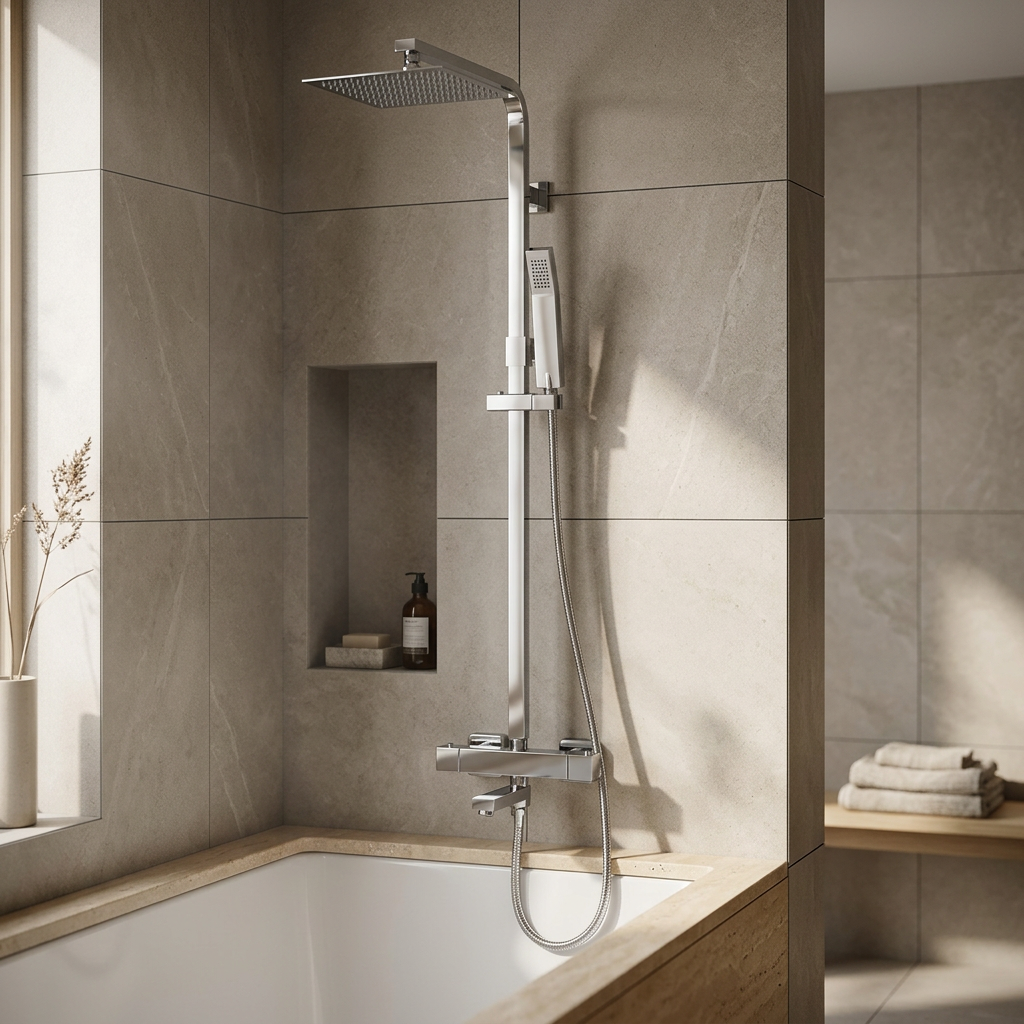
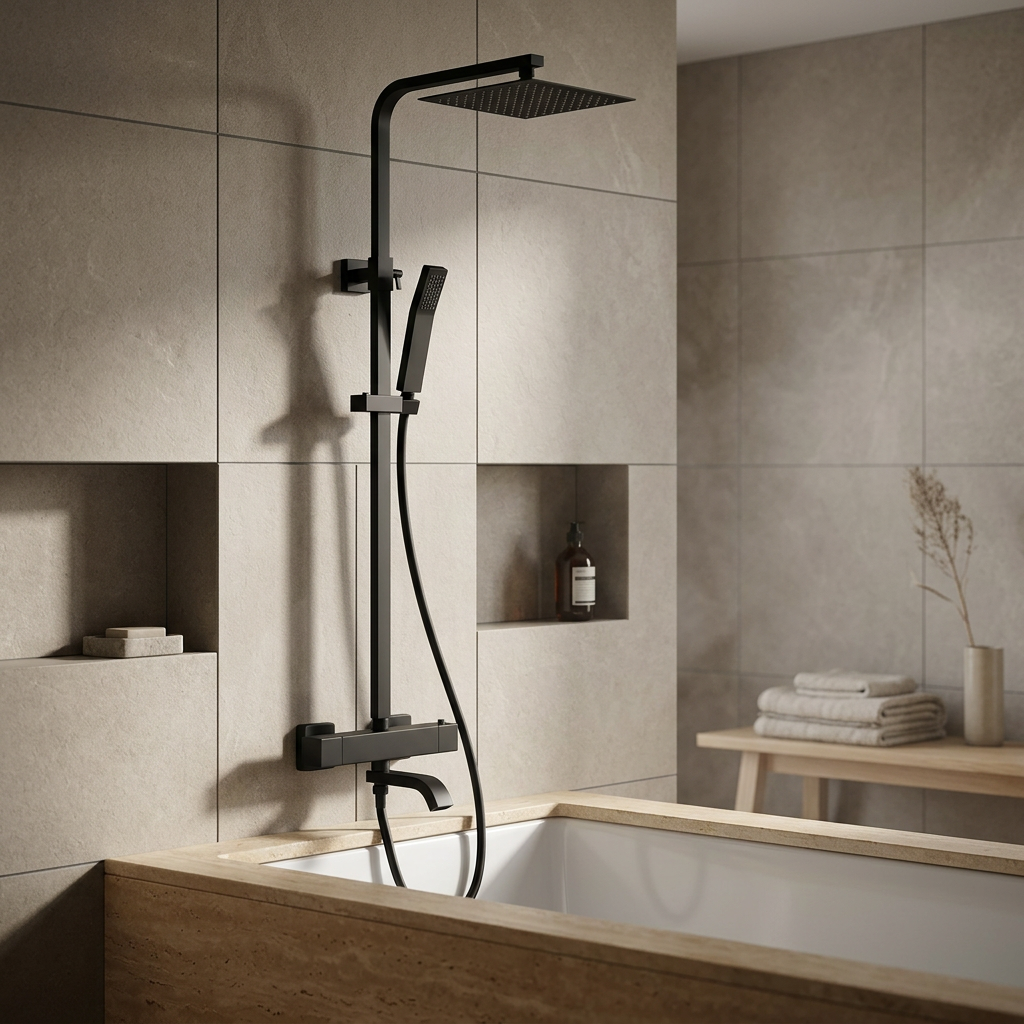
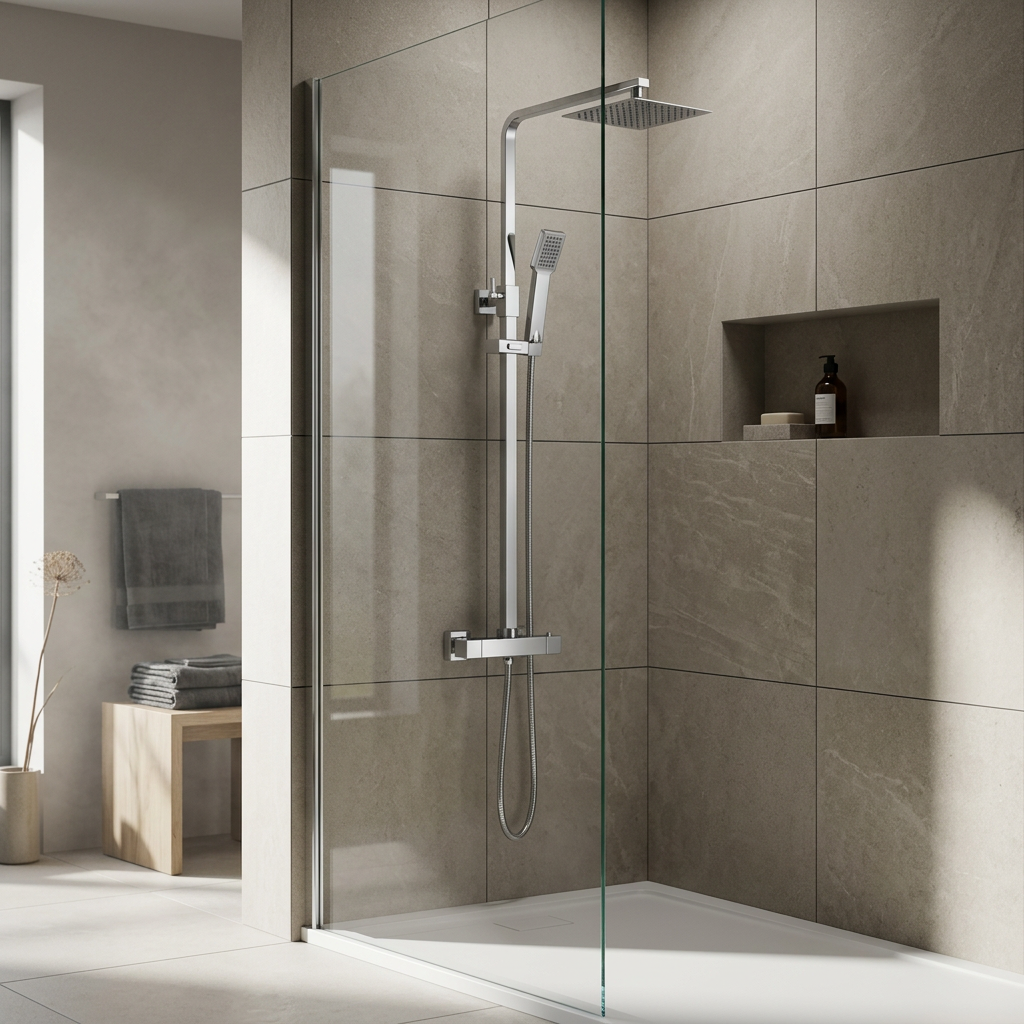
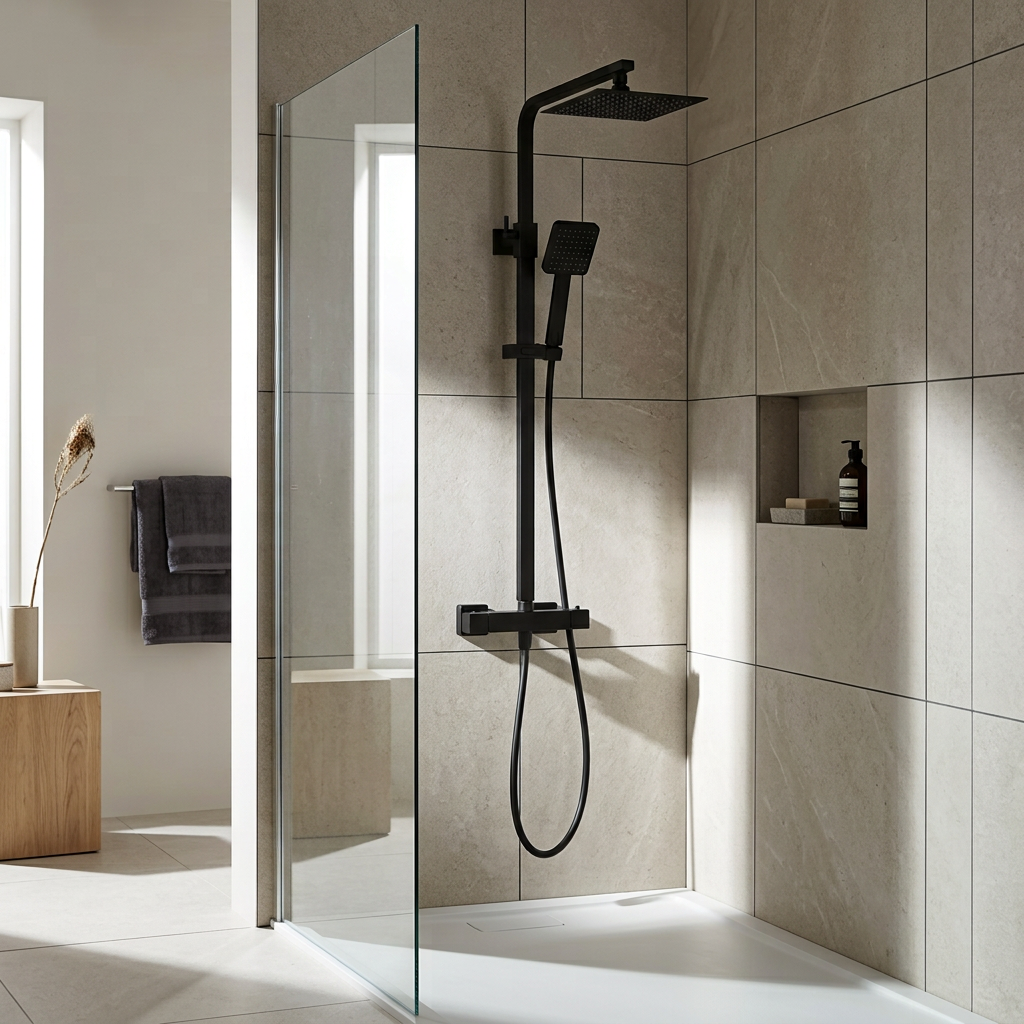
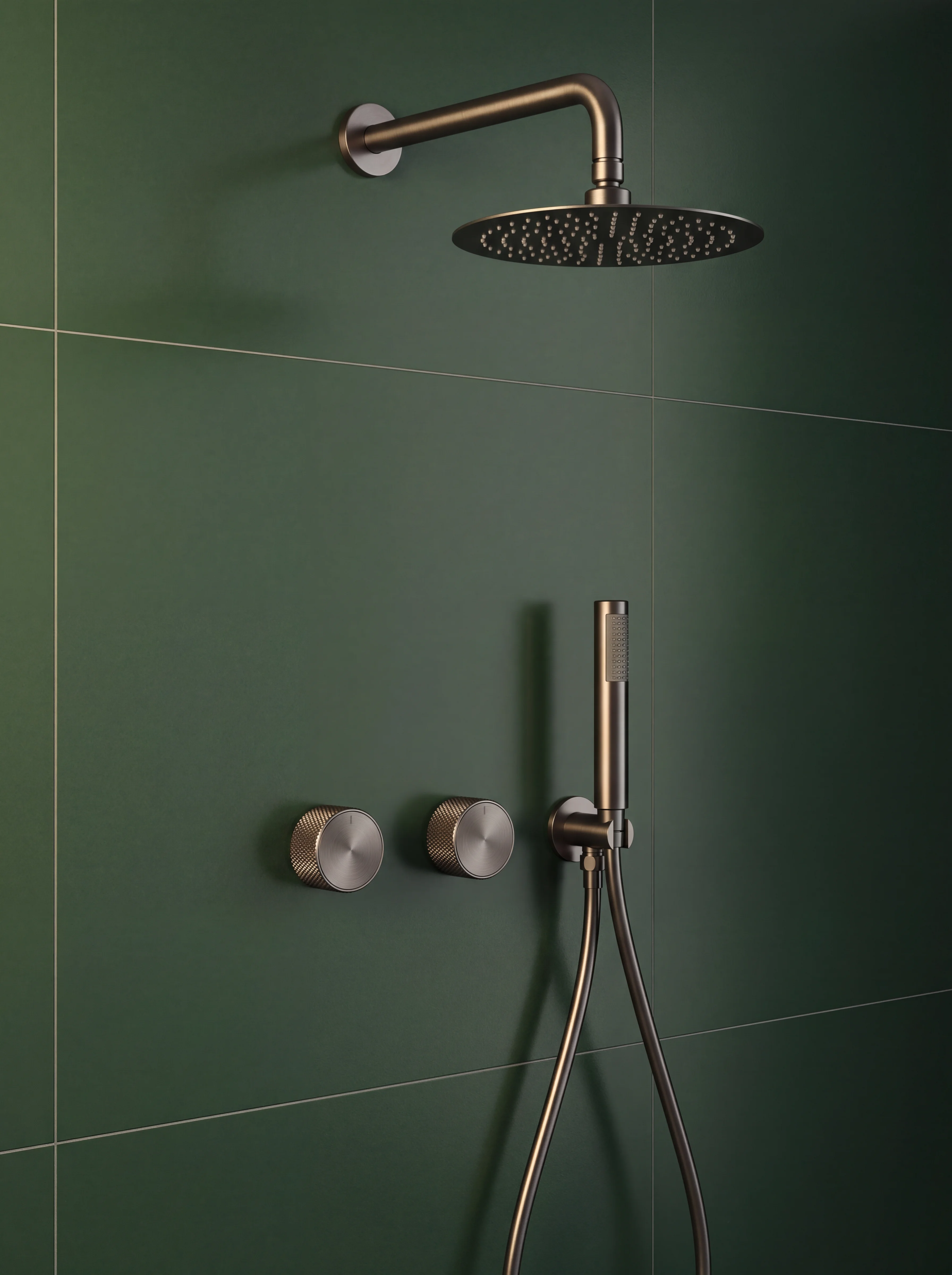
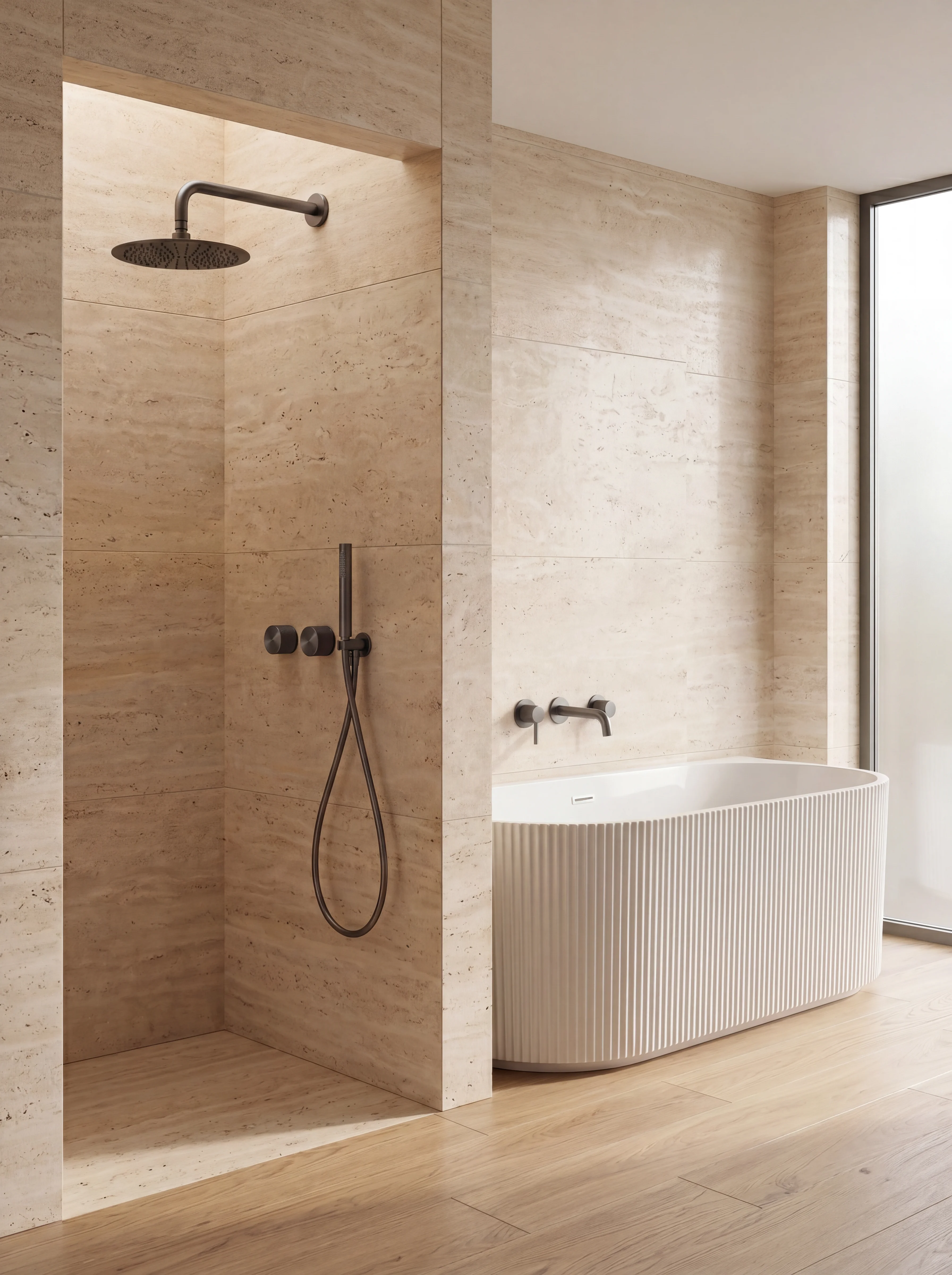
A concealed system buries the valve and pipework in the wall, leaving only the controls and the head visible. It is the quieter, more architectural answer — and it needs the wall opened up, so it belongs to a renovation rather than a swap. An exposed kit keeps the riser on the wall as part of the design and fits in an afternoon onto existing plumbing. Neither is better; they suit different projects.
What water pressure does a shower need?
Most thermostatic mixer showers want around 1 bar to perform properly, and some want more. A mains-fed combi or unvented cylinder will usually deliver that comfortably. A gravity-fed system with a loft tank often delivers 0.2–0.5 bar at an upstairs shower, which is where disappointment comes from. Check the minimum bar rating of any shower against your system, and consider a pump if the gap is large.
Do rainfall shower heads need high pressure?
They benefit from it. A large fixed head relies on volume rather than velocity — the water falls rather than being driven — so on a low-pressure system it can feel weak in a way a smaller handset does not. If pressure is limited, a smaller head, or a pumped supply, will give a better shower than a wide one.
Should the shower match the taps?
It does not have to, but a bathroom generally reads better when the metal finishes are coordinated rather than nearly-matching. Choose the finish once and carry it through — shower, taps, accessories — or contrast deliberately, with one finish for the larger fittings and another as an accent. The version that looks accidental is two similar-but-different warm metals in the same room.
Further reading