Concealed Shower Systems — A UK Buying Guide | Elani
Concealed hides the valve and pipework behind the wall for a clean, minimal finish; exposed costs less to fit. Here's how to actually decide between them.
August 24, 2026
5 minutes
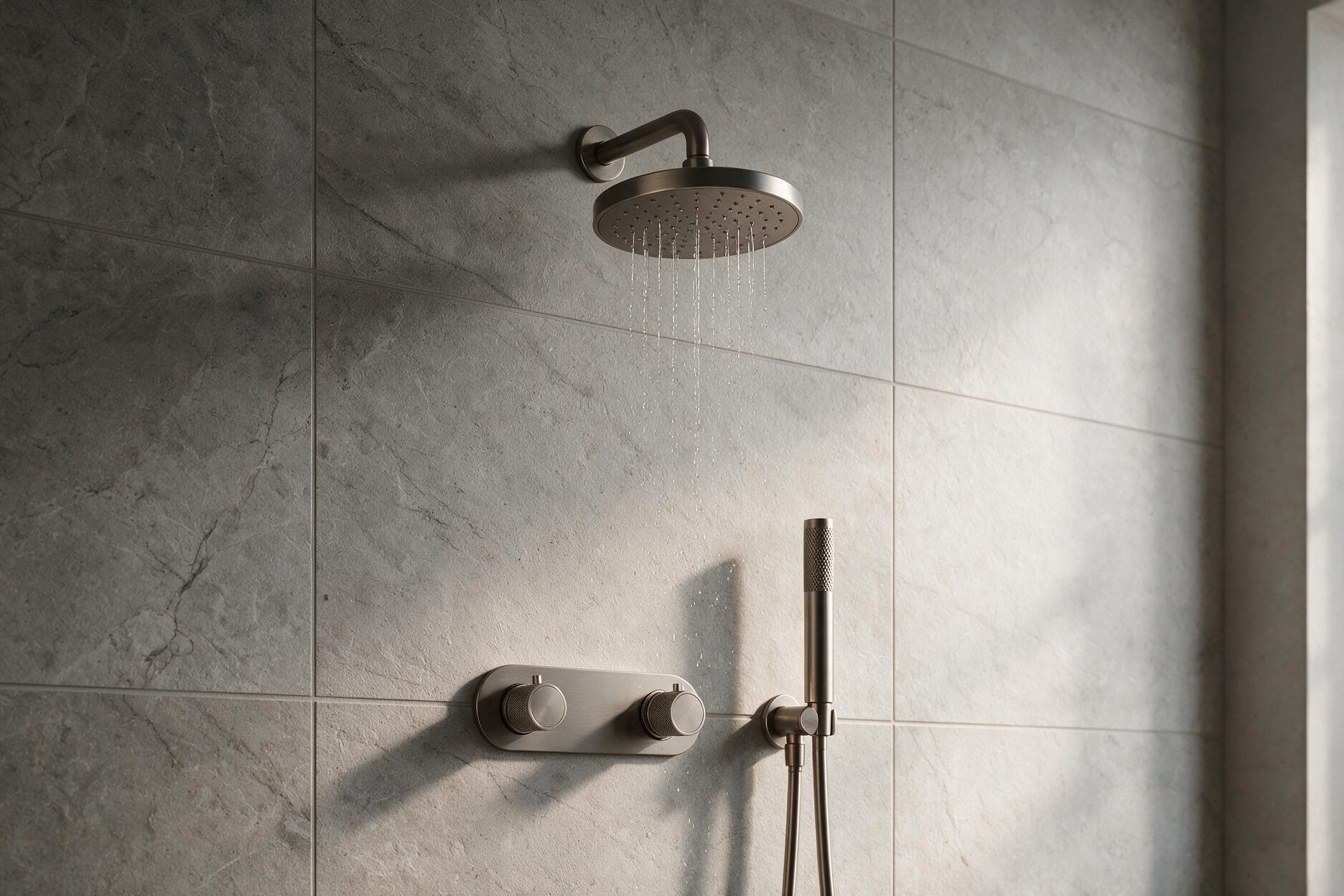
Concealed hides the valve and pipework behind the wall for a clean, minimal finish; exposed costs less to fit. Here's how to actually decide between them.
August 24, 2026
Last updated 6 October 2026 · Elani Journal
A concealed shower system routes the valve and pipework behind the wall, leaving only the controls and shower head visible, for a clean, uncluttered finish. An exposed system mounts the same components on the surface of the wall. Concealed costs more to install, because the wall has to be chased to hide the pipework, but it's the format most considered, minimal bathrooms — including a wet room — are built around.
Both systems control the same thing — water flow and temperature — the difference is entirely about where the mechanics live. An exposed valve sits on the tiles, fully visible and easy to access if it ever needs servicing. A concealed valve sits inside the wall, connected to a control plate that's often little more than a single lever or dial, which is what gives a concealed system its clean, architectural look. Neither performs better in terms of water quality or reliability — the choice is aesthetic and practical, not technical.
A typical concealed shower system — like the Elani Forge — pairs a concealed valve with a wall-mounted shower head, and usually a handset kit on a riser rail or wall outlet for flexibility. Everything visible on the wall is a considered design object in its own right, which is why concealed systems tend to anchor a bathroom's finish rather than sit quietly in the background the way an exposed valve does. For how the head itself affects the experience, see Rainfall vs Standard Shower Heads.
Added October 2026.
The UK is introducing a mandatory water efficiency label — an A–F colour-coded rating, in the same mould as the energy label on an appliance. Non-electric showers are in scope, which covers the thermostatic and mixer valves every concealed system is built around. Defra settled the scheme's final shape on 2 October 2026, removing washing machines, dishwashers, washer-dryers and electric showers. Retailers will be required to display the label wherever a product is sold, online included.
This deserves more attention on a concealed system than on an exposed one, for a reason specific to the format: you are not going to change it easily. An exposed valve can be swapped in an afternoon if it turns out thirstier than expected. A concealed valve is behind tile. Whatever flow rate you specify is, realistically, the flow rate that bathroom has for the next decade.
So add it to the list of things settled before the wall closes, alongside pressure and position. Household water bills in England and Wales rose an average of 5.4% in April 2026 — about £33, to roughly £639 a year — with several regions well beyond that, so the gap between an efficient valve and a thirsty one compounds across the life of the installation.
Concealed suits any bathroom being renovated from the studs — where the wall is already open for re-tiling or re-plumbing, chasing in the pipework adds relatively little extra cost or disruption. It's also the natural choice for a wet room, where a clean, minimal wall surface matters more than in a standard bathroom; see Wet Room Or Walk-In Shower for how that layout decision plays out. Where it makes less sense is a lighter refresh where the wall isn't being opened up anyway — retrofitting a concealed system into a finished wall is a genuinely bigger job than swapping an exposed valve for a newer one.
Because the valve sits inside the wall, a concealed system needs to be positioned and plumbed before tiling, not after — this is a decision to make at the same stage as choosing your bath and basin, not afterwards. Always confirm installation with a qualified plumber, and check your home's water pressure before committing to a specific system, since some concealed valves perform better under stronger mains pressure than others.
Servicing is less immediate — a fault typically means accessing the valve through a removable panel rather than simply unscrewing an exposed fitting — but concealed valves are built for infrequent maintenance and don't fail more often than exposed ones.
Yes. Non-electric showers, which includes the thermostatic and mixer valves concealed systems use, are in scope for the UK's mandatory A–F water efficiency label, and retailers must display it wherever the product is sold. Electric showers were removed from the scheme when Defra settled its final scope on 2 October 2026. It is worth checking before you specify, because a concealed valve sits behind tile and is not easily changed later.
Not inherently, but check the specific valve's minimum pressure requirement. Homes on lower mains pressure or older gravity-fed systems should confirm compatibility before ordering.
Yes, but it means opening the wall to run and conceal new pipework, which is a bigger job than a straightforward valve swap. It's most cost-effective when done alongside a wider renovation.
Match it to the rest of the room's hardware — the Elani Forge's brushed gunmetal finish pairs naturally with matte black or brushed gunmetal taps and accessories for a consistent metal language throughout.
Forge — Gun Metal Concealed Shower System. Shop now →