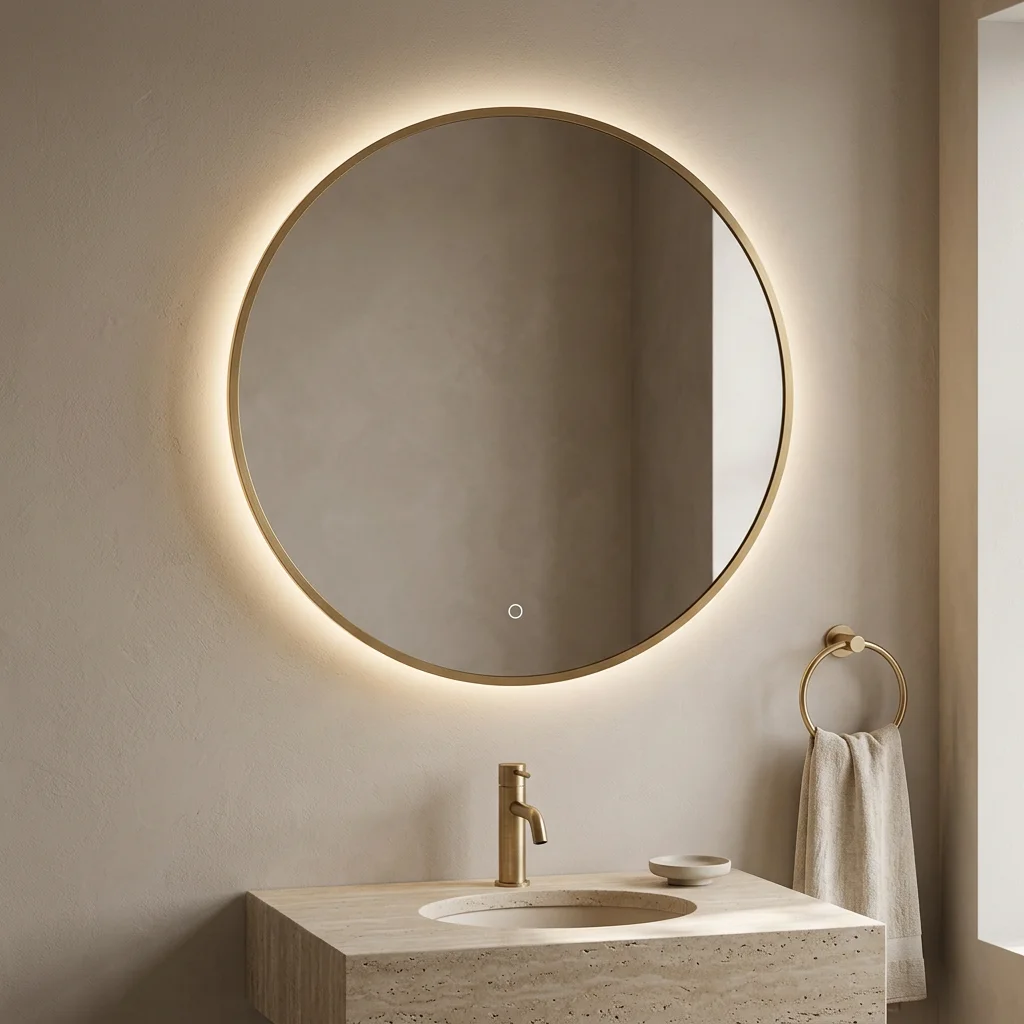
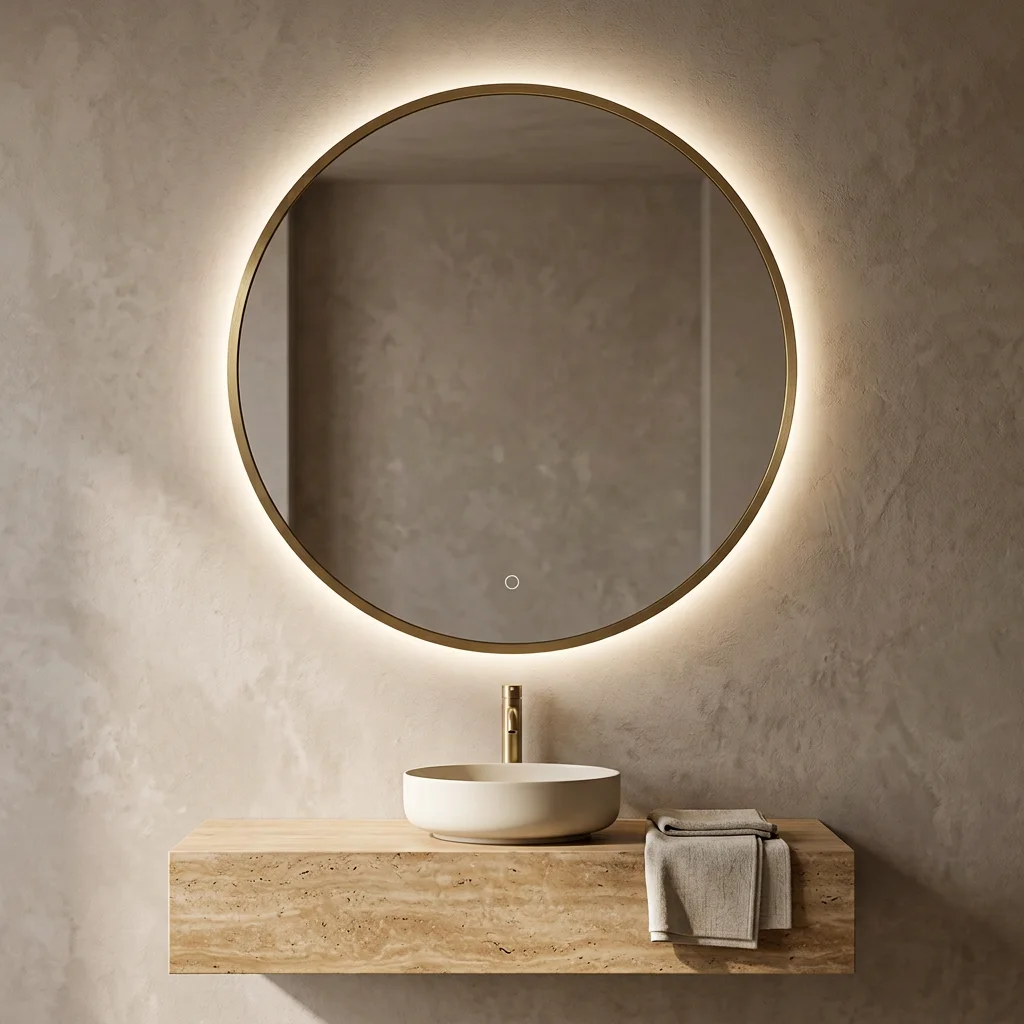
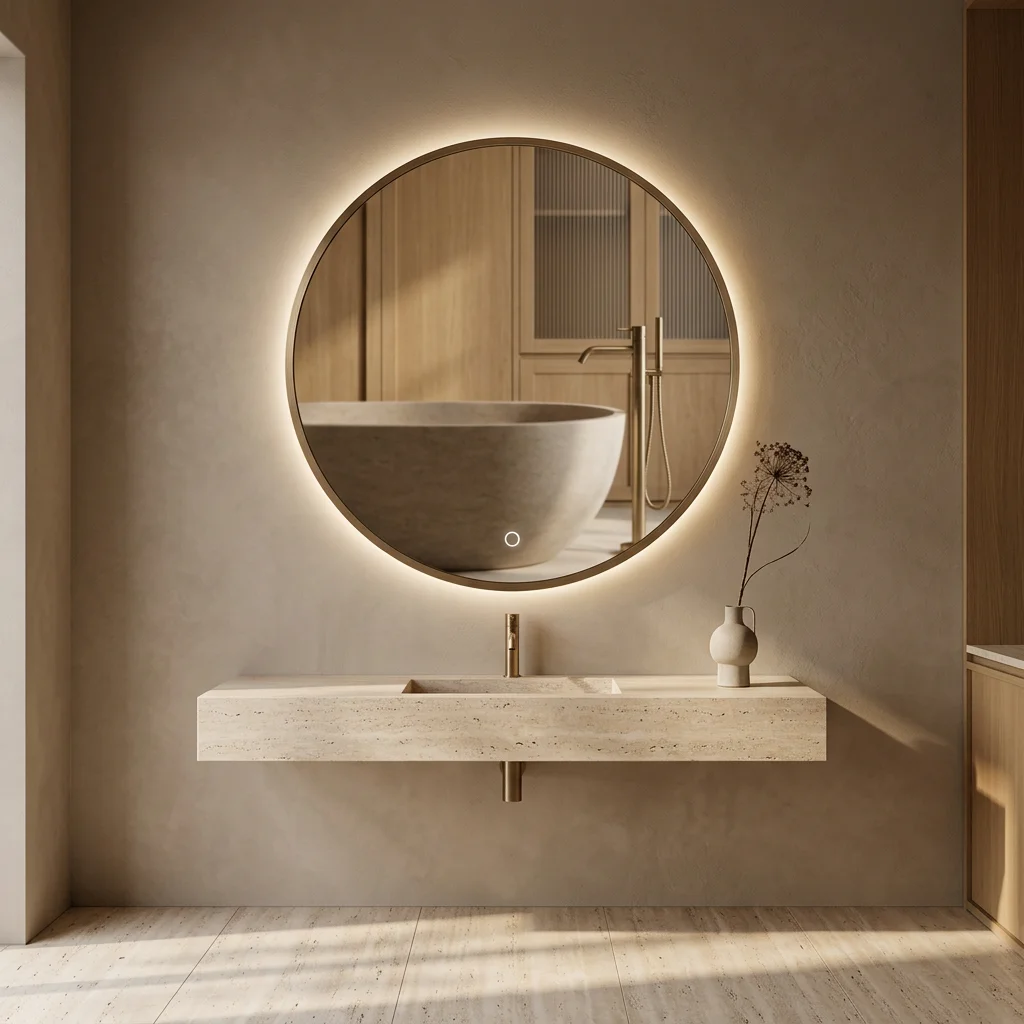
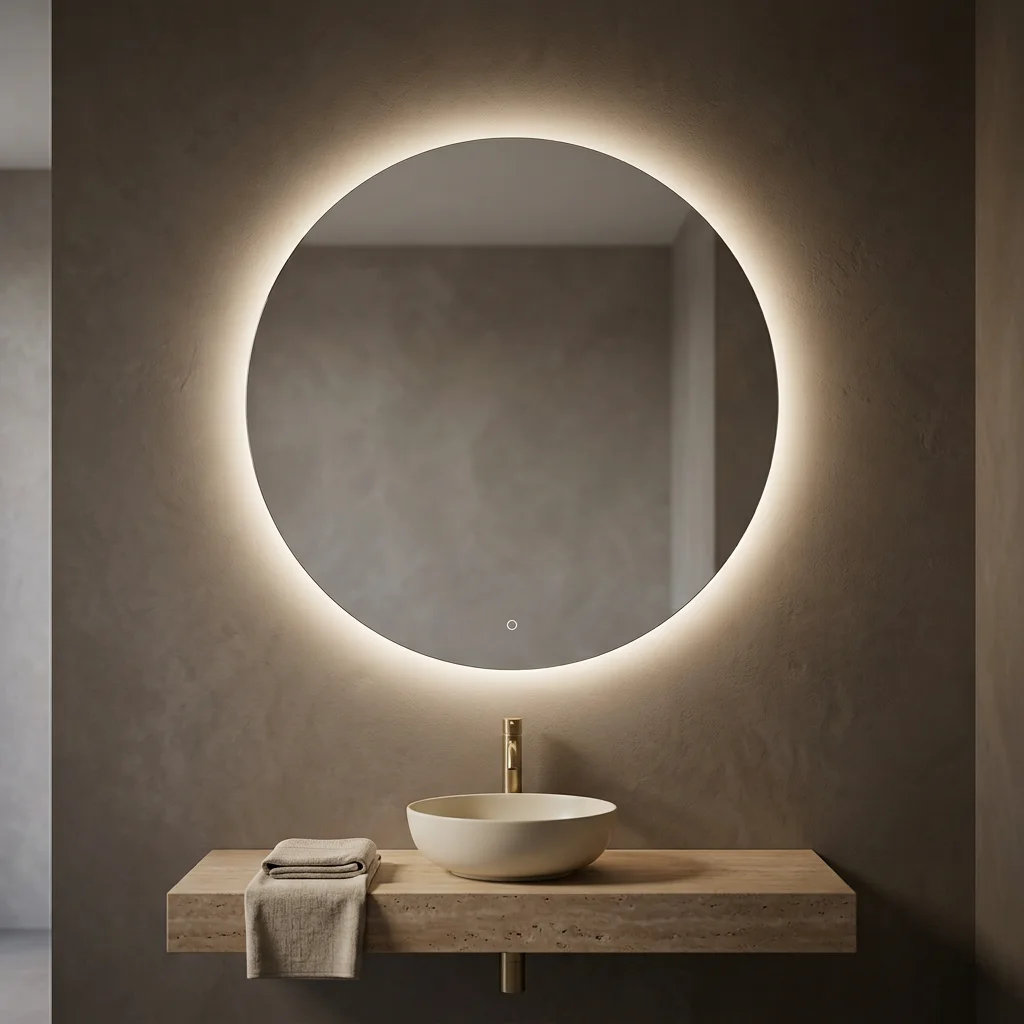
What size mirror should go above a basin?
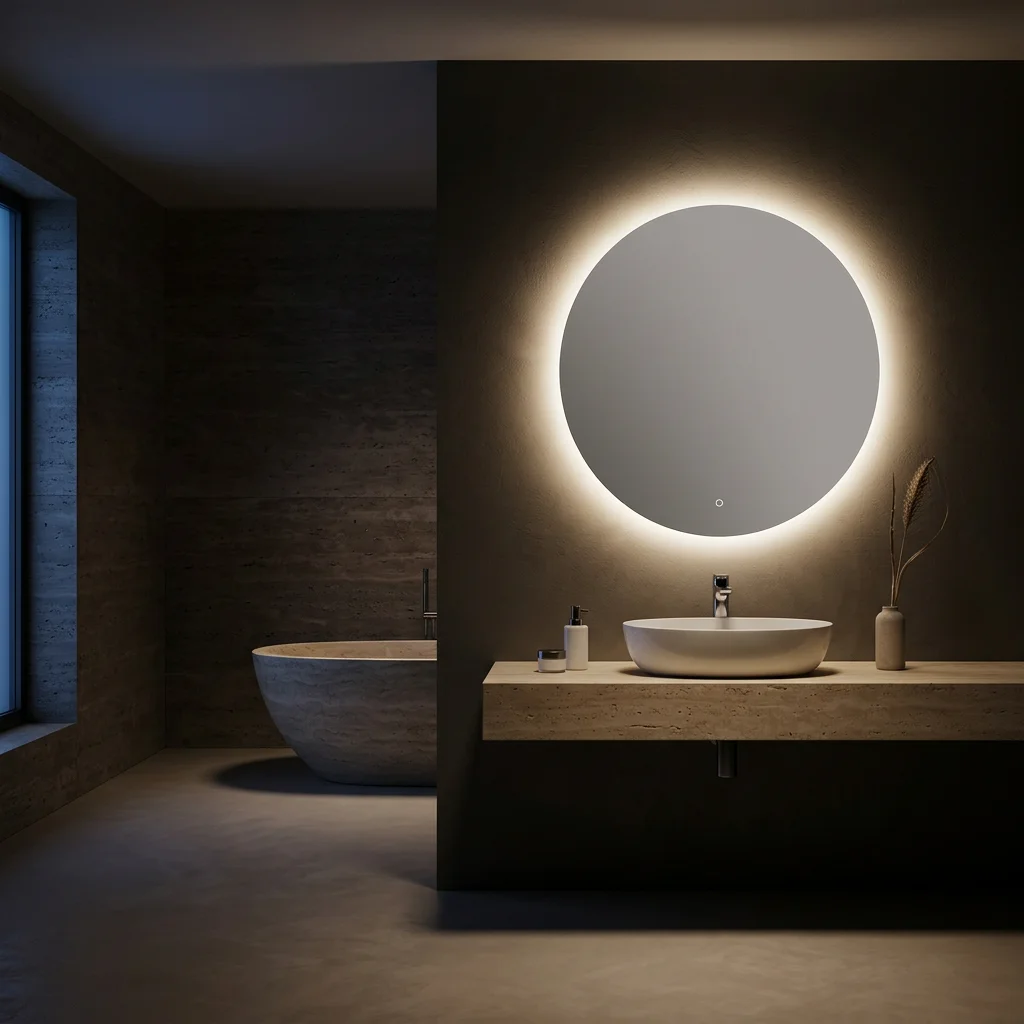
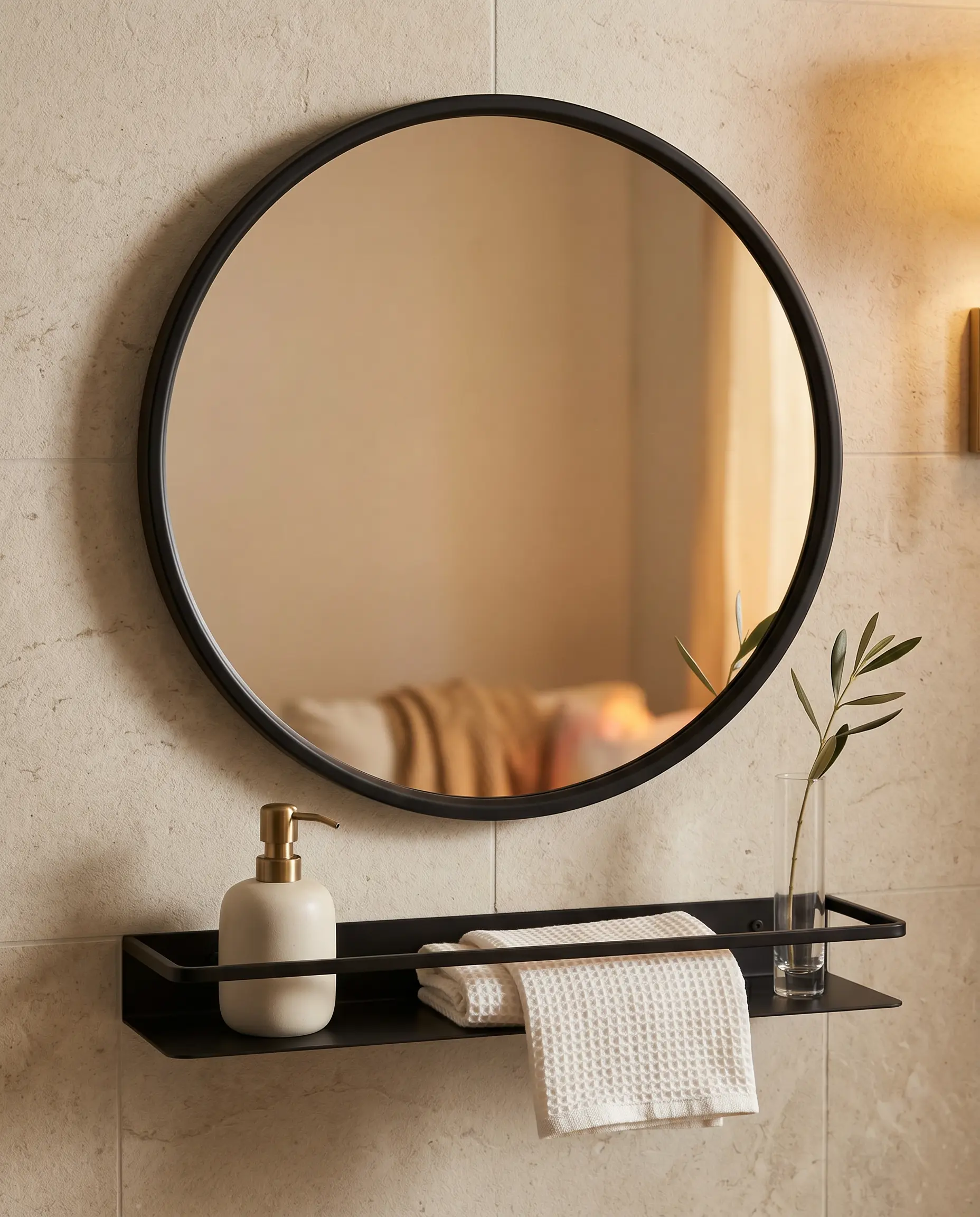
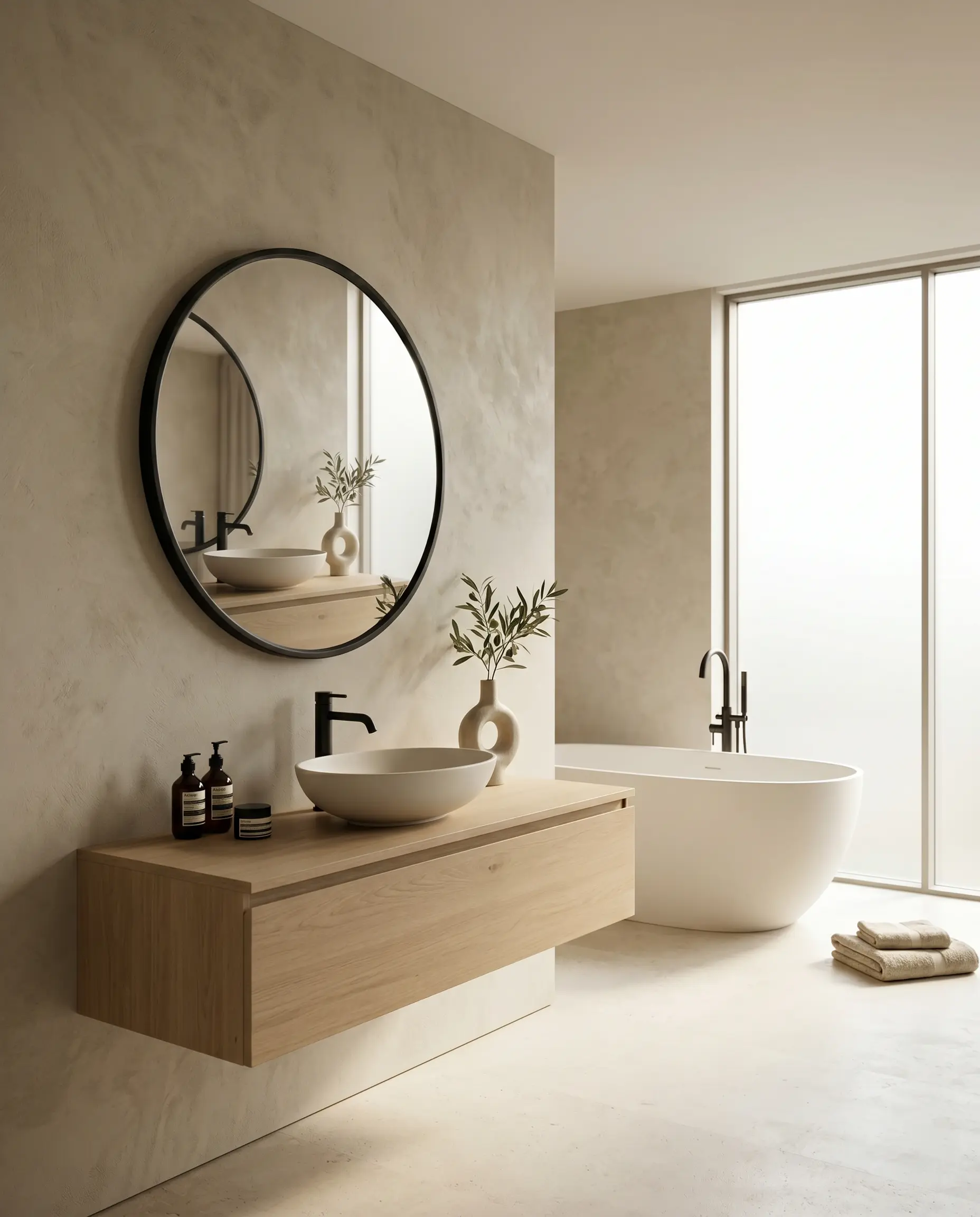
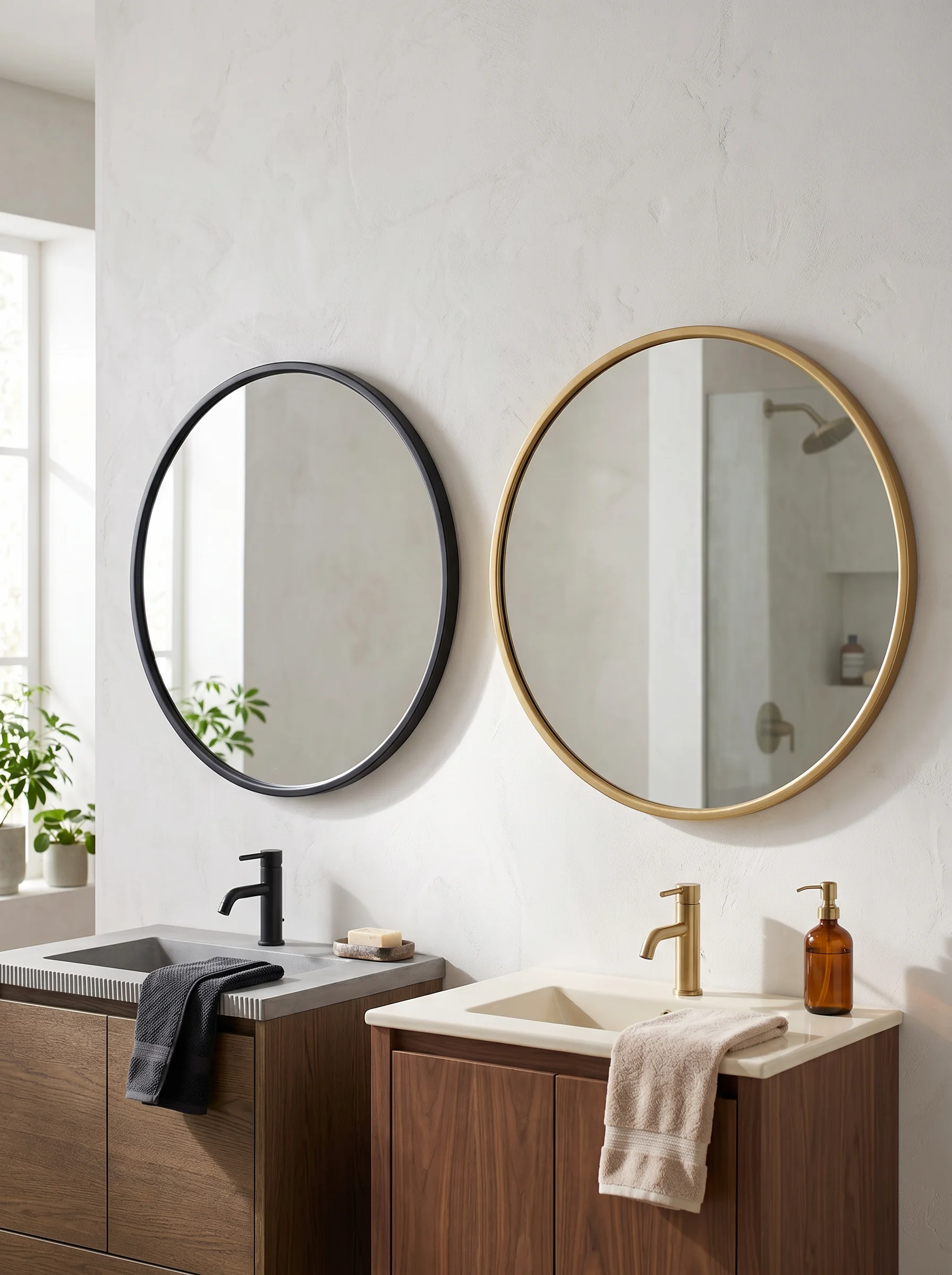
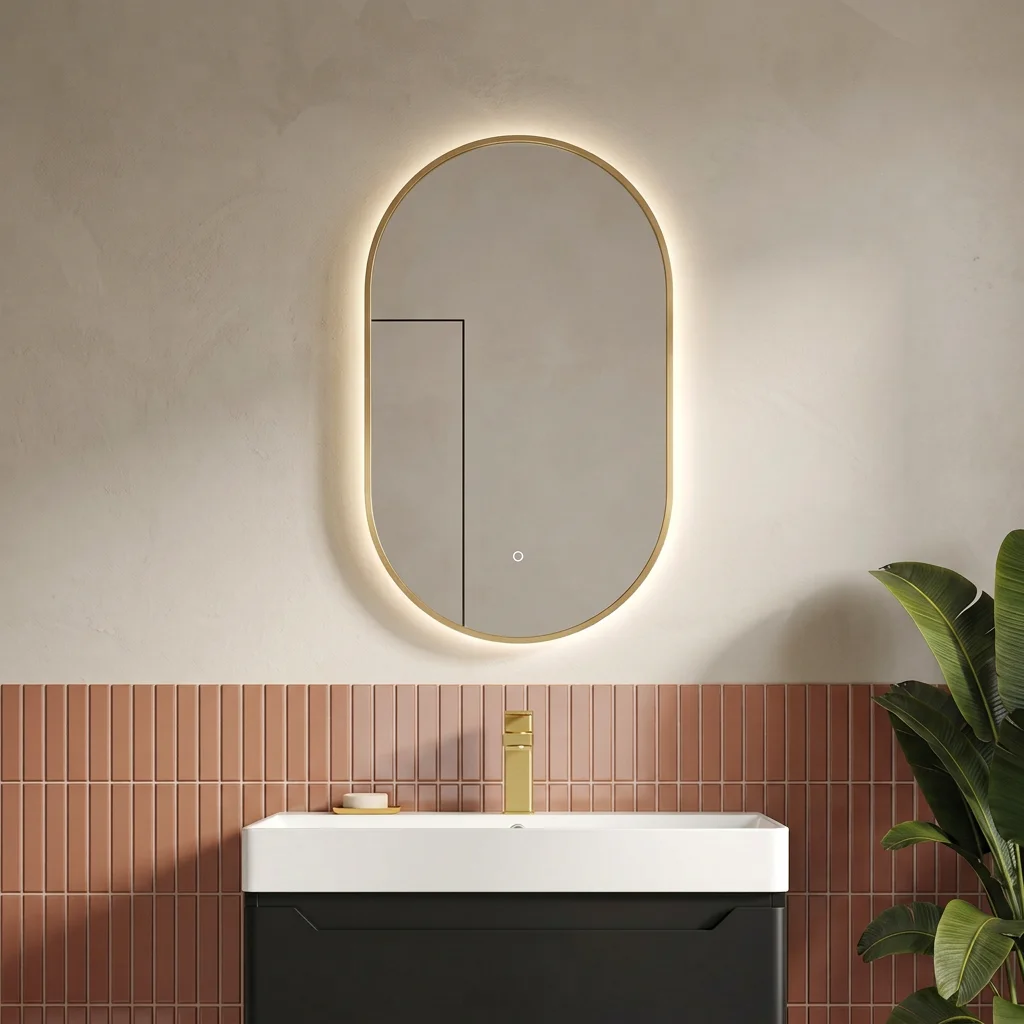
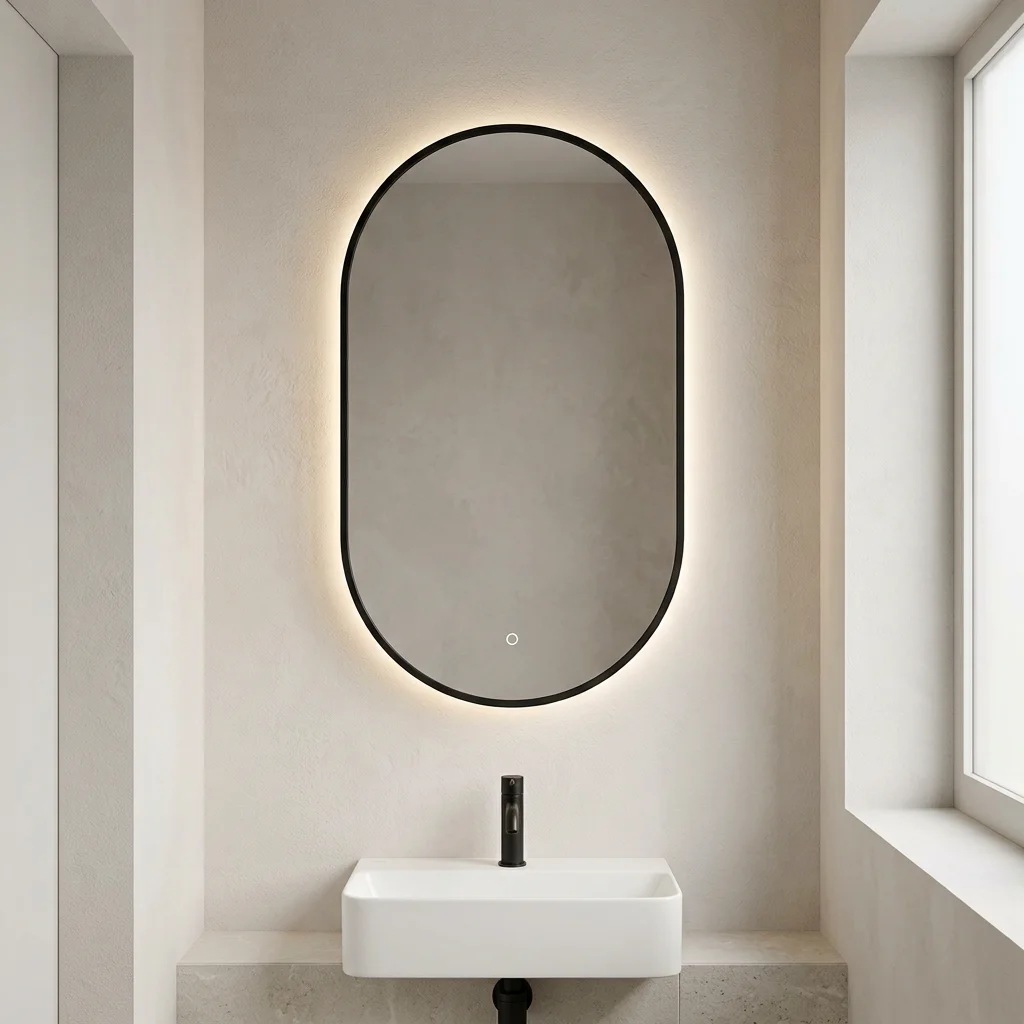
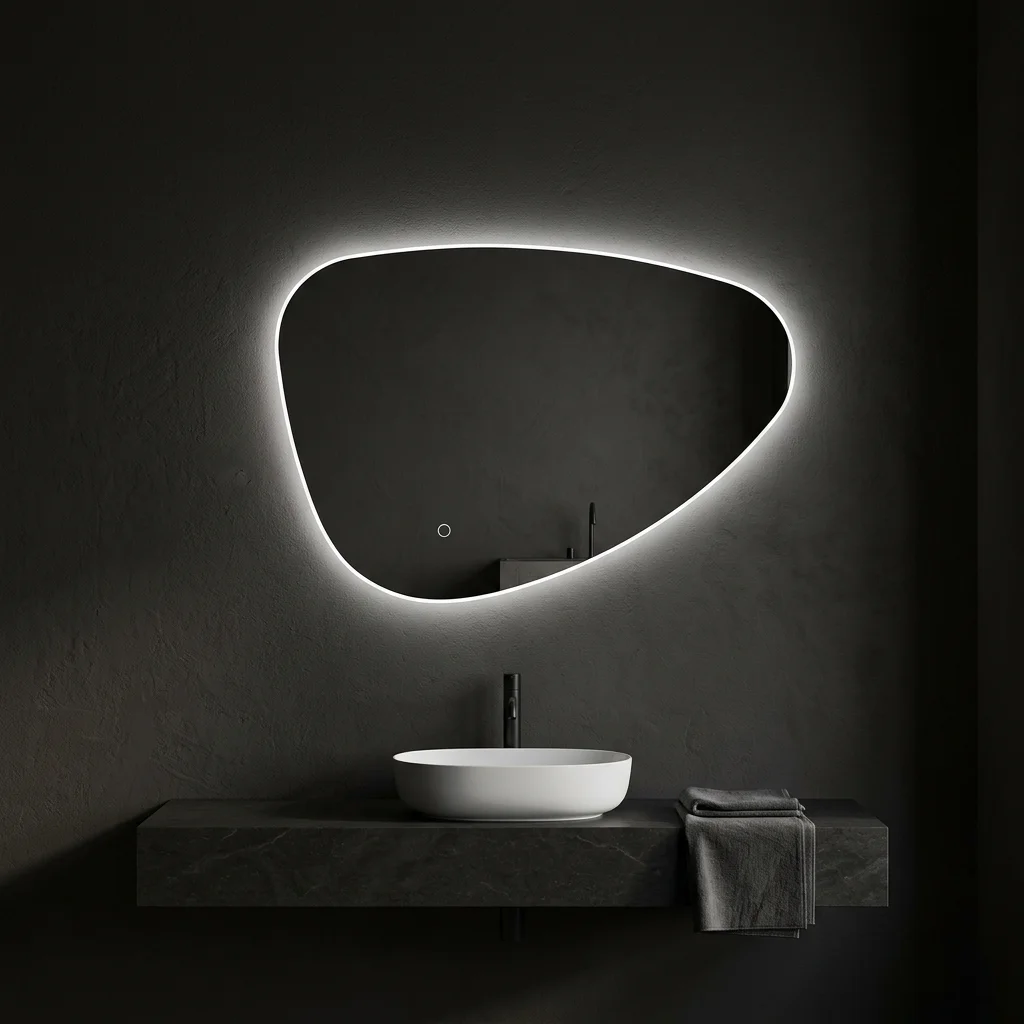
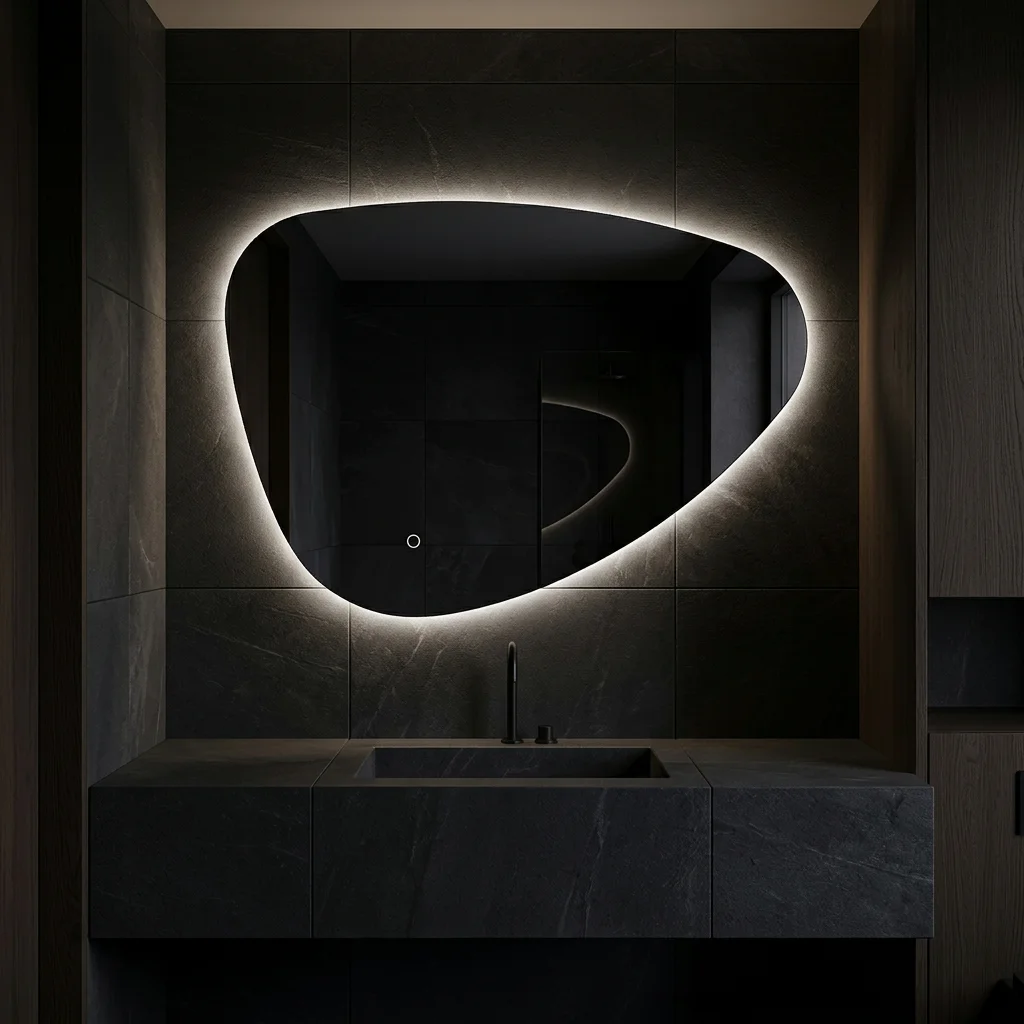
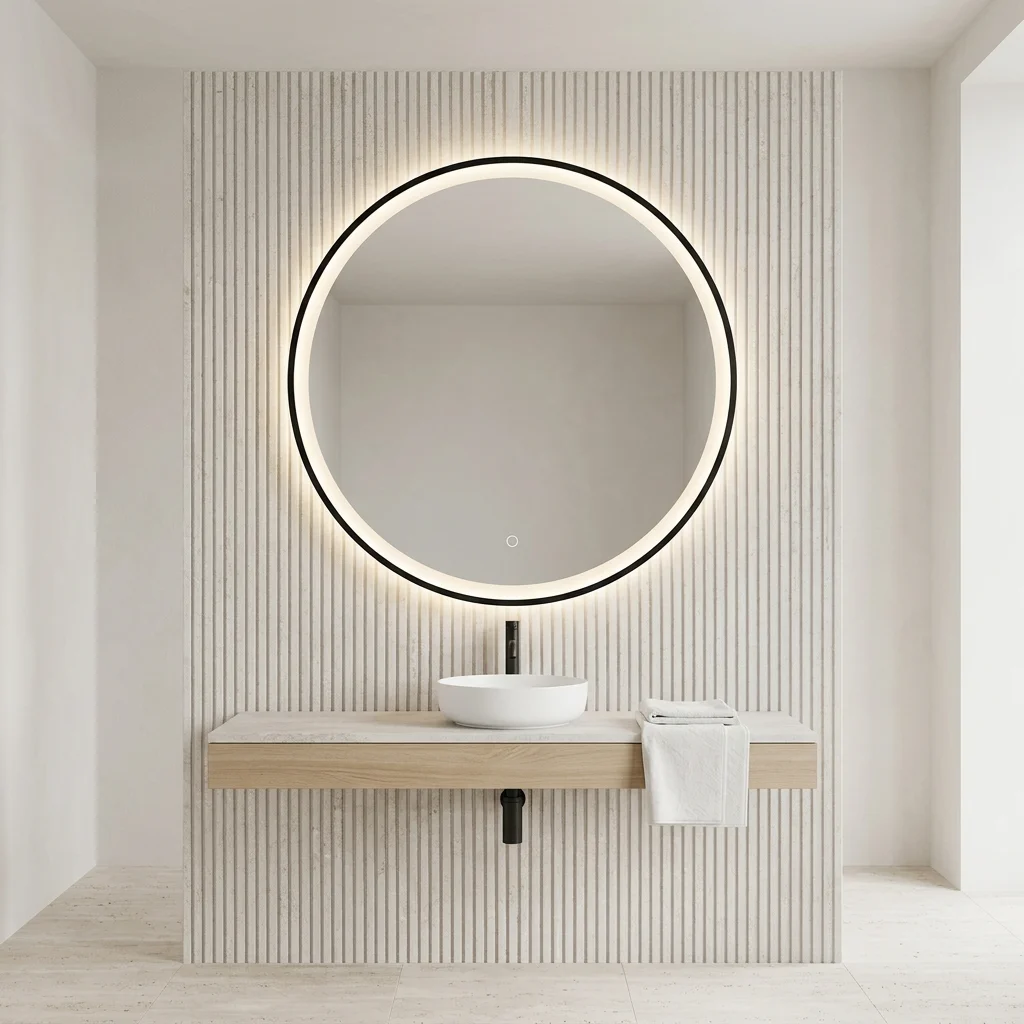
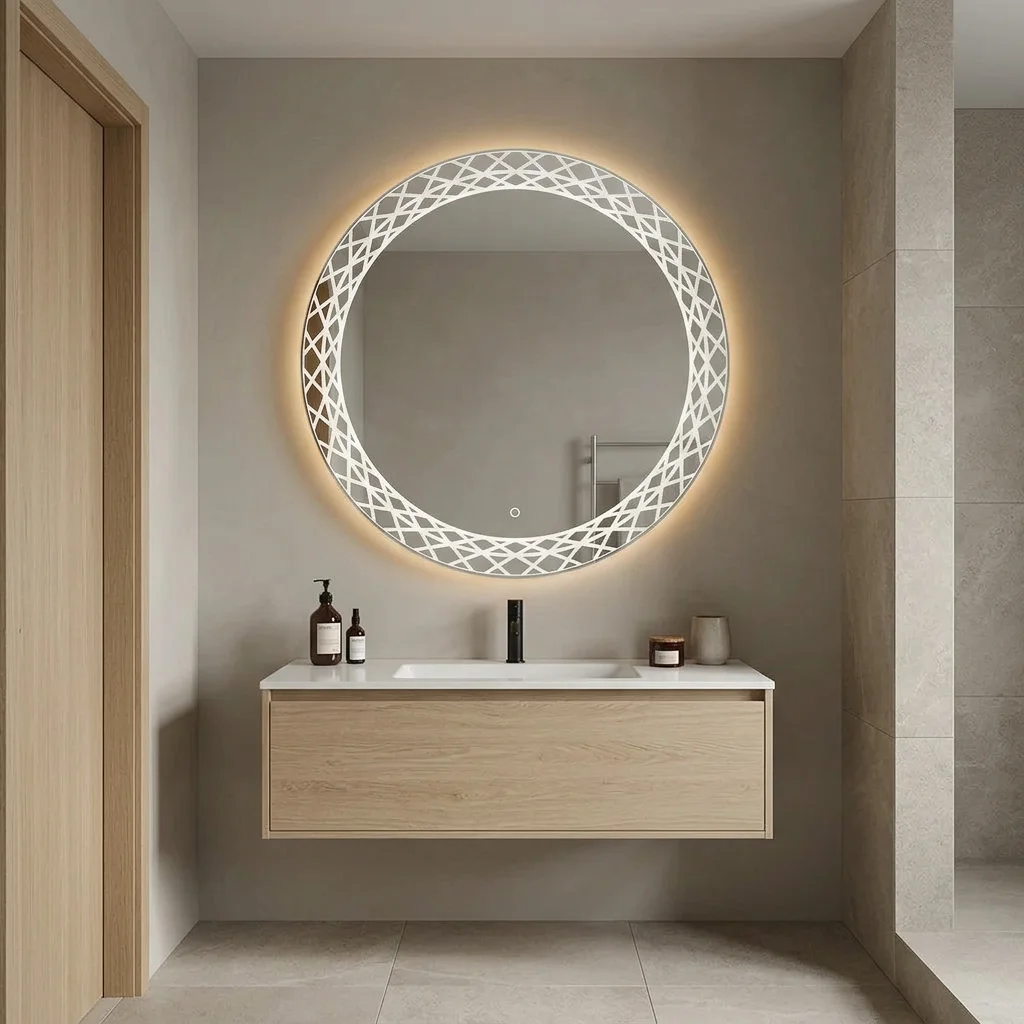
Measure the basin or vanity width and take 50–100mm off each side. A single basin of 500–600mm suits a mirror of 500–700mm; a double vanity of 1,000–1,200mm takes 800–1,200mm. The mirror should never be narrower than the basin — that is the proportion that makes a bathroom look unplanned. Hang it so the bottom edge sits around 200mm above the highest point of the tap.
What IP rating does a bathroom mirror need?
It depends where it goes. UK bathroom zones under BS 7671 put the area around a washbasin in Zone 2, which needs a minimum of IP44. Directly above a bath or inside a shower enclosure is Zone 1 and needs IP65. Most mirrors above a basin are therefore IP44 territory — but check the rating of whichever mirror you choose against where it is actually going, and have an electrician confirm the zone if the layout is unusual.
What does a demister pad do?
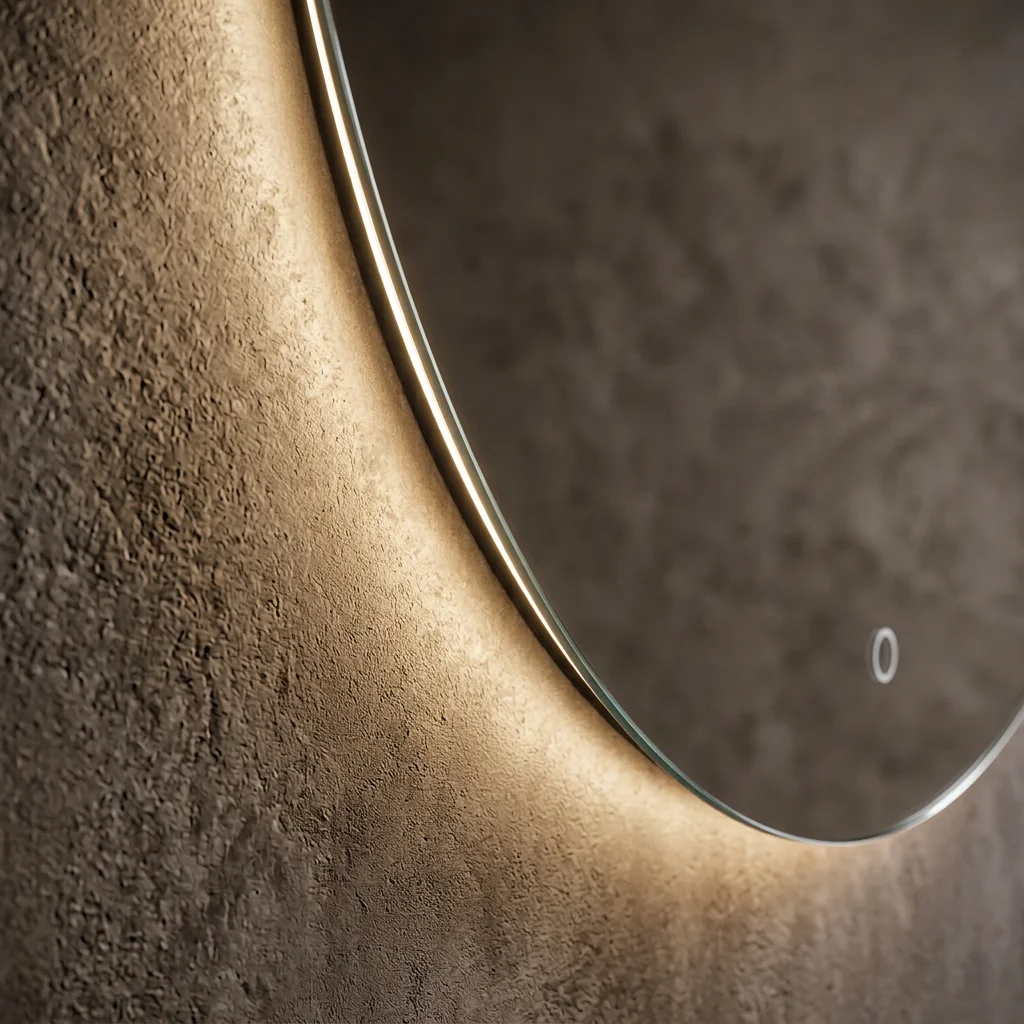
A demister is a heated pad bonded behind the glass. It warms the mirror surface slightly so condensation cannot form on it, which keeps the mirror clear through and after a shower. It draws very little power and typically comes on with the light. It is the difference between a mirror you can use straight after a bath and one you have to wipe.
Does an LED mirror need an electrician?
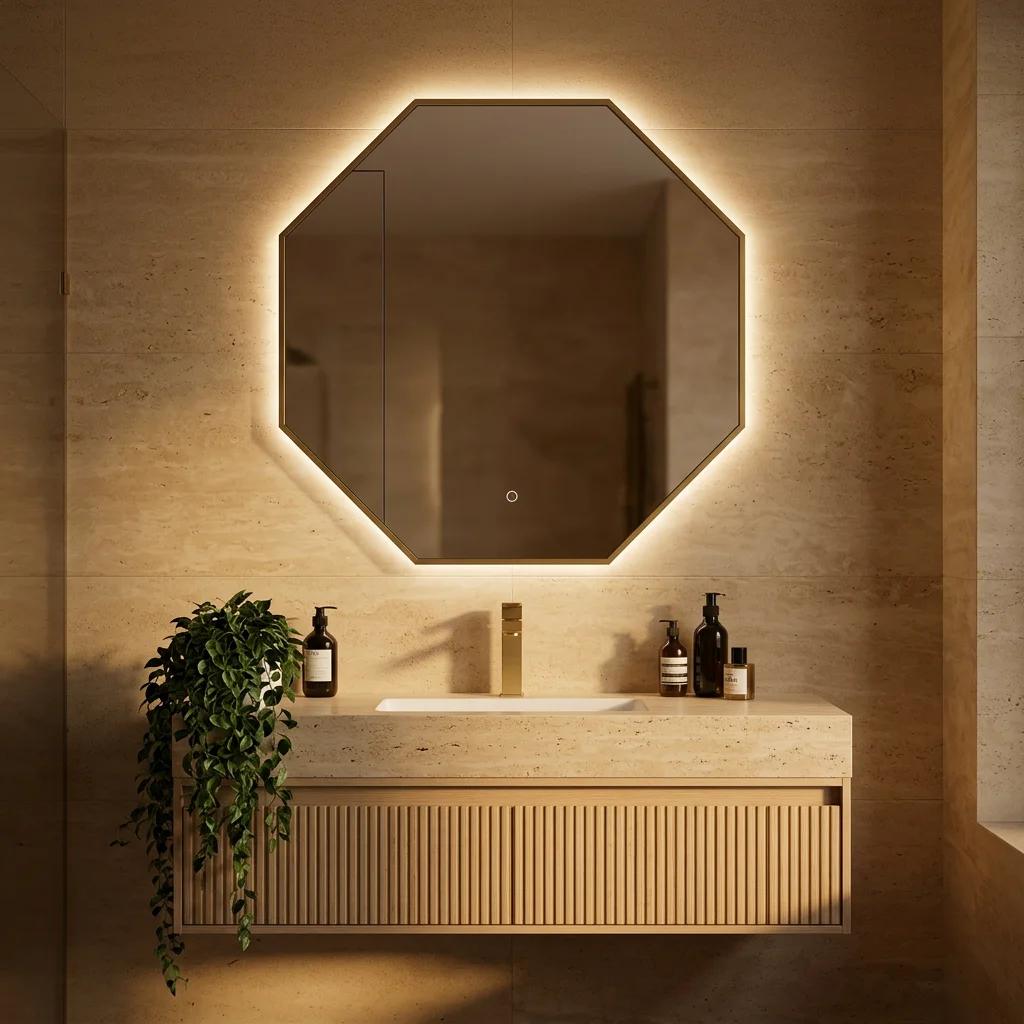
Yes. A mains-wired LED mirror needs a fused spur installed outside the bathroom's splash zones by a qualified electrician under UK Building Regulations. It is a small, contained job, but it is not a DIY one — and it is worth planning the spur position before tiling rather than after.
Further reading



.webp)