Rainfall vs Standard Shower Heads: What Matters | Elani
Rainfall shower heads need strong water pressure; standard heads suit the lower mains pressure common in older UK homes. How to choose.
August 24, 2026
4 minutes
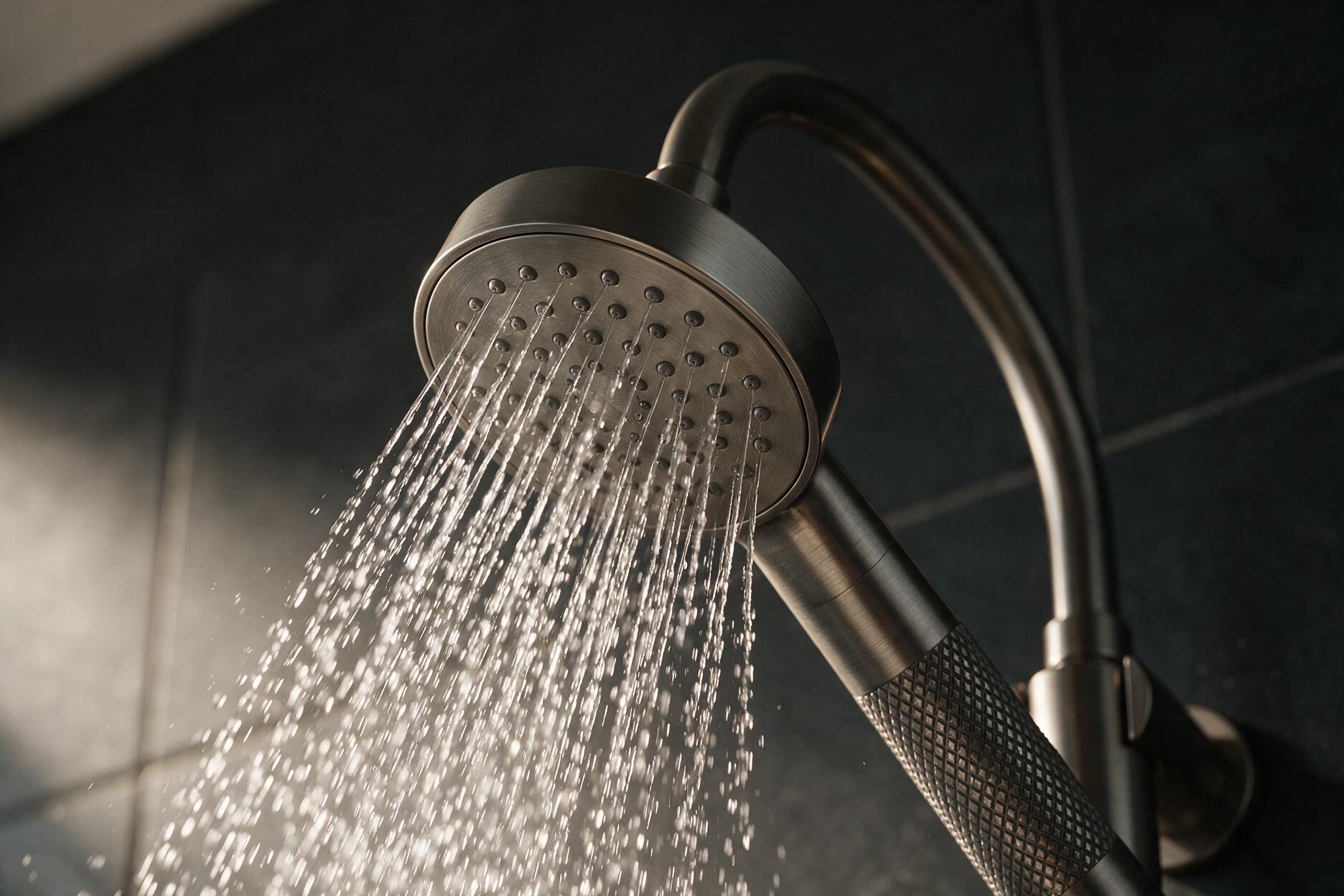
Rainfall shower heads need strong water pressure; standard heads suit the lower mains pressure common in older UK homes. How to choose.
August 24, 2026
Last updated 6 October 2026 · Elani Journal
Rainfall shower heads deliver a wide, gentle, full-body spray but need genuinely strong water pressure — ideally 40 to 60 PSI — to feel as good as they look. Standard shower heads produce a more focused, higher-pressure stream that performs noticeably better on the lower mains pressure common in older UK homes and gravity-fed systems. The right choice depends more on your home's plumbing than on which look you prefer.
A rainfall head spreads water across a wide surface area for a soft, immersive spray that mimics rain — which is exactly the effect that makes it feel like a spa fixture rather than a functional shower. A standard head concentrates the same water through a smaller number of jets, producing a stronger, more direct stream that rinses more efficiently. Neither is objectively better; they're built for a different feeling.
A typical UK power shower delivers around 12 to 15 litres a minute, while a standard head limits flow to roughly 6 to 10 — and a rainfall head needs that flow spread across a wide diameter to avoid feeling weak. UK homes, particularly older ones on gravity-fed systems, often run at lower mains pressure than the American or continental plumbing rainfall heads are frequently designed around, which is why a rainfall head that looks stunning in a showroom can feel disappointing once it's fitted. Checking your home's actual water pressure before choosing is worth more than any amount of comparing finishes.
Added October 2026.
Until now, comparing the water use of two shower heads has meant hunting through a spec sheet for a litres-per-minute figure, assuming the manufacturer published one at all. That is changing.
The UK is introducing a mandatory water efficiency label — an A–F colour-coded rating, in the same mould as the energy label on an appliance — and non-electric showers are in scope, along with toilets, basin and kitchen taps, and urinals. Defra settled the final shape of the scheme on 2 October 2026, removing washing machines, dishwashers, washer-dryers and electric showers from it. Mixer and thermostatic showers, which is what most UK bathrooms have, stayed in. Retailers will be required to display the label wherever a product is sold, online included.
This matters more for a shower than for anything else in the bathroom, because the shower is the largest discretionary water draw in most homes and because the spread between heads is genuinely wide — a power shower at 12 to 15 litres a minute against a restricted head at 6 is a difference you will see on a meter.
Bills sharpen the point. In April 2026 household water bills in England and Wales rose by an average of 5.4%, around £33 a year, to roughly £639. Several regions went considerably further, with Bristol at about 12% and Affinity's central region at 13% among the steepest.
None of this changes the advice above — pressure still decides whether a rainfall head will feel right in your bathroom. But where two heads both suit your system, the label gives you a second, genuinely comparable reason to pick one.
If your home has strong mains pressure or a pumped system, a rainfall head delivers the full, immersive effect it's designed for and suits a spa-style or wet room bathroom particularly well. If pressure is on the lower side, a standard head — or a rainfall head paired with a pressure-boosting system — will perform more reliably day to day than a rainfall head fighting weak flow. For how to think about the rest of the system around the head itself, see How To Choose A Concealed Shower System.
Yes — many concealed systems, including the Elani Forge, support a fixed head alongside a separate handset, which means you can pair a rainfall-style overhead with a standard handset for rinsing and everyday flexibility, rather than choosing one at the expense of the other.
A plumber can test it directly, or you can get a rough sense from how quickly a bath fills or how strong an existing shower feels. If you're on a combi boiler or have a pump already installed, pressure is usually adequate for a rainfall head.
Not necessarily — flow rate depends on the specific head and any flow restrictor fitted, rather than the spray pattern itself. This is becoming far easier to check: non-electric showers fall under the UK's new mandatory water efficiency label, an A–F rating that retailers must display wherever the product is sold.
If it is a mixer or thermostatic shower, yes — non-electric showers are in scope. Electric showers were removed from the scheme when Defra settled its final shape on 2 October 2026, along with washing machines, dishwashers and washer-dryers.
In most cases, yes, provided the arm or outlet position and pipe diameter are compatible — check the valve's specification or ask a plumber before ordering.
Larger heads (200mm+) give the most immersive coverage but need correspondingly strong pressure; a mid-size head (around 150–200mm) is the safer choice for most UK homes.
Forge — Gun Metal Concealed Shower System. Shop now →