What A Resin Bath Actually Is
"Resin bath" covers two different materials, and the difference matters more than the shared name suggests.
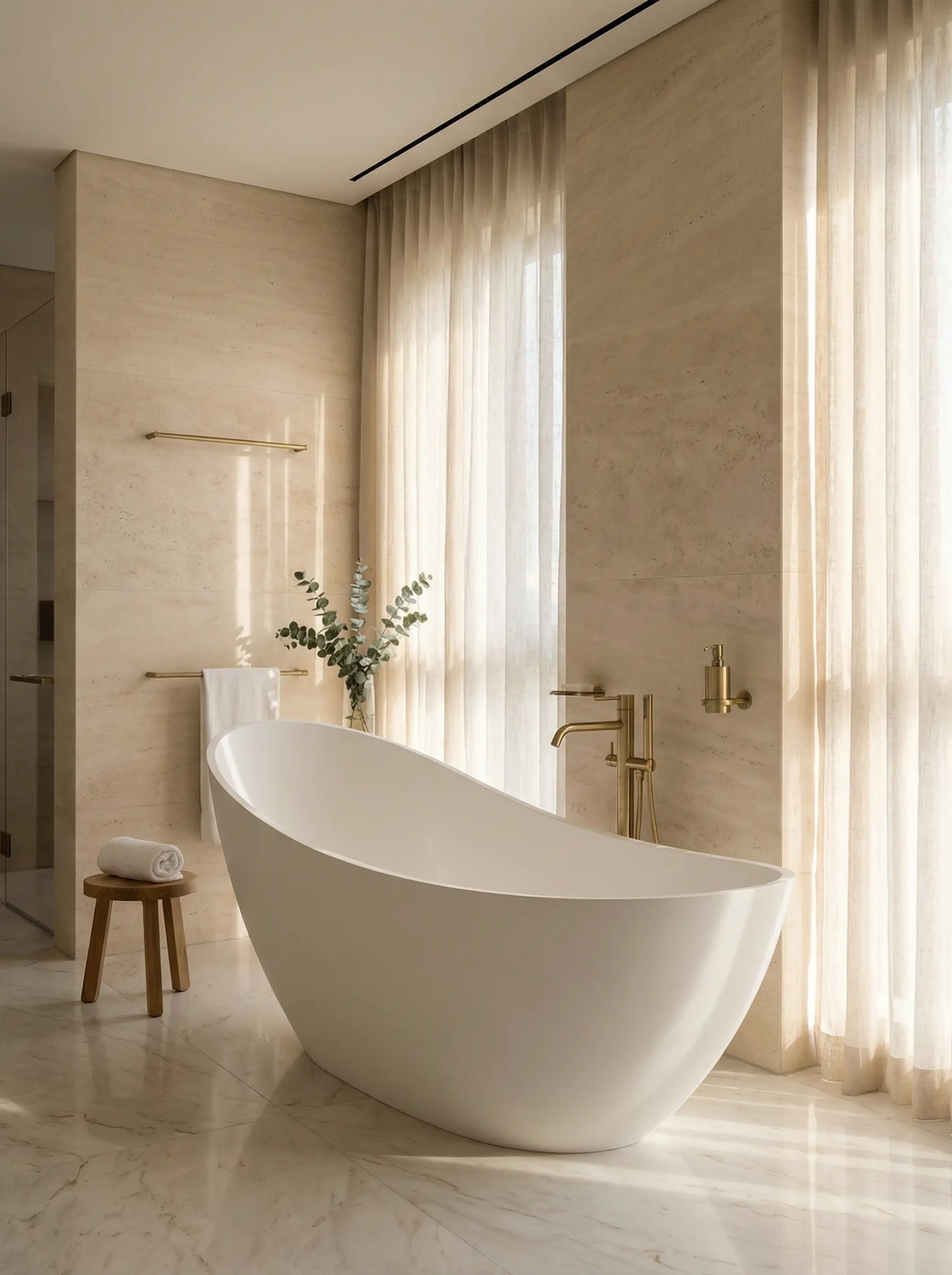
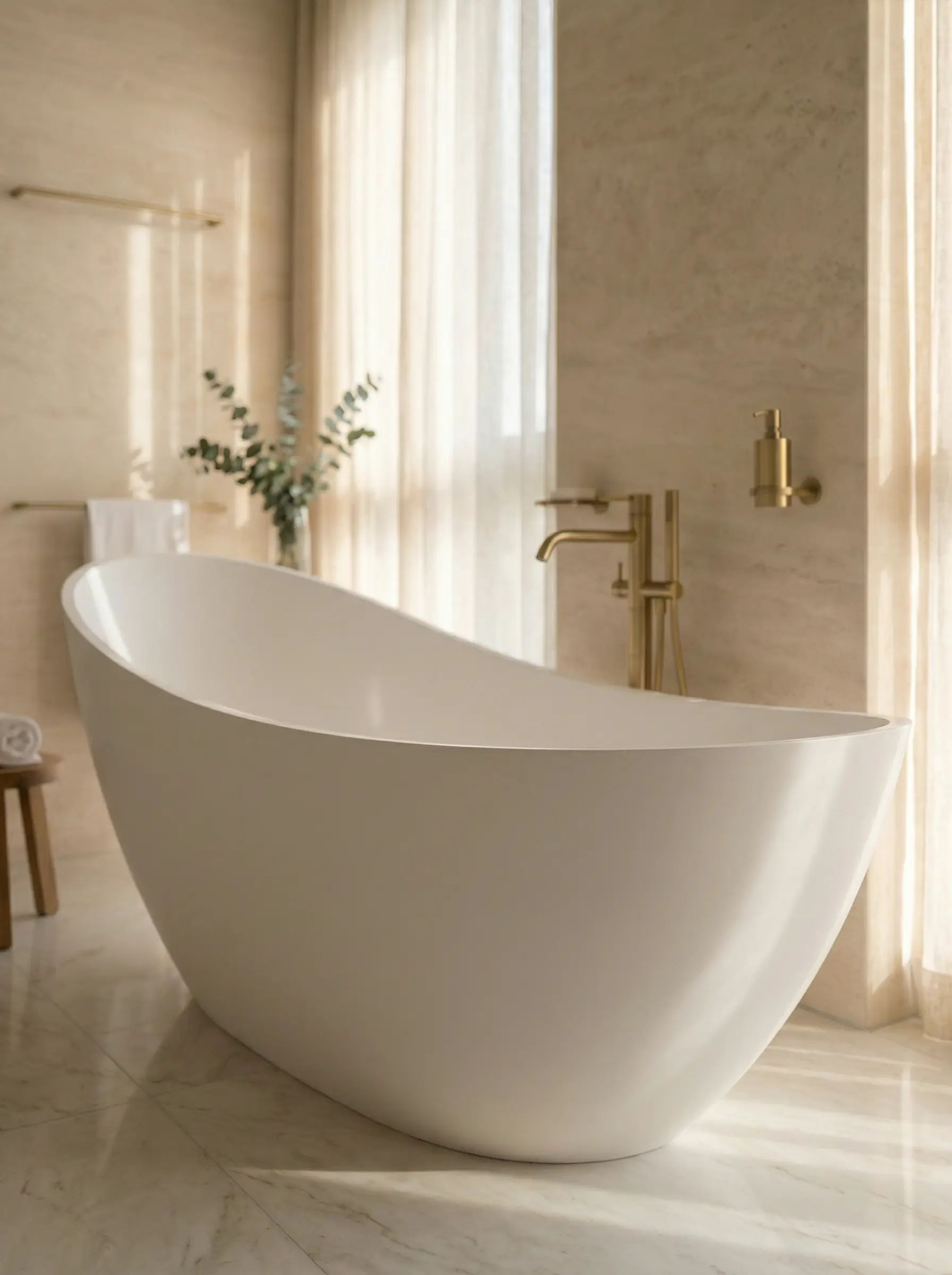
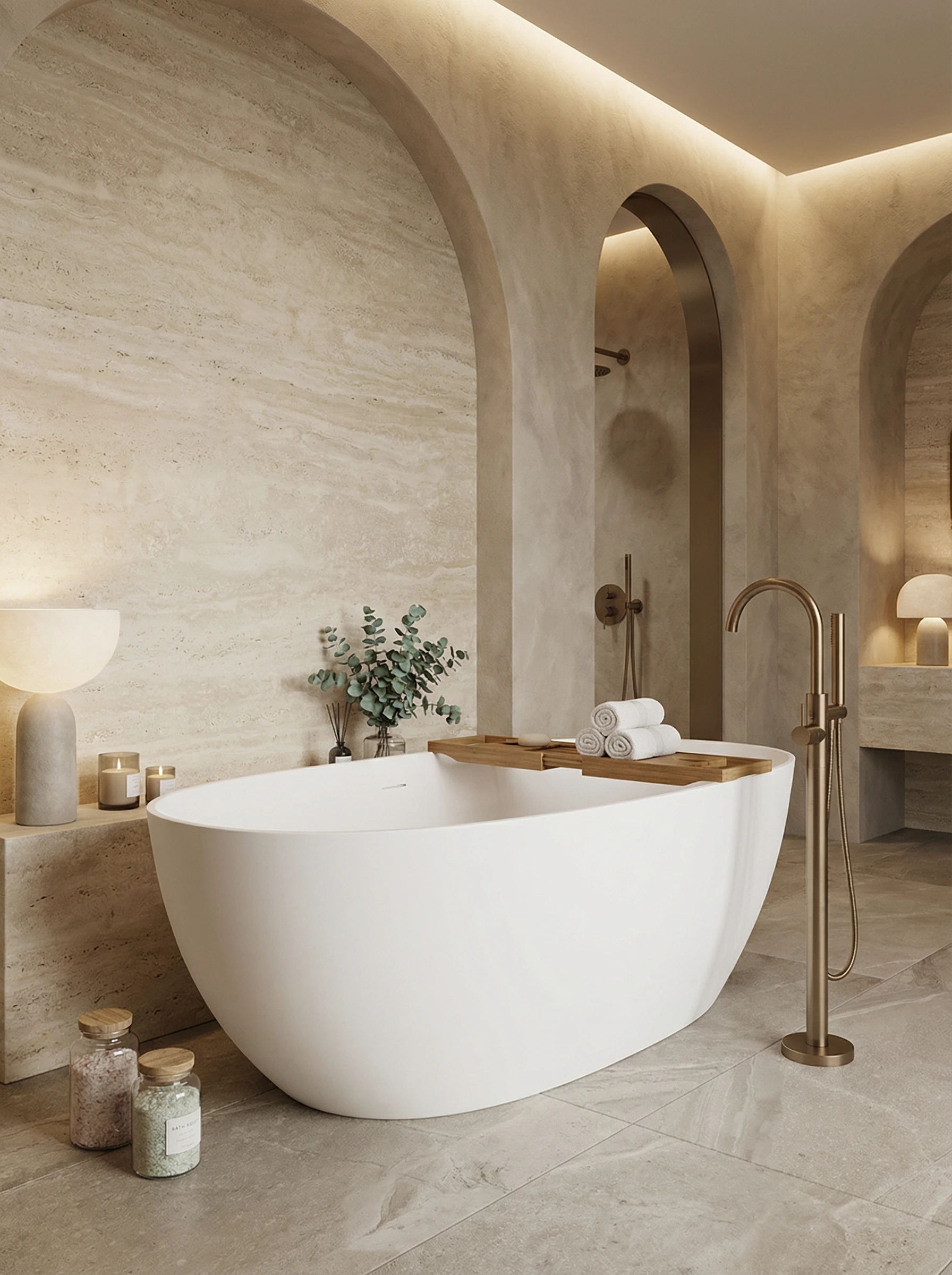
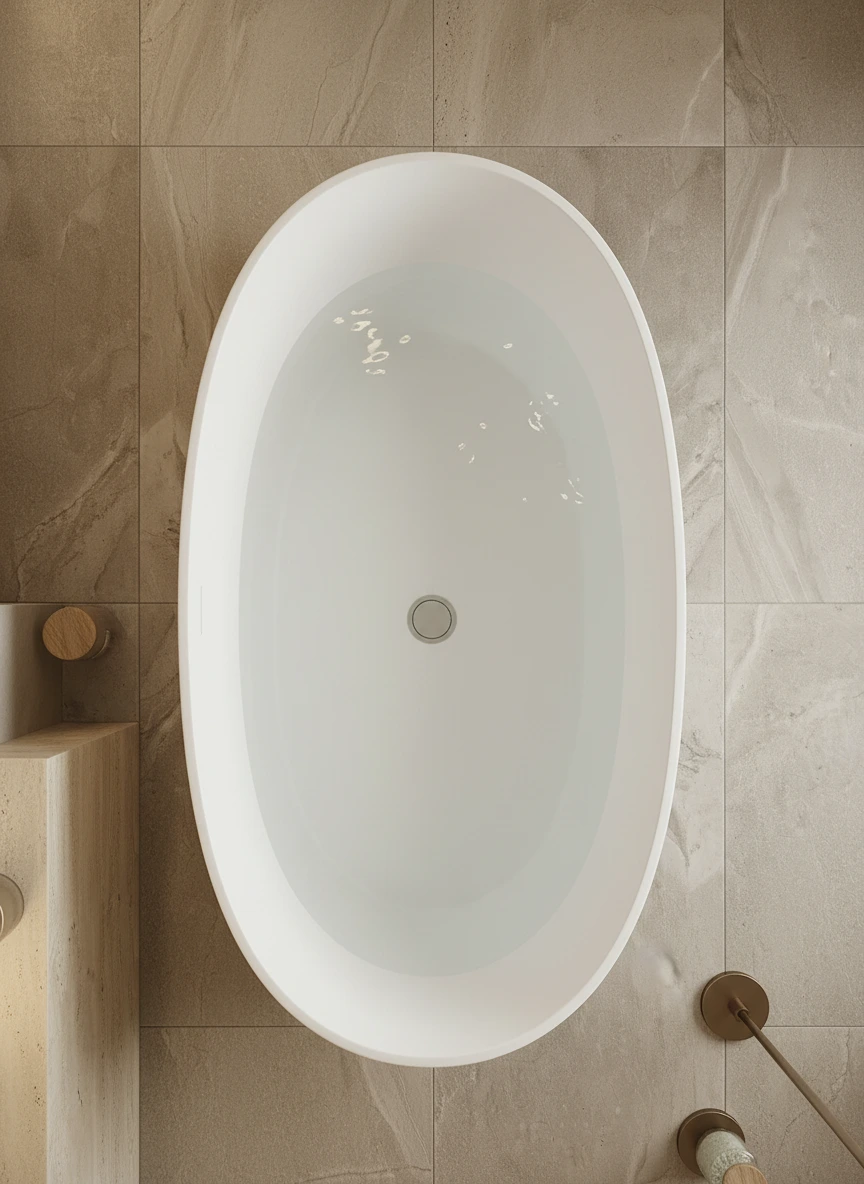
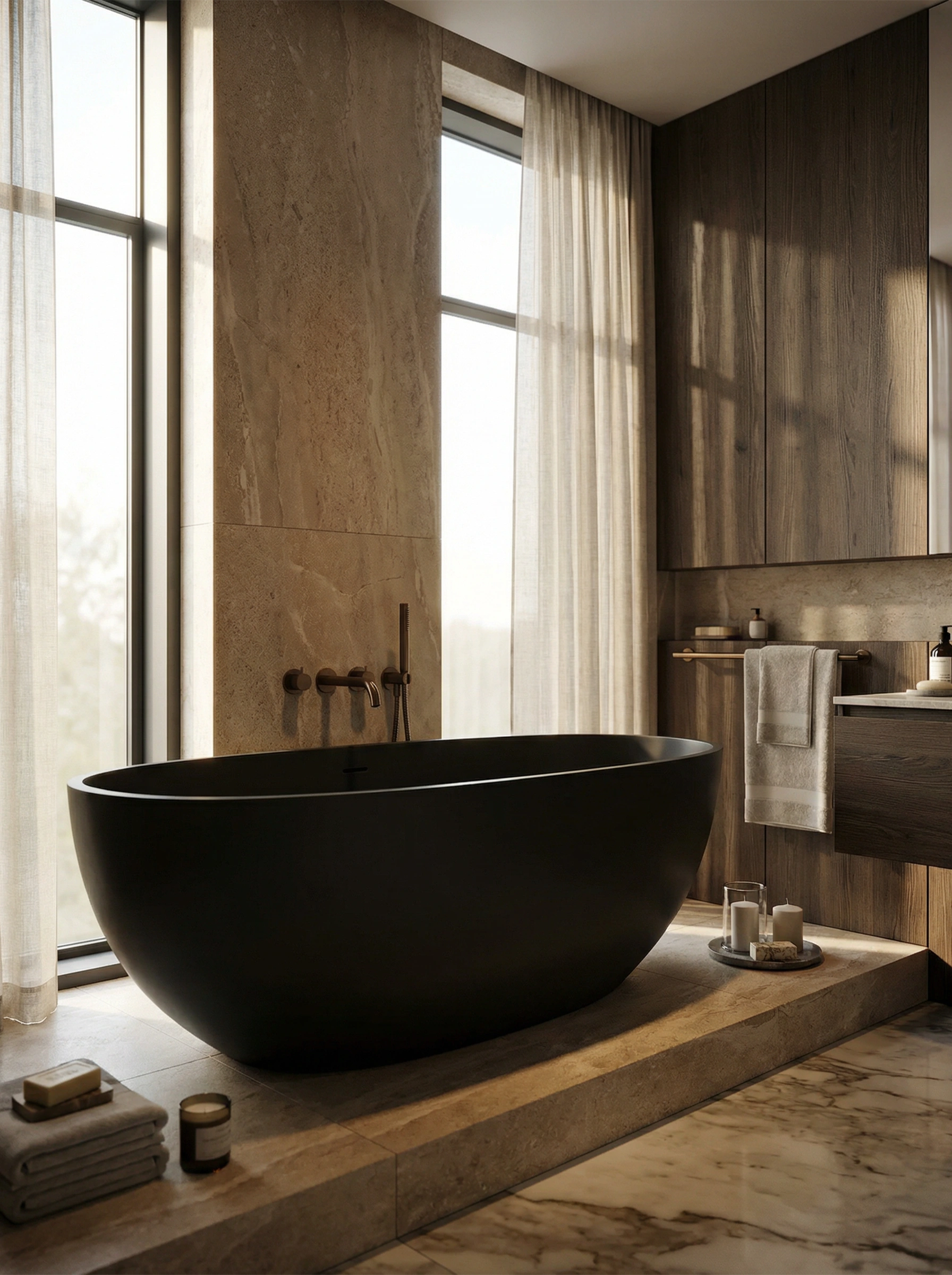
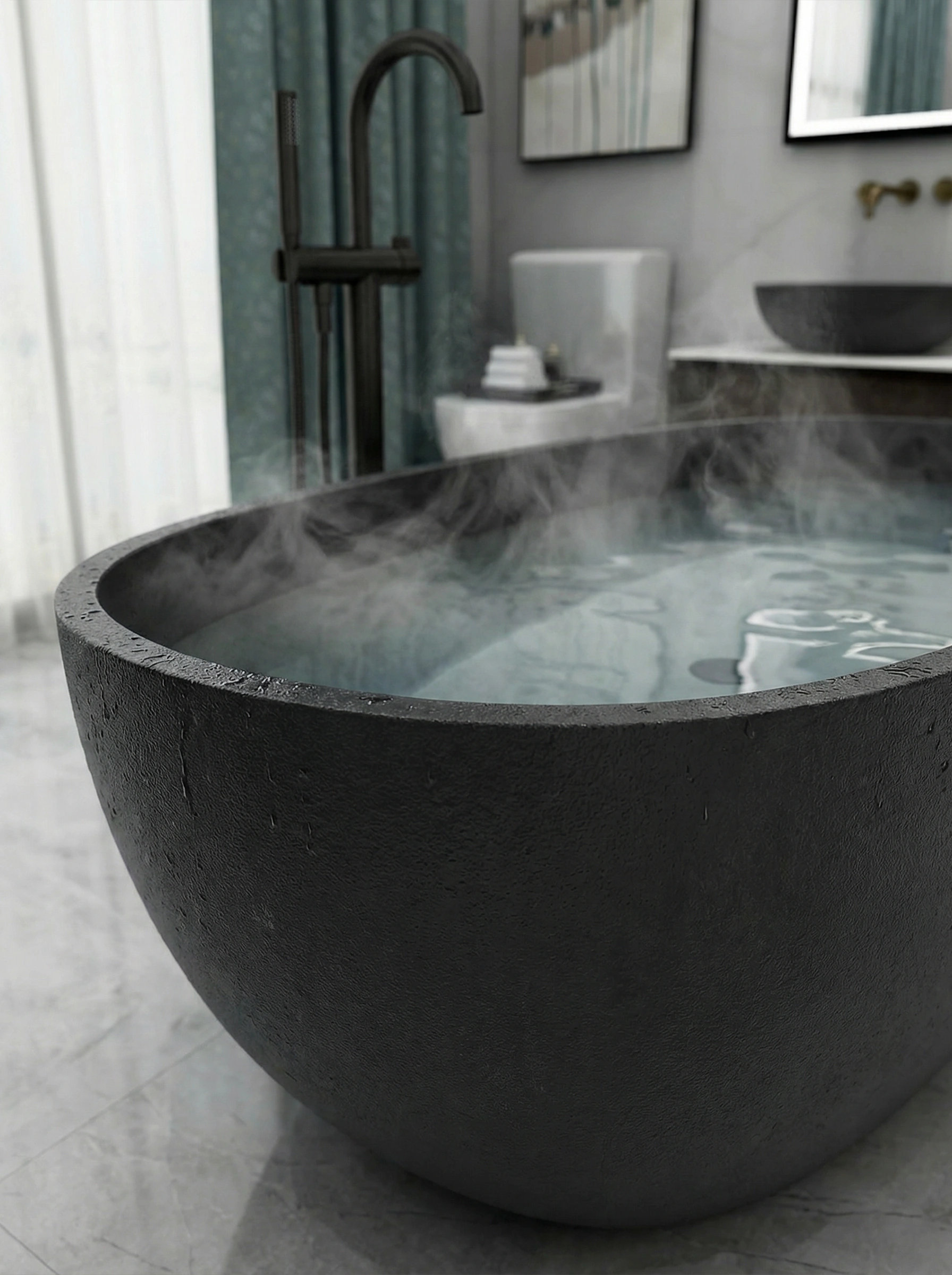
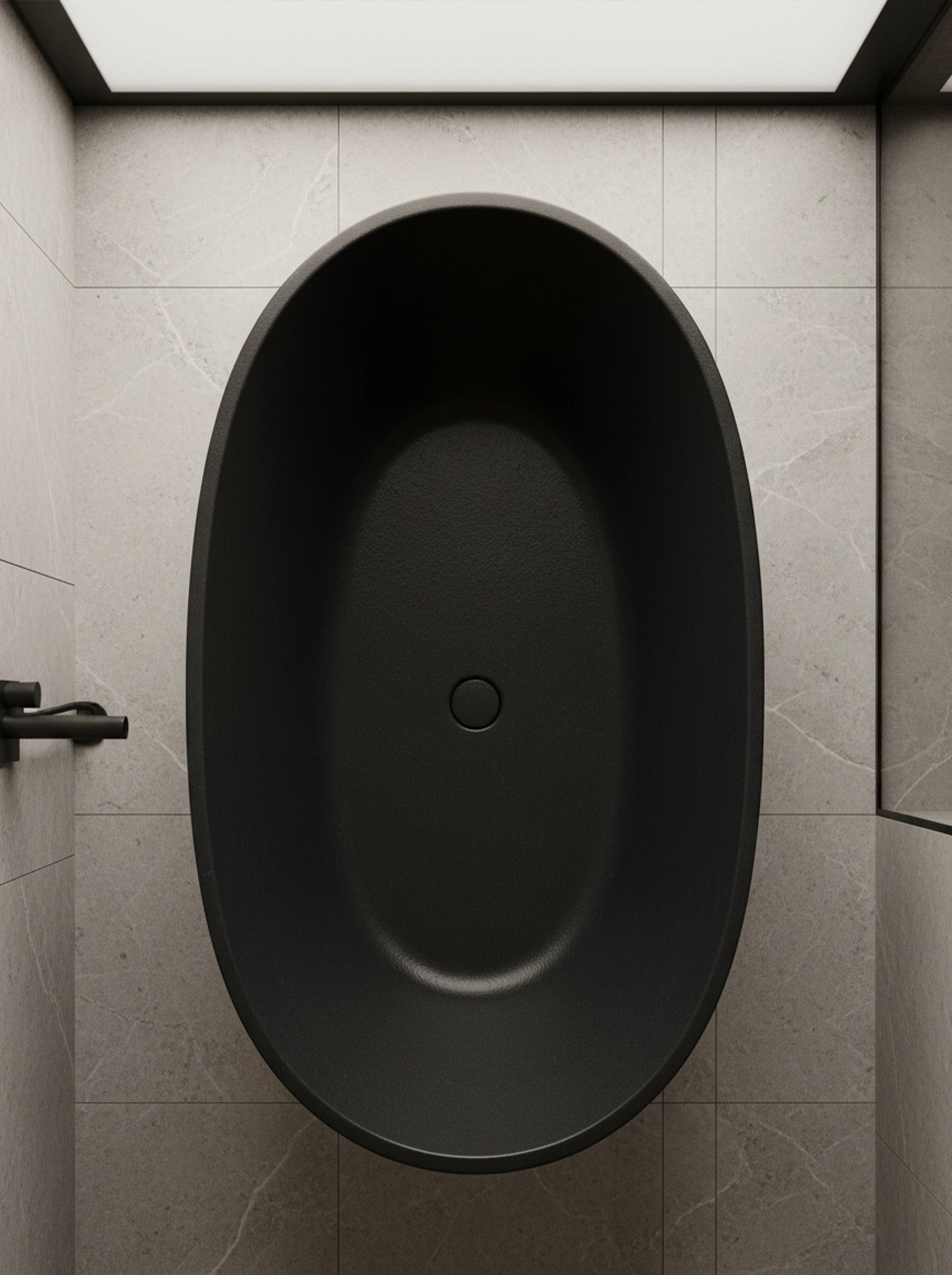
Solid surface resin is a mineral filler — usually crushed stone — bound in a resin matrix and cast into a mould. It is solid all the way through, matt rather than glossy, and warm to the touch in a way acrylic is not. The Onyx, Linear, Lumen and Solis are made this way.
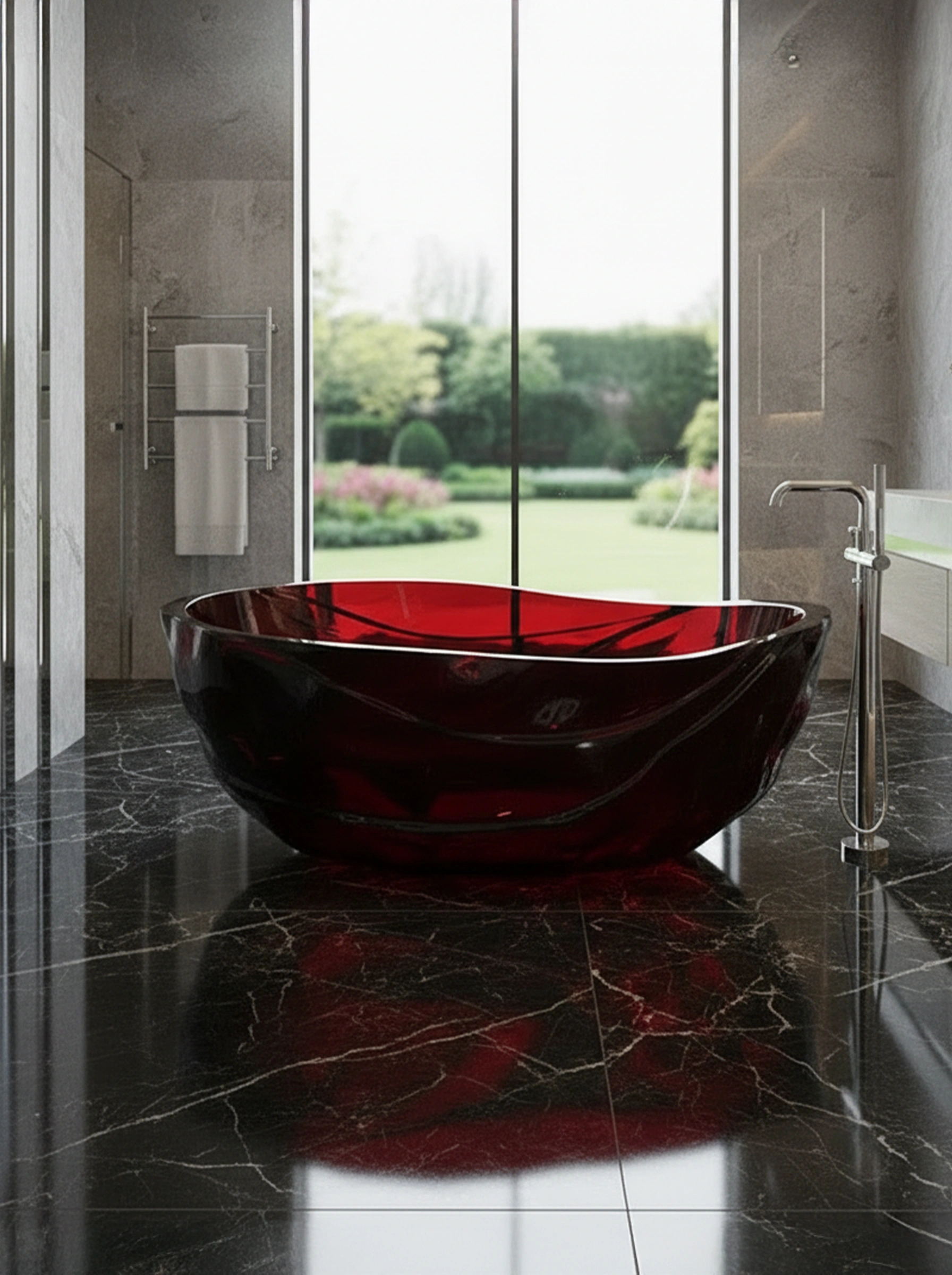
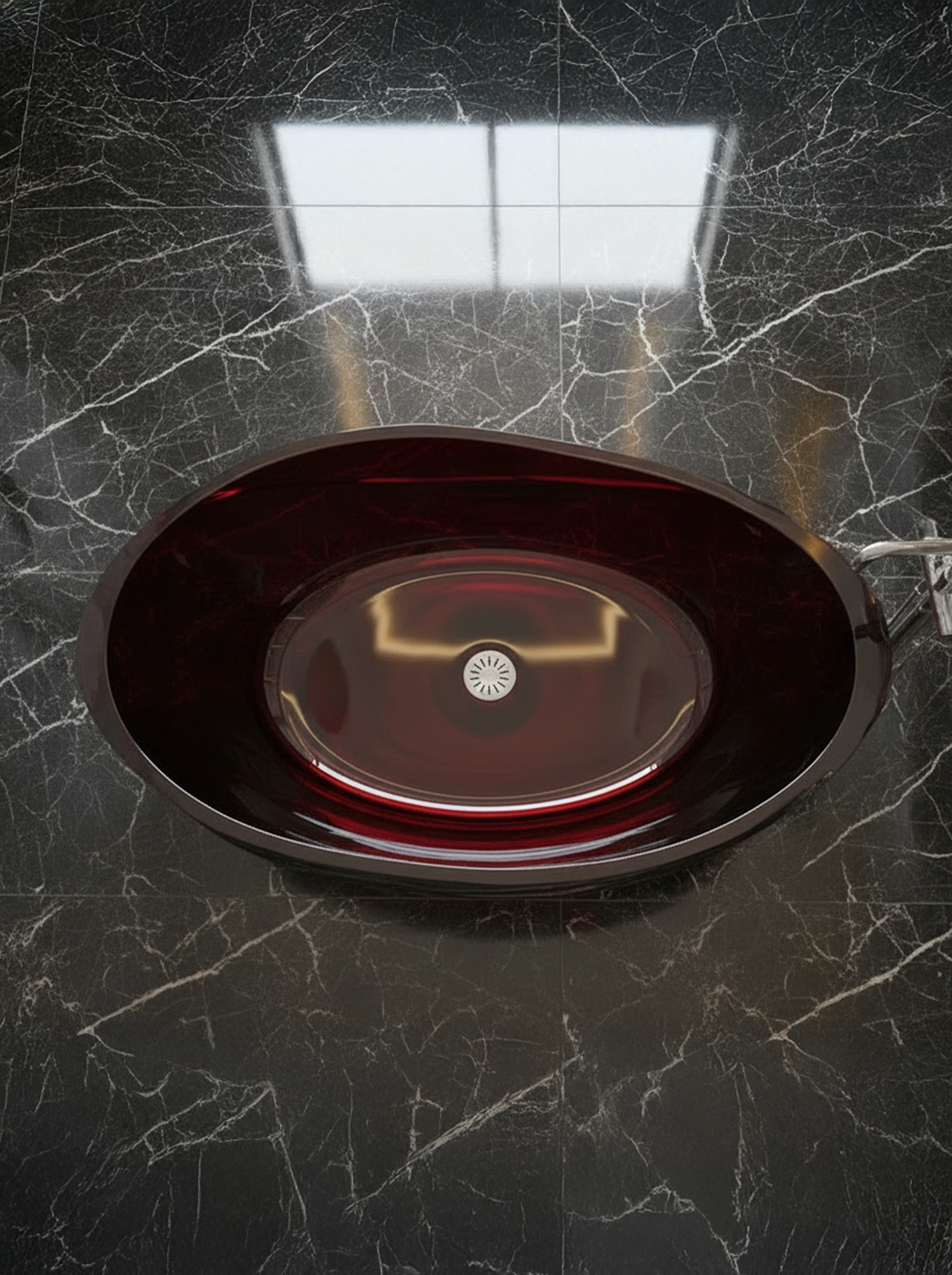
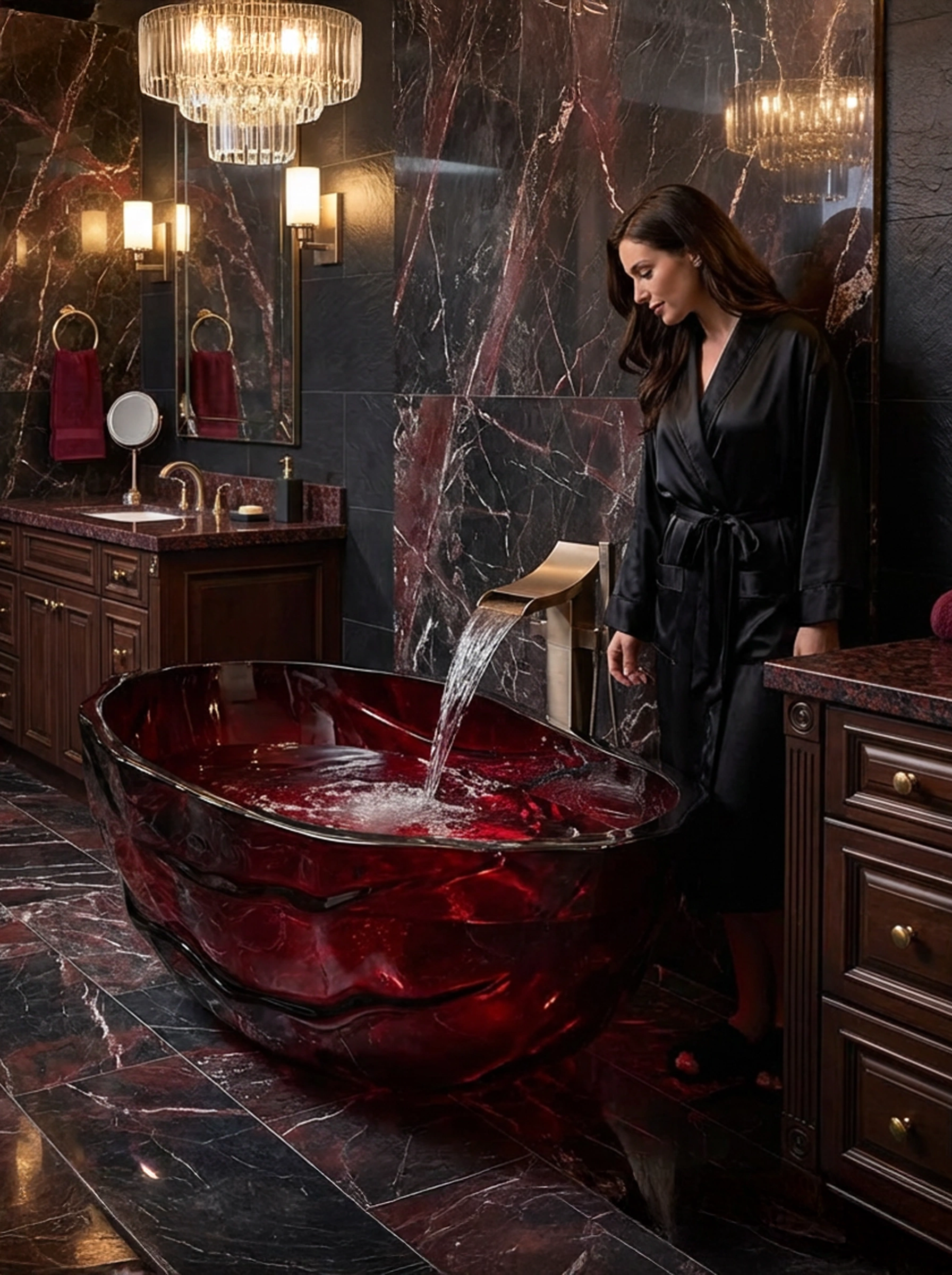
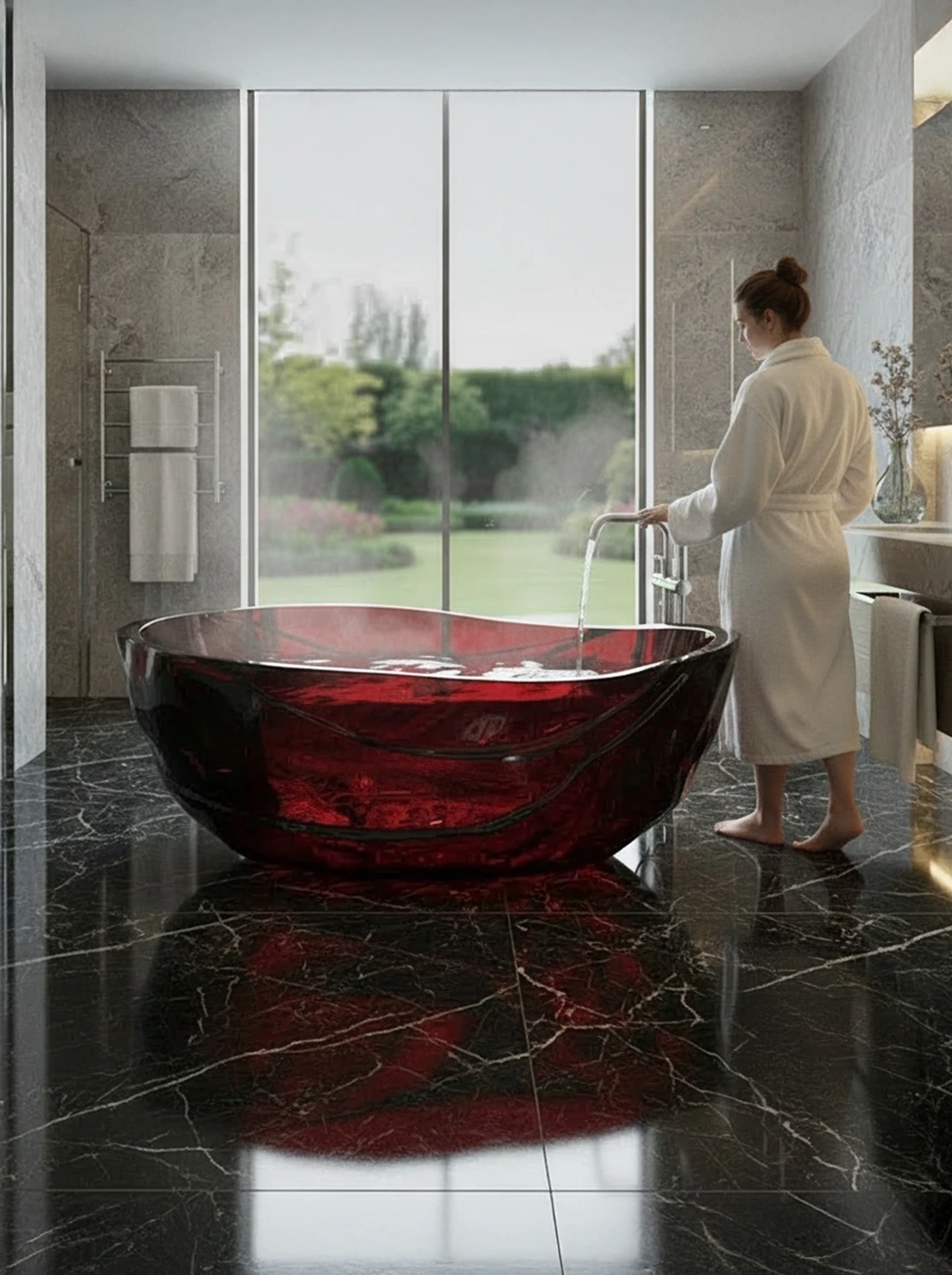
Translucent resin is a cast resin without the mineral filler, which is what lets light pass through it. It is the reason the Aquaire reads as blue glass and the Inferna as deep red rather than painted. The colour runs through the material rather than sitting on it.
Neither is the same as a stone or cast-iron bath, and neither is acrylic. If a bath is described only as "stone resin" with no further detail, it is worth asking which of the two you are buying.
Resin vs Acrylic vs Steel
Acrylic is the lightest and cheapest, and it is what most high street freestanding baths are made of. It warms quickly, scratches fairly easily, and the thin shell means it can flex slightly underfoot.
Steel and cast iron hold heat well but feel cold on first contact and are considerably heavier again.
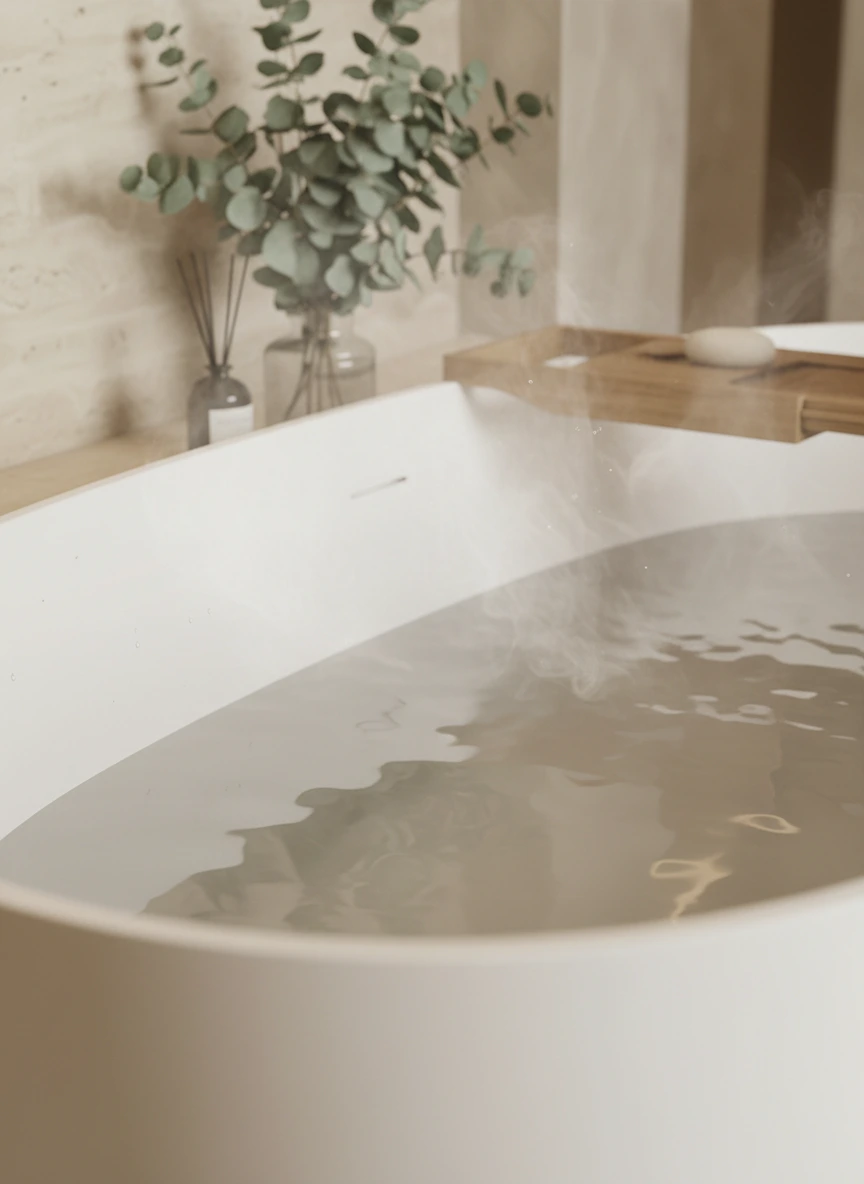
Resin sits between them. A solid surface resin bath holds heat better than acrylic because the wall is thick and the material is dense, and it feels warm immediately rather than after a minute. The trade-offs are weight and price — covered below.
The Weight Question
This is the one practical thing to settle before ordering. A solid surface resin bath weighs considerably more empty than an acrylic equivalent — the Onyx is 176kg before any water goes in — and a full 1700mm bath with an occupant can approach half a tonne.
On a ground floor concrete slab, this is a non-issue. On a suspended timber upper floor it is worth a conversation with whoever is fitting it, and occasionally with a structural engineer. The usual outcome is that nothing needs doing; the point is to ask before delivery rather than after.
The weight also affects how it gets into the room. Two people minimum, and a tight staircase or a turn on a landing is worth measuring properly.
Living With Resin
Resin is non-porous, so it does not stain the way a porous stone would, and the colour goes right through the material rather than being a surface coat. The practical consequence is that a light scuff can often be polished out, which is not true of acrylic.
What it does not tolerate is abrasive cleaners and scouring pads. Warm soapy water and a soft cloth is the whole routine — the detail is in How To Maintain A Resin Bath.
Which Tap Goes With A Resin Bath
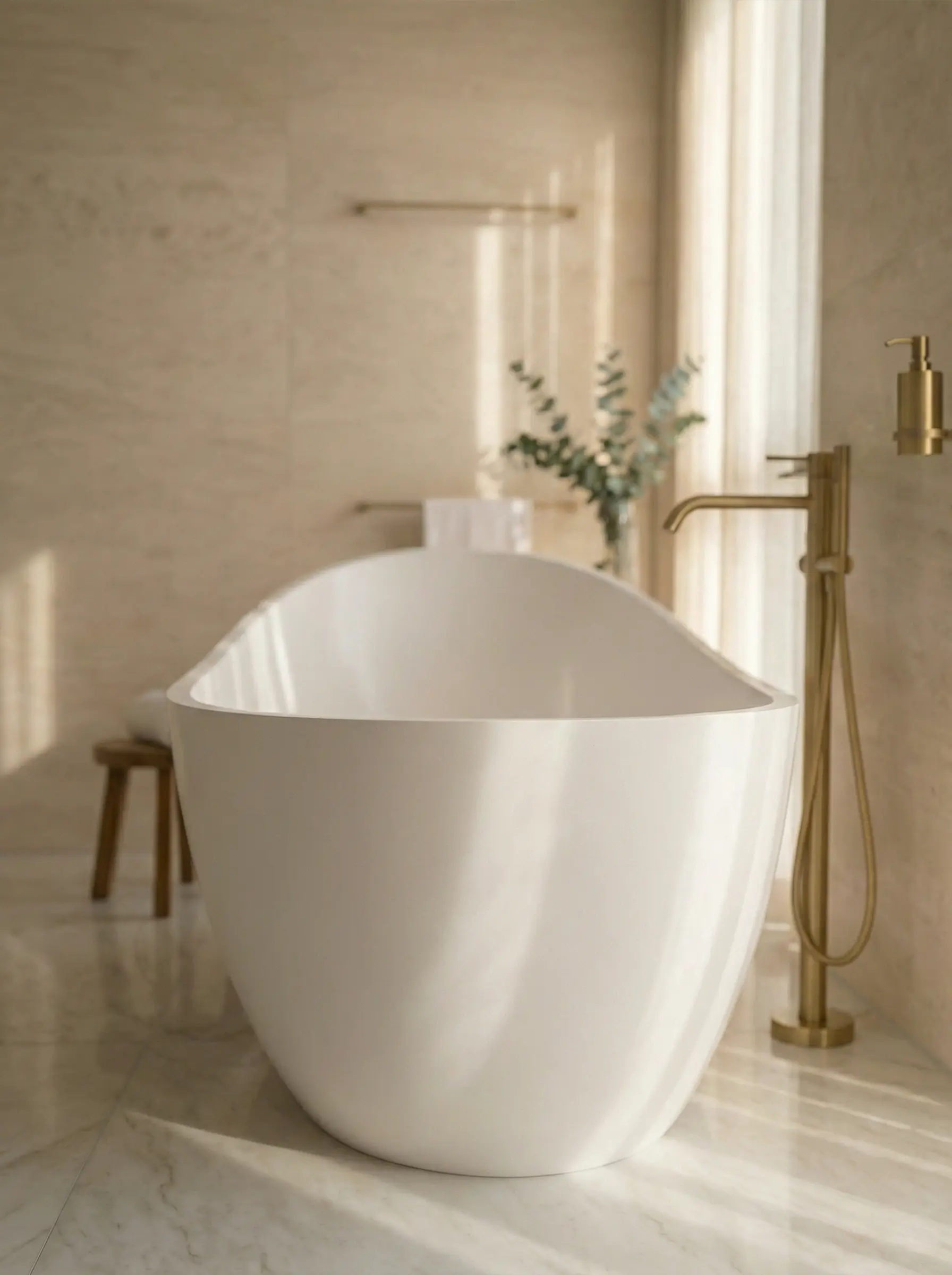
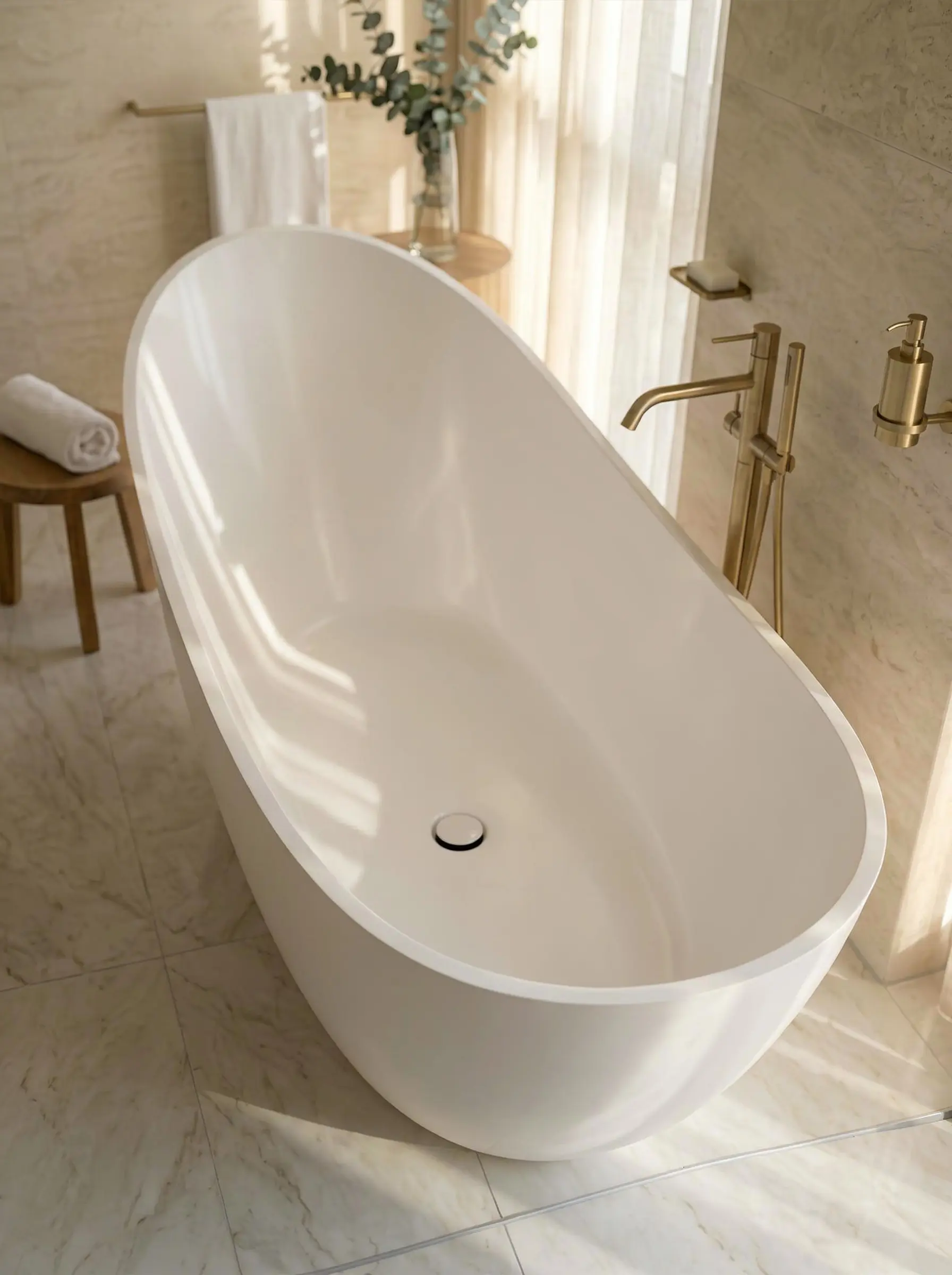
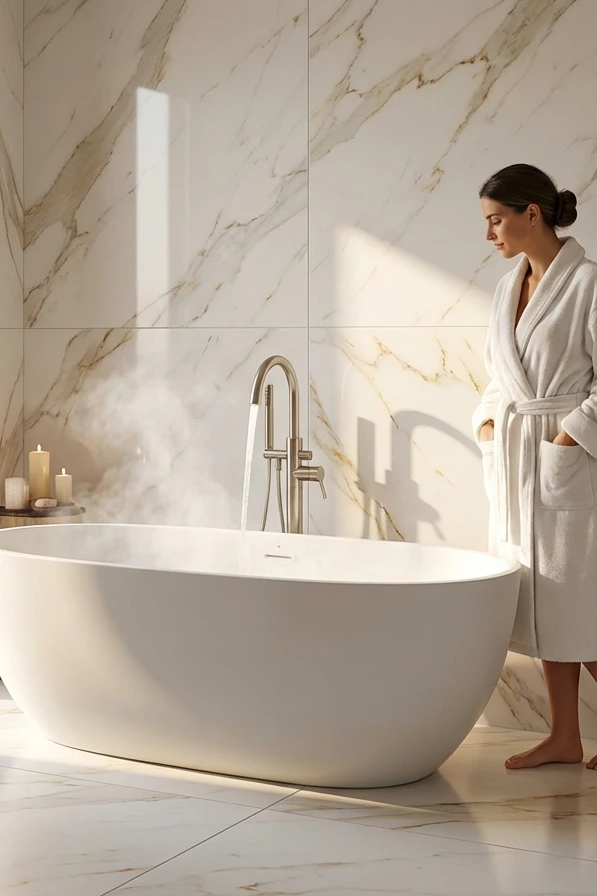
None of these baths are drilled for a tap, which means a floorstanding or wall-mounted filler rather than a deck-mounted one. That is a plumbing decision to make before the floor goes down, not after.
Elani's floorstanding bath fillers cover brushed gold and matt black. For how finish choice interacts with a coloured bath, see Black And Brass Bathroom Ideas.
Frequently asked questions
Are resin baths better than acrylic?
For heat retention and feel, yes — a solid surface resin bath holds temperature longer and feels warm on contact, because the wall is thicker and the material denser. Acrylic wins on weight and price. The honest answer is that resin is a better bath and a more demanding installation.
How much does a resin bath weigh?
Typically between 120kg and 180kg empty, depending on size. Filled, with someone in it, a 1700mm bath can approach 500kg. On a ground floor that is irrelevant; on a suspended timber floor it is worth checking with your installer before ordering.
Do resin baths stain?
Not readily — the material is non-porous and the colour runs through it rather than sitting on the surface. Hair dye and strongly pigmented bath products should still be rinsed off rather than left to sit, as with any bath.
Can a scratch in a resin bath be repaired?
Usually yes. Because the colour is solid through the material, light scratches in solid surface resin can often be polished out — something that is not possible with a coated or acrylic surface. Deep damage is a different matter and worth asking about before attempting anything yourself.
What is the difference between stone resin and translucent resin?
Stone resin (solid surface) contains crushed mineral filler, which makes it opaque, dense and warm to the touch. Translucent resin omits the filler so light passes through it, which is what produces the glass-like colour depth in baths like the Aquaire and Inferna.
Can you fit a resin bath upstairs?
In the great majority of UK homes, yes. The weight is within what a normal suspended timber floor carries, but the span, joist size and position matter, so it is a question for your installer rather than an assumption. Ask before the bath is delivered.
Do resin baths come with a waste?
Yes — every Elani bath includes a matching waste fitting as standard. The tap is separate, and because these baths are not tap-drilled it needs to be a floorstanding or wall-mounted filler.


.webp)
.webp)
.webp)
.webp)