Is Autumn The Best Time To Renovate Your Bathroom? | Elani
Contractor availability improves after the summer rush, and indoor work beats winter weather. The case for renovating your bathroom in autumn.
August 23, 2026
4 minutes
Contractor availability improves after the summer rush, and indoor work beats winter weather. The case for renovating your bathroom in autumn.
August 23, 2026
There's a reason this question spikes every September. Summer holidays are over, the house is back to normal, and suddenly the bathroom you've been putting up with all year feels like the thing to finally sort — before Christmas guests, before the weather turns, before another year slips by.
It turns out the instinct is right, for reasons that have nothing to do with impatience.
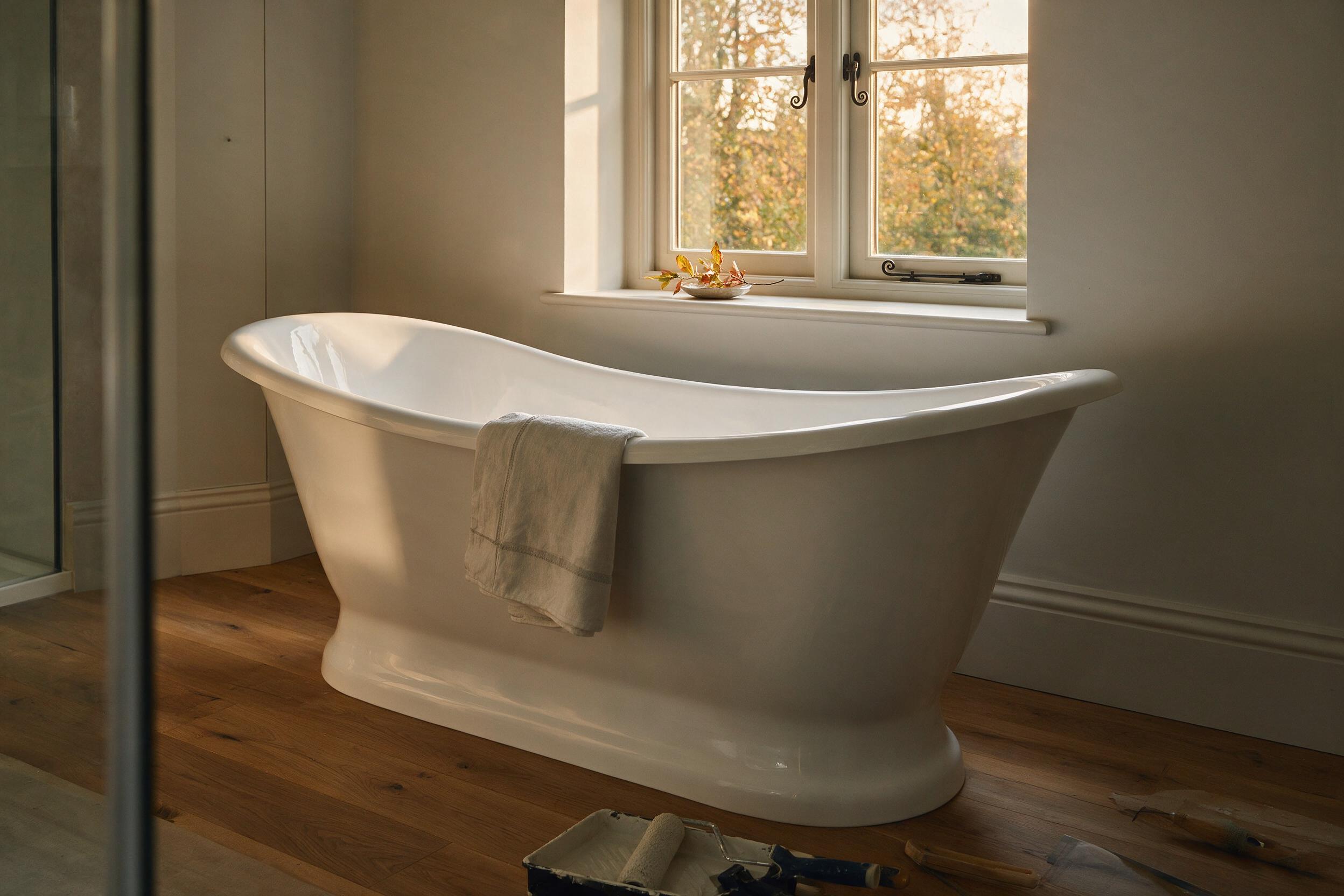
A quiet payoff to a September renovation — browse freestanding baths.
Last updated 24 August 2026 · Elani Journal
A bathroom renovation is almost entirely indoor work — plumbing, tiling, plastering, joinery — which makes it one of the few home projects that isn't weather-dependent. That's an advantage most of the year. It becomes a real one in autumn, when exterior projects are racing the clock before winter weather causes delays. Trades doing exterior work in October and November often run behind schedule, which pushes some contractors to prioritise indoor jobs — like bathrooms — precisely when demand for them is rising.
Book a renovation in September and a standard full refit (2–4 weeks on site) comfortably finishes well before Christmas, even allowing for the usual slippage. Leave it until November and you're either racing a hard deadline or accepting that your bathroom stays mid-renovation over the festive period — never a good position with visiting family.
Good bathroom fitters get booked up. Spring and early summer are traditionally the busiest renovation months in the UK, as households tackle projects once the weather improves. By September, that peak has passed — tradespeople who were fully booked in May often have earlier availability by autumn, which can mean a shorter wait between getting a quote and getting started.
Get quotes now, even if you're not ready to commit — lead times for bespoke pieces (a freestanding bath, a considered tap, brassware in a specific finish) can run 3–5 working days for in-stock UK-made pieces, longer for anything made to order. If you're planning a full room around a single statement piece — the freestanding bath, typically — choose that first; everything else gets specified around it, not the other way round.
This is also the natural moment to weigh up a full wet room conversion if your current layout doesn't work for you — it's a bigger job than a standard refit, and the extra runway before Christmas gives it room to happen properly.
Not typically. Material and labour costs don't follow a strong seasonal pattern for indoor work the way exterior trades sometimes do. If anything, slightly quieter contractor diaries in autumn can mean more competitive quotes than during the spring rush.
For a standard full refit, 4–6 weeks' notice is a reasonable target to secure a good contractor, though this varies by region and how in-demand your chosen fitter is. Booking earlier gives you more choice, not less risk.
A standard 2–4 week refit started in early-to-mid September has a comfortable buffer before Christmas even allowing for typical delays. Larger renovations with structural changes or bespoke, made-to-order fixtures need to start earlier in the month to keep the same margin.
Choose your key fixture — usually the bath — before anything else. Tiling, lighting and layout are all specified around it, and pieces with longer lead times need to be ordered earliest in the process.
See also: How Long Does A Bathroom Renovation Actually Take? and How To Plan A Bathroom Renovation.