How To Plan A Bathroom Renovation — The UK Guide | Elani
Planning a bathroom renovation? Here's how to budget, sequence, and choose the pieces worth investing in — before a single tile is ordered.
June 16, 2026
6 minutes
Planning a bathroom renovation? Here's how to budget, sequence, and choose the pieces worth investing in — before a single tile is ordered.
June 16, 2026
Most bathroom renovations go wrong before any work begins.
Not because of a bad tiler, or the wrong tile, or a delivery that arrives late — although all of those things happen. They go wrong because the planning happened in the wrong order, or not at all. A budget set without understanding where the money actually goes. A bath chosen before the layout was settled. A delivery date assumed rather than confirmed.
None of this is complicated to get right. It just has to happen in the right sequence, with the right things decided first.
It is tempting to begin a renovation by browsing — baths, tiles, taps, all the things a new bathroom could include. The better starting point is the opposite question: what is wrong with the one you have now?
Poor lighting. Not enough storage. A layout that wastes space. A bath that's never used because the shower is more practical. Tiles that have dated badly. Write these down before anything else. They become the brief — the list of problems the renovation actually needs to solve, rather than a moodboard of things that looked good on Pinterest.
A renovation that solves real problems feels successful for years. One driven purely by aesthetics often looks dated again within a few.
A realistic UK bathroom renovation in 2026 runs from around £2,500 for a basic suite swap to £15,000 or more for a luxury wet room, with most standard family bathrooms landing between £4,500 and £9,000 fully fitted. Set a figure, then add at least 10% on top. Something always costs more than expected — an unforeseen pipe run, a tile that's discontinued, a delivery delay that needs a workaround.
The detail most people get wrong: roughly 45–60% of a typical renovation budget goes to labour, not to the products you can see in a showroom. This matters for one reason — it means the sanitaryware, the bath, the taps, and the accessories are usually a smaller slice of the total spend than people assume, which is exactly why it's worth choosing them well rather than economising on the pieces that will be looked at and used every single day.
Moving a toilet or a stack pipe is the single most expensive layout decision — typically adding £1,000–£2,500. If the existing layout broadly works, keeping the plumbing where it is and redesigning around it will save meaningfully more than any discount on tiles.
For real UK price ranges on the two biggest single-item purchases, see How Much Does A Freestanding Bath Cost? and Bathroom Tap Prices Explained.
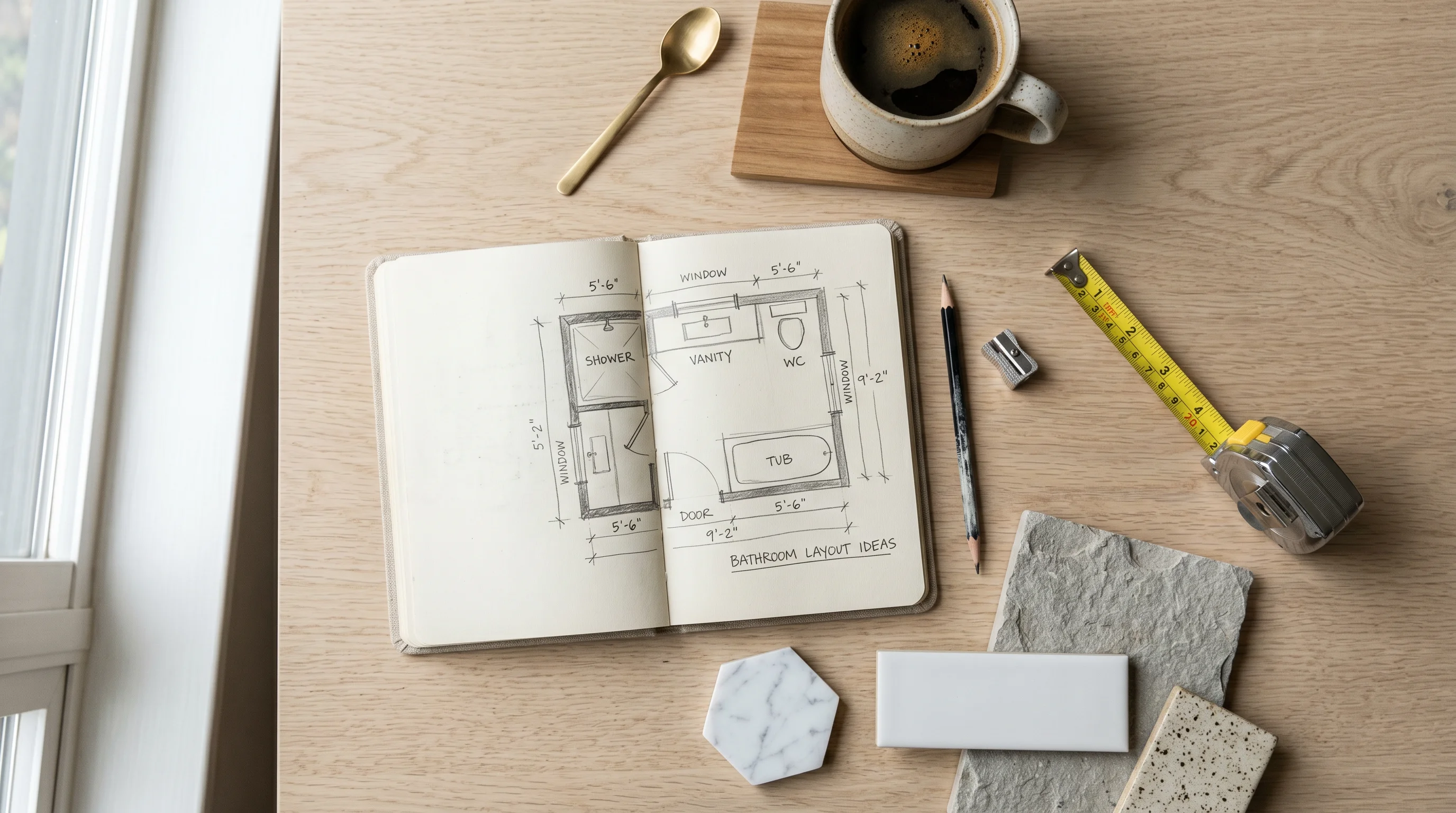
Layout is the decision that constrains every other decision, which is why it has to come first. Where the basin sits, where the bath or shower goes, how the door swings, how much floor space is left to move through — none of this can be properly decided once tiling has started.
UK bathrooms, often smaller than their European or American equivalents, benefit disproportionately from a few specific moves: wall-hung units that free up floor space, corner basins in tight footprints, and a freestanding bath positioned to be a feature rather than squeezed against a wall it doesn't suit. Where space is genuinely limited, a dedicated small bathroom bath or back-to-wall design is built for exactly that constraint, rather than compromising on a full-size freestanding format. Measure everything twice — including ceiling height, door swing, and any sloped ceilings or awkward corners that a brochure floor plan won't show.
This is also the point to test ventilation and check for anything a previous owner may have worked around rather than fixed. Older properties in particular often have quirks — historic waterproofing, unusual heating runs — that are far cheaper to address now than after the new floor is down.
If a full wet room conversion is on the table rather than a standard refit, it's worth deciding early — it changes the waterproofing, the floor build-up, and the drainage in ways a refit doesn't. Our wet room ideas guide covers whether it suits your layout, and what it typically costs to install in the UK.
The single most common cause of a renovation overrunning isn't the building work — it's waiting for something to arrive. Tiles, sanitaryware, brassware, and lighting all carry lead times, and they vary enormously between suppliers.
This is where it pays to know exactly what you're ordering and when. A bath that's UK-stocked and delivered in 3–5 working days, like the Elani Classic Collection, can be ordered relatively late in the process without risk. A bespoke or made-to-order piece needs to be locked in weeks before the tiler is due on site. Confirm lead times for every major piece before fixing a start date with your tradesperson — not after.
The pieces to order early, in order of how far in advance they're typically needed: the bath or shower enclosure (longest lead time if bespoke), tiles (check stock, not just price — discontinued runs are a common cause of delay), then sanitaryware and brassware, which can usually be confirmed once the layout is fixed. See Bathroom Renovation Mistakes To Avoid for the sequencing errors that most commonly cause delays here.
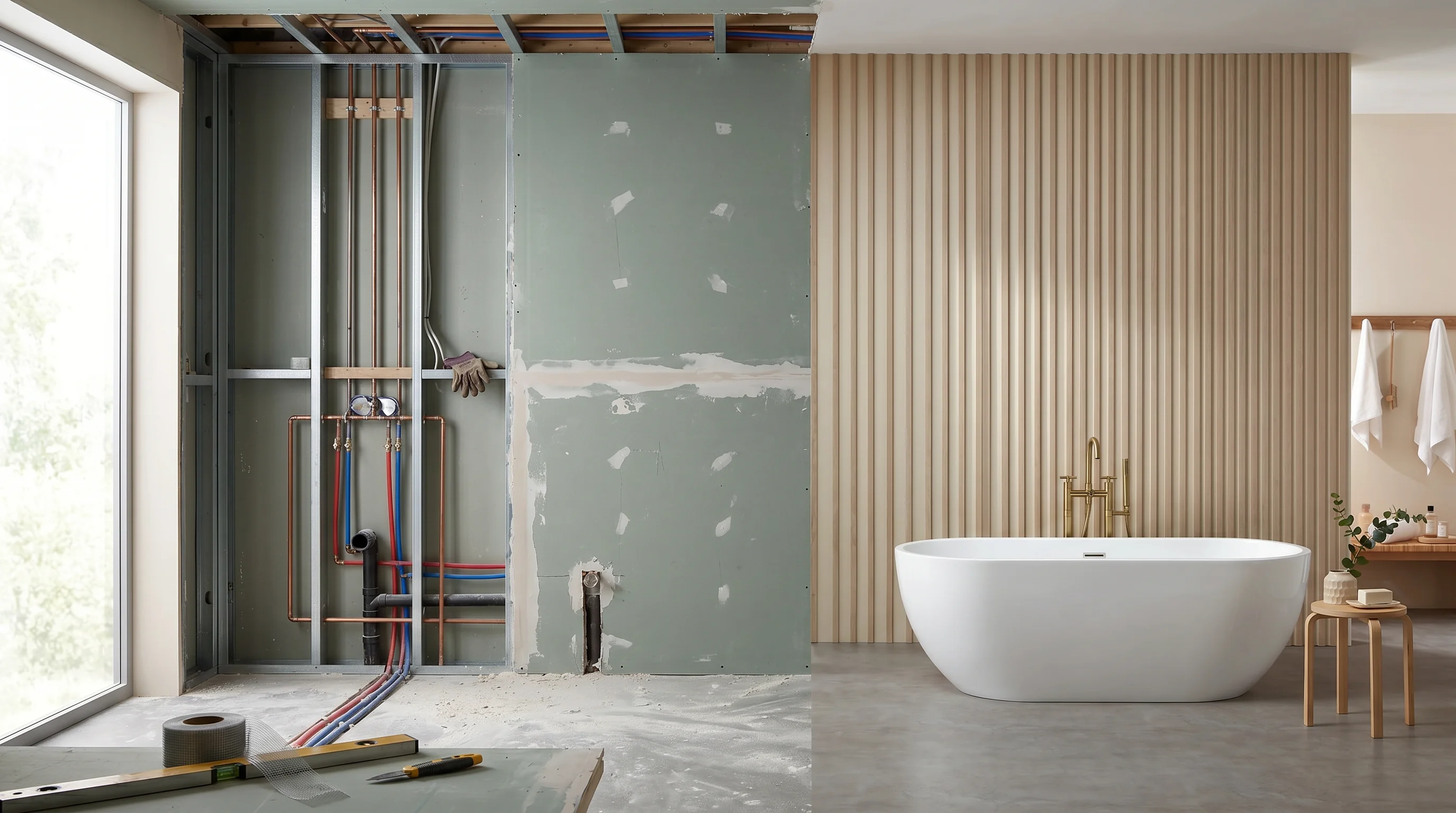
Once labour and layout are settled, the remaining budget goes further than most people expect — which makes the choice of where to spend it more important, not less.
The bath. It's the largest object in the room and the one piece that sets the tone for everything else. A bath chosen for its form — not just its price — earns its place for a decade or more. The Elani Forme and Crest work as quiet, enduring centrepieces; the Elani Inferna or Aquaire for a renovation built around one genuinely striking piece.
The tap and brassware finish. Taps are touched and seen daily, and the finish chosen here sets the metal language for the whole room. Brushed brass or matte black, chosen once and carried through consistently, looks considered. Mixed metals chosen piecemeal rarely do.
The mirror. Often an afterthought, and a mistake to treat as one — it's positioned at eye level and used every morning. The Elani Circa in brushed brass or matte black is a small piece with an outsized effect on how finished a bathroom feels.
The accessories. Easy to deprioritise, and the cheapest place in the whole renovation to get the finish right. A coordinated set — like the Elani Aurum Collection — costs a fraction of the bath but is touched more often than almost anything else in the room. See How To Accessorize A Considered Bathroom for how to choose them well.

A bathroom renovation is, in the end, a sequence of decisions made in the right order: the problem first, the budget second, the layout third, then the long-lead items, then the pieces worth lingering over.
Get the sequence right and the renovation runs the way it's supposed to — each decision narrowing the next, rather than each one undoing the last. Get it wrong, and even the right bath in the right bathroom can feel like it arrived too late, or too early, or into a room that wasn't ready for it.
Start with the list of what's wrong. Everything else follows from there.
Planning for autumn specifically? See Is Autumn The Best Time To Renovate Your Bathroom? and How Long Does A Bathroom Renovation Actually Take? for realistic timelines. And before you start ordering, read Bathroom Renovation Mistakes To Avoid — the five most common ways this sequence goes wrong.
Elani Forme — Clean oval freestanding bath, white. £1,895. Shop now →
Elani Inferna — Deep red translucent resin freestanding bath. £2,699. Shop now →
Elani Circa — Round mirror, brushed brass or matte black. From £89. Shop now →
Elani Aurum Collection — Brushed brass accessories. From £29. Shop now →
Elani Edge Set — Five-piece matte black accessory set. £79. Shop now →