Fluted & Textured Baths
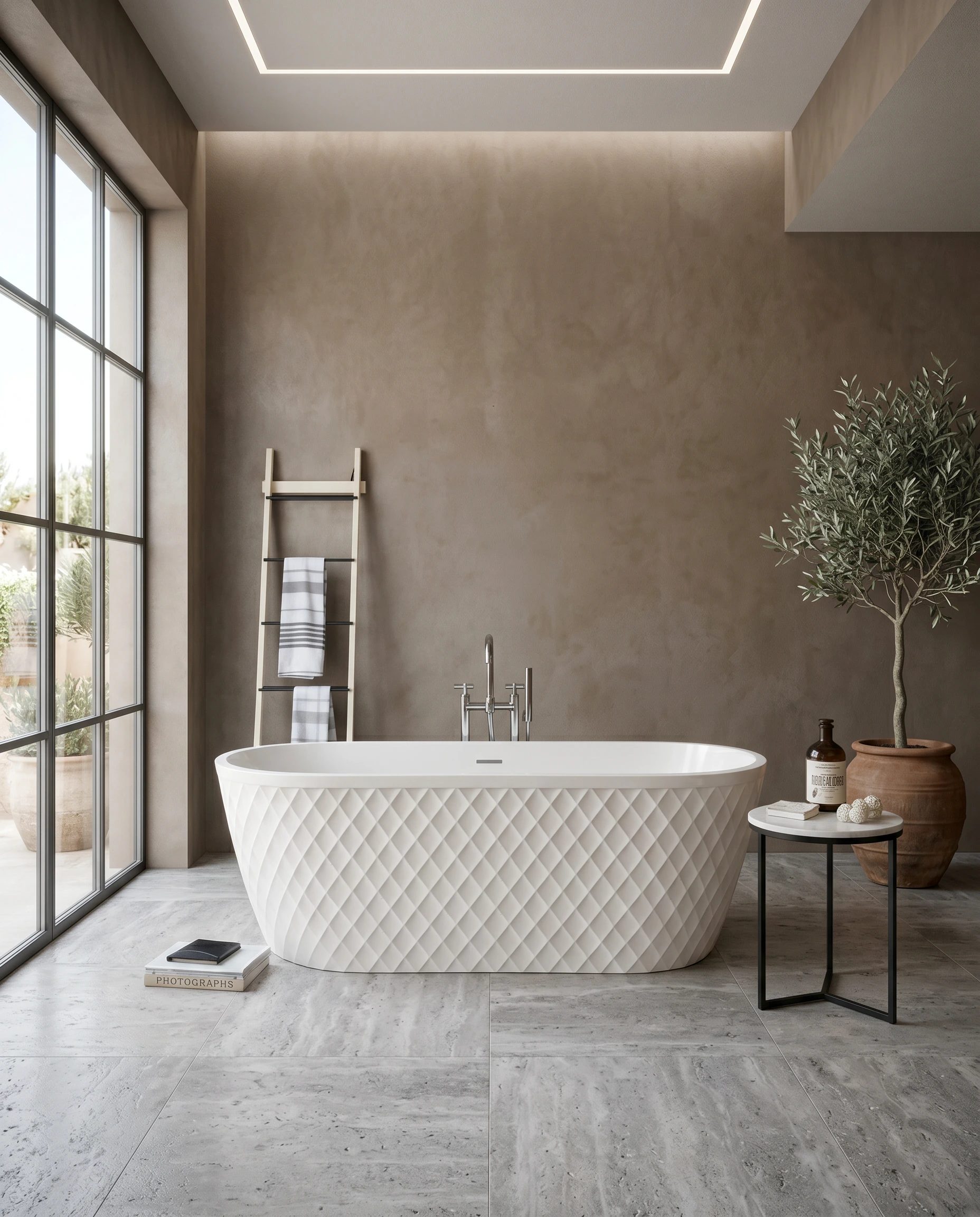
Reeded, woven and faceted freestanding baths — where the surface carries the detail instead of the silhouette. The texture catches light differently through the day, which is most of the point.

Reeded, woven and faceted freestanding baths — where the surface carries the detail instead of the silhouette. The texture catches light differently through the day, which is most of the point.
They get used interchangeably and they are not the same thing.
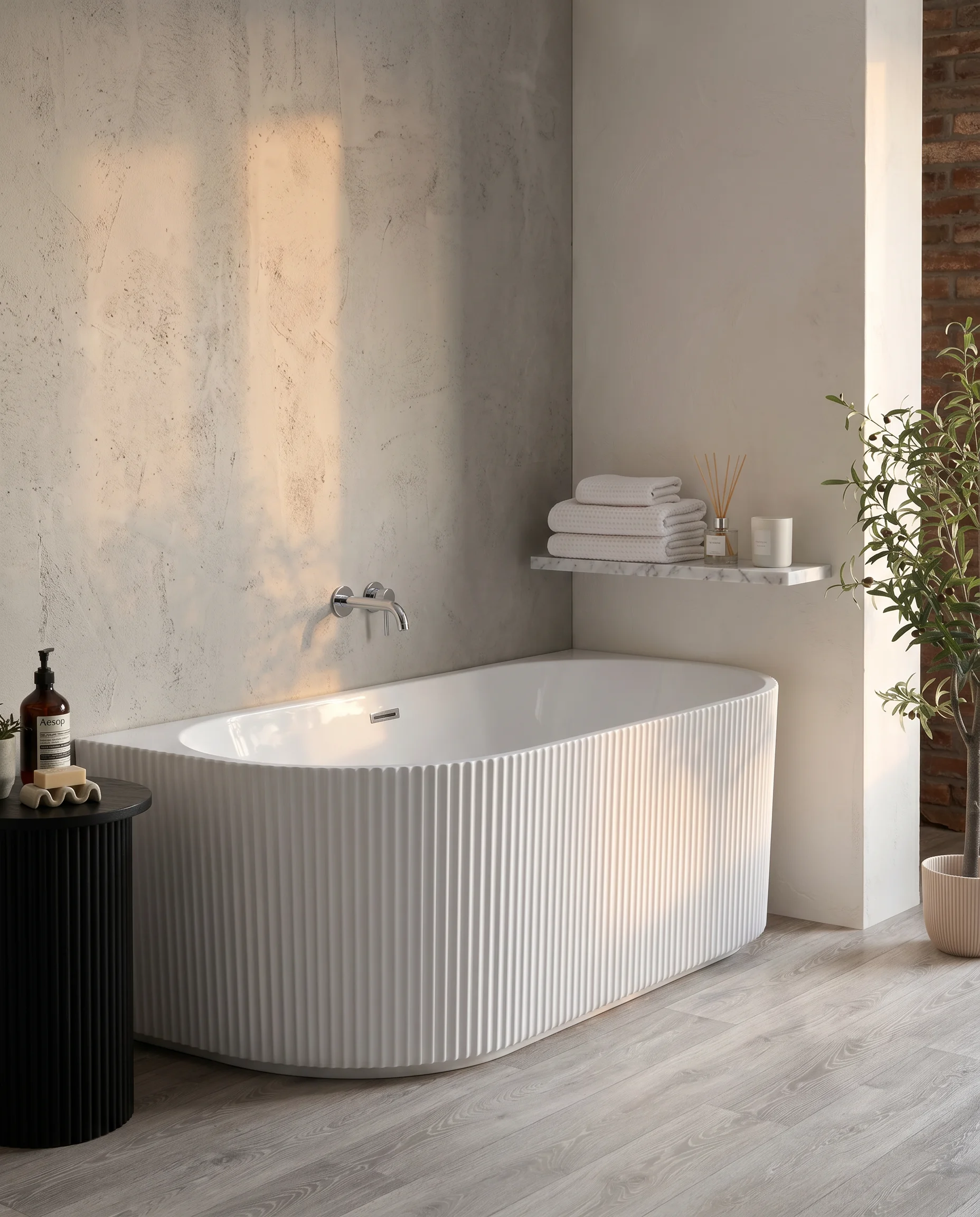
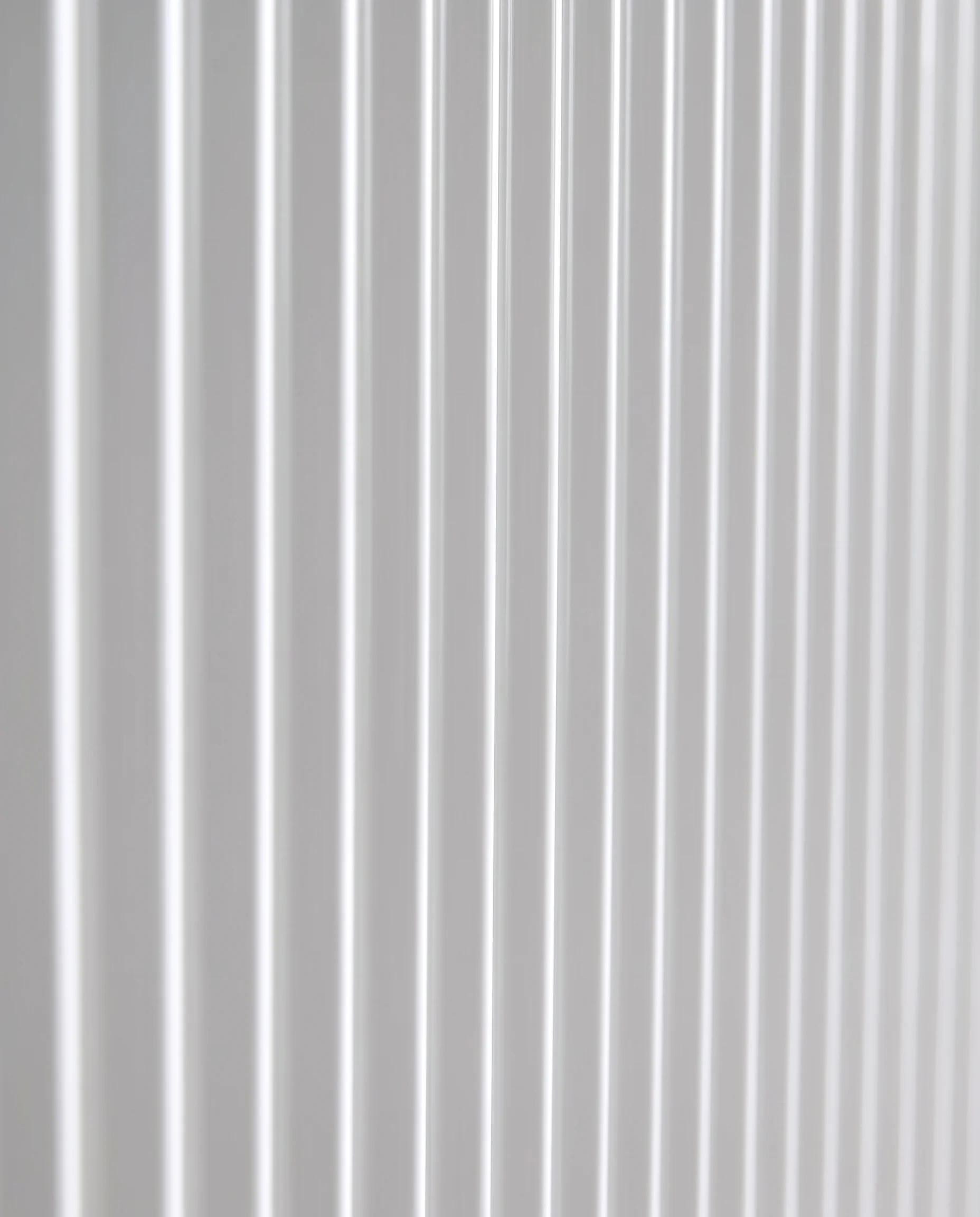
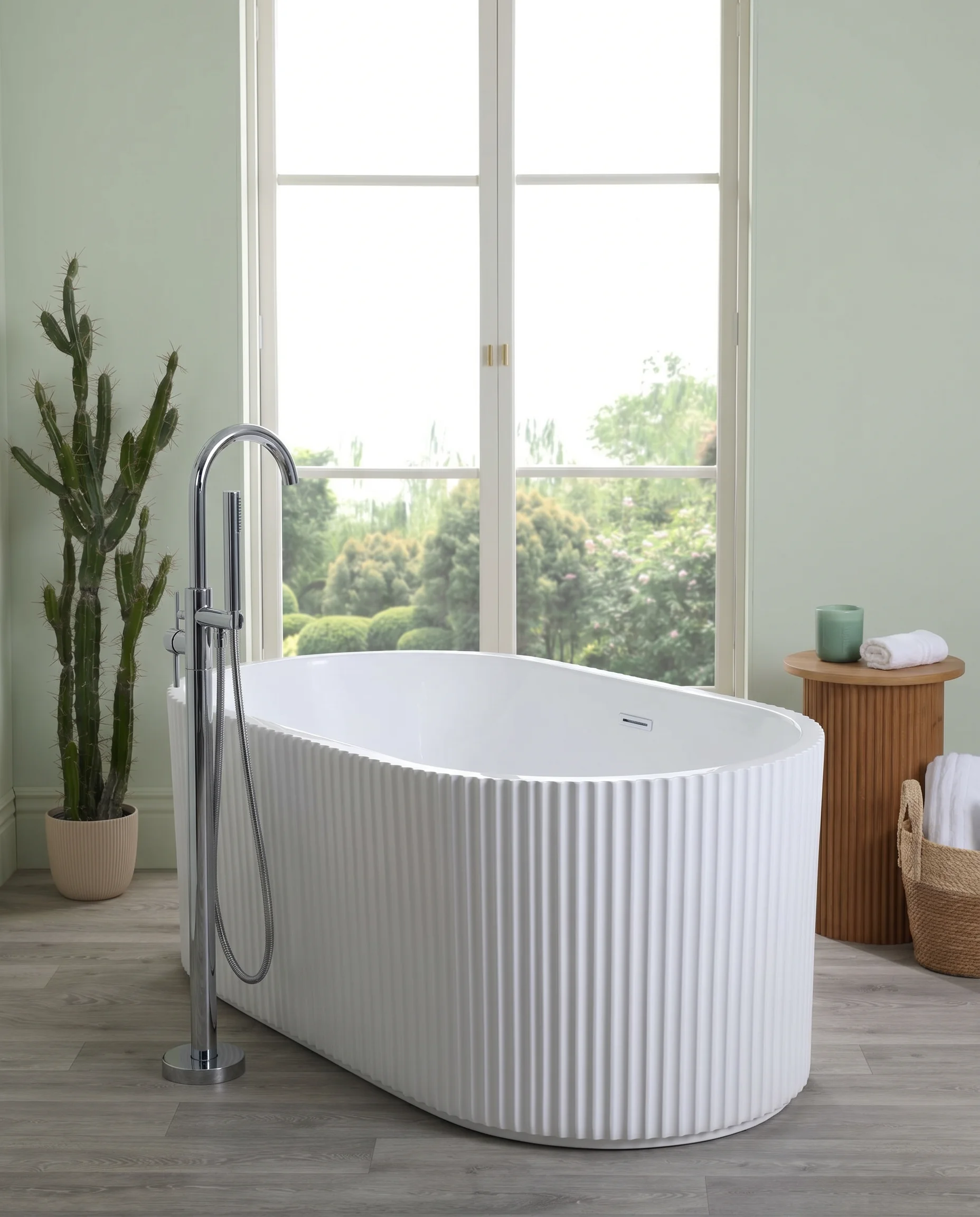
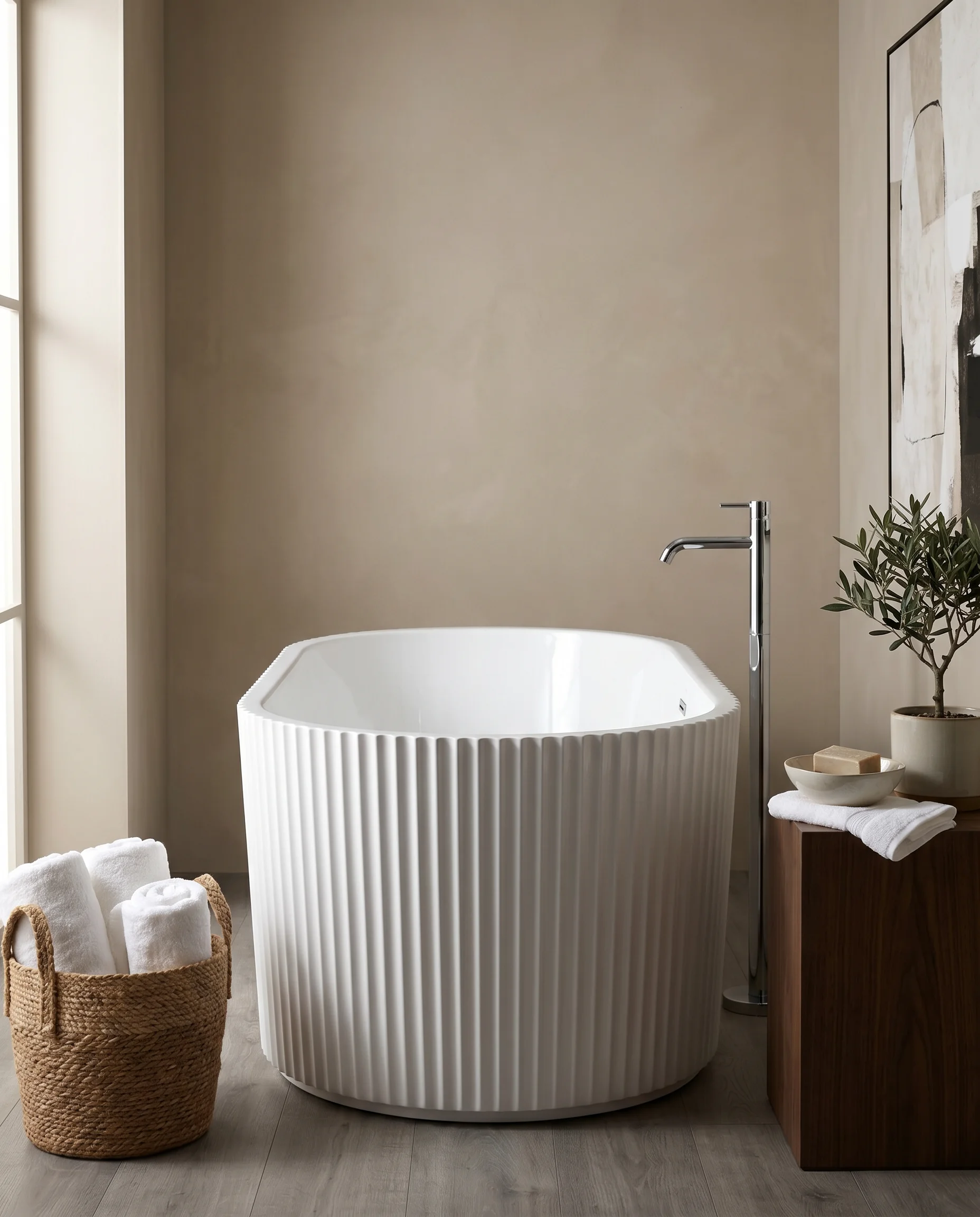
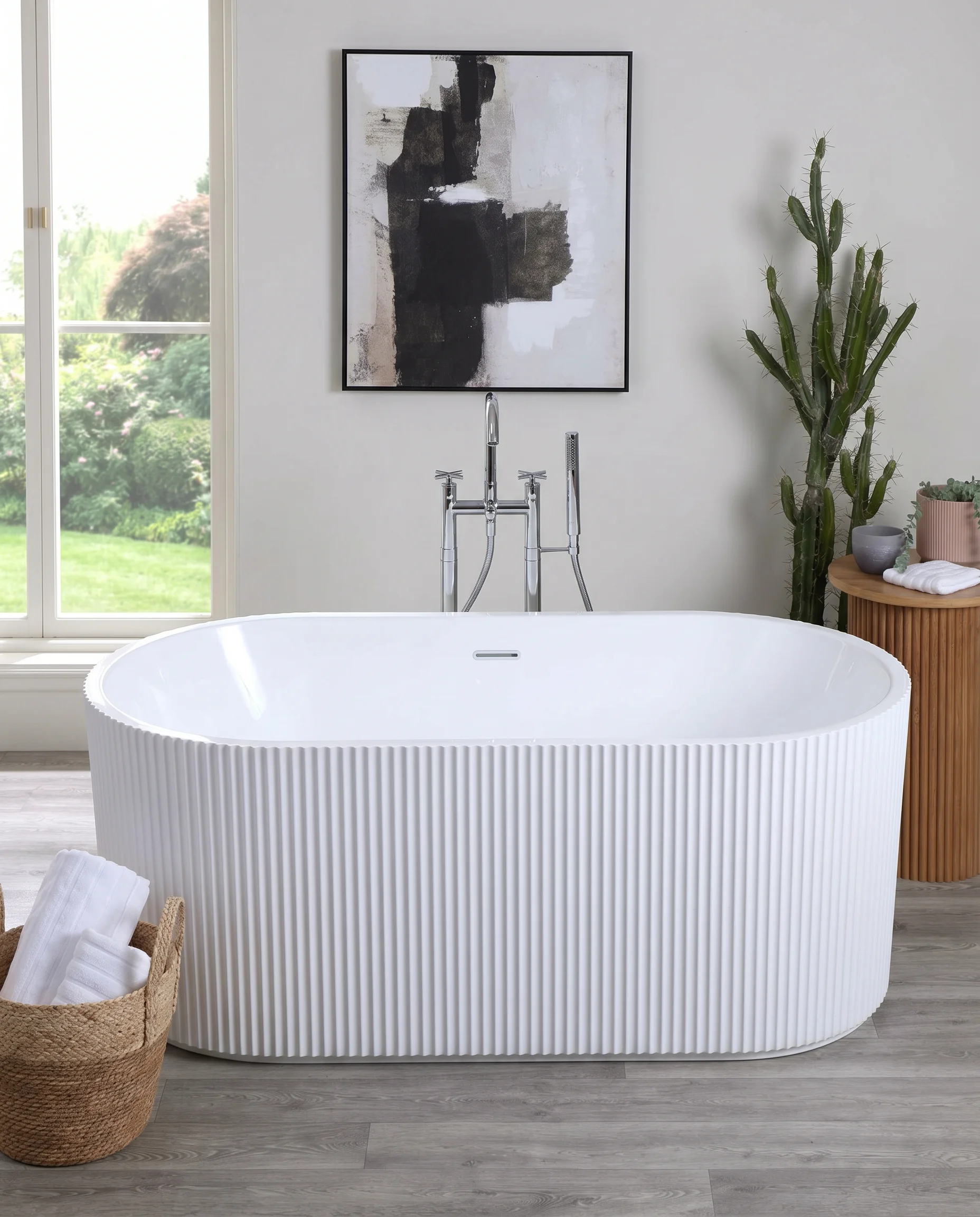
Fluted and reeded are the two halves of the same idea. Fluting is a series of concave grooves cut into a surface; reeding is the opposite — convex ridges standing proud of it. On a bath, reeding is far more common, because rounded ridges shed water and clean more easily than grooves do. The Reede is the straightforward version of this, with deep vertical fluting on a back-to-wall form.
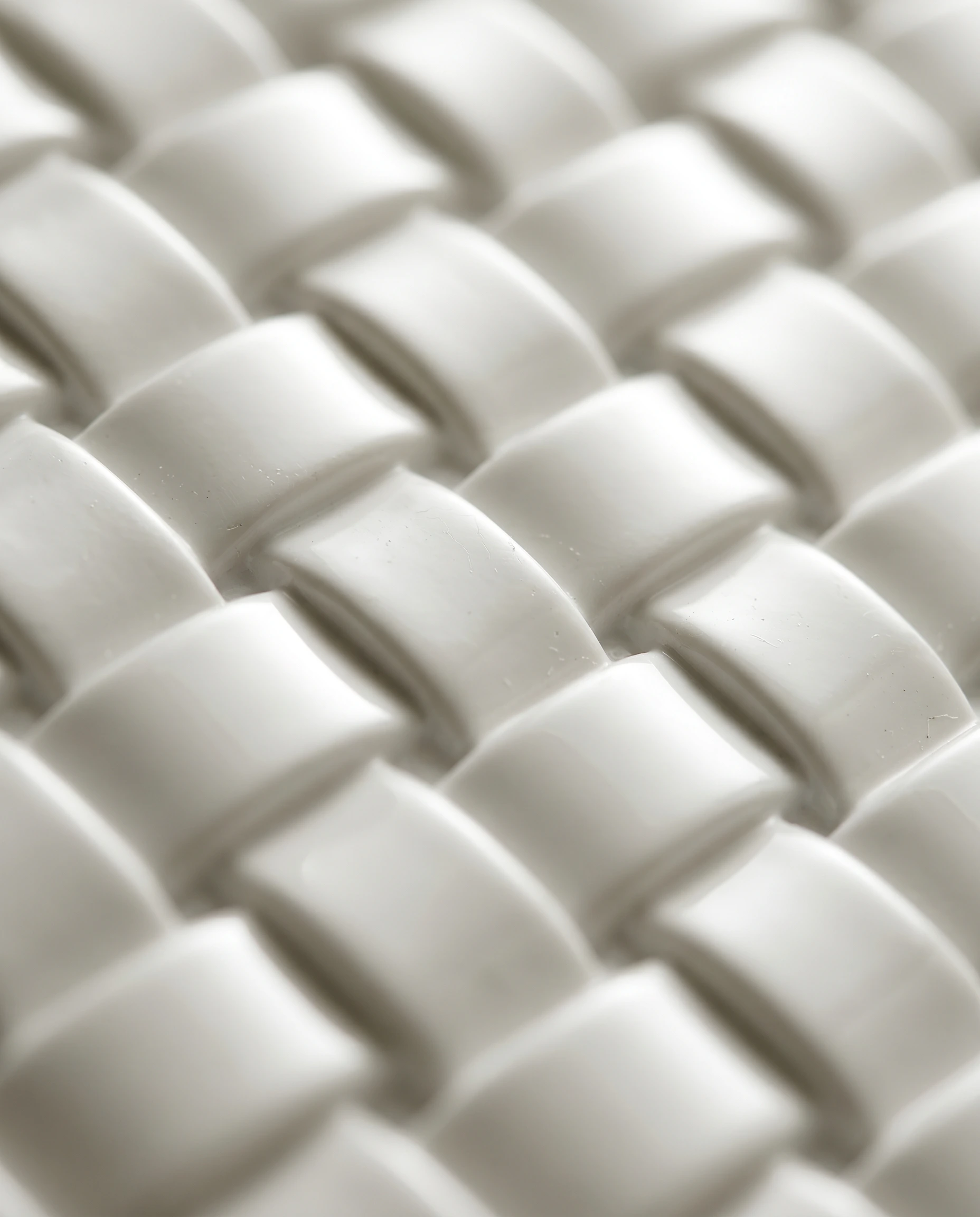
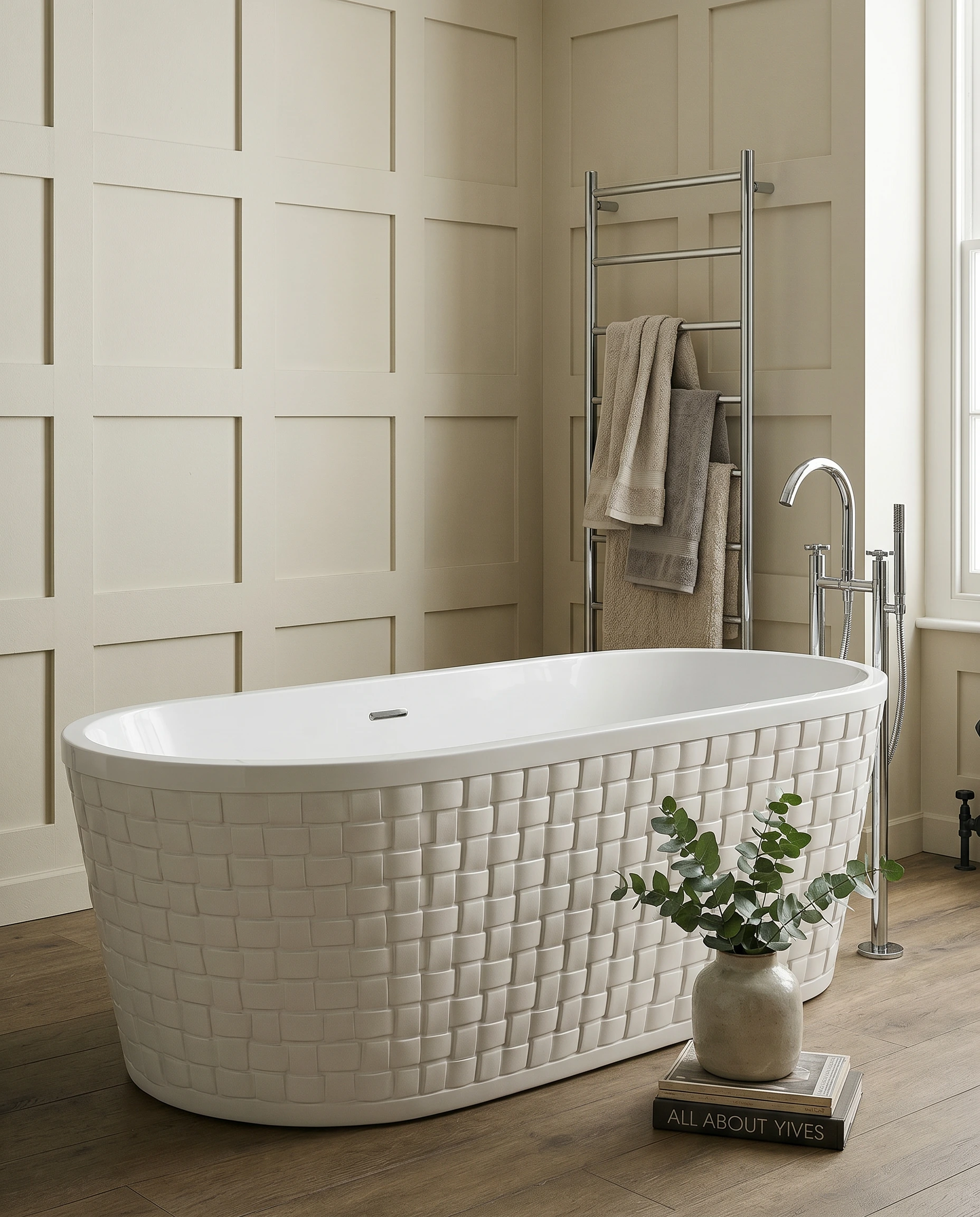
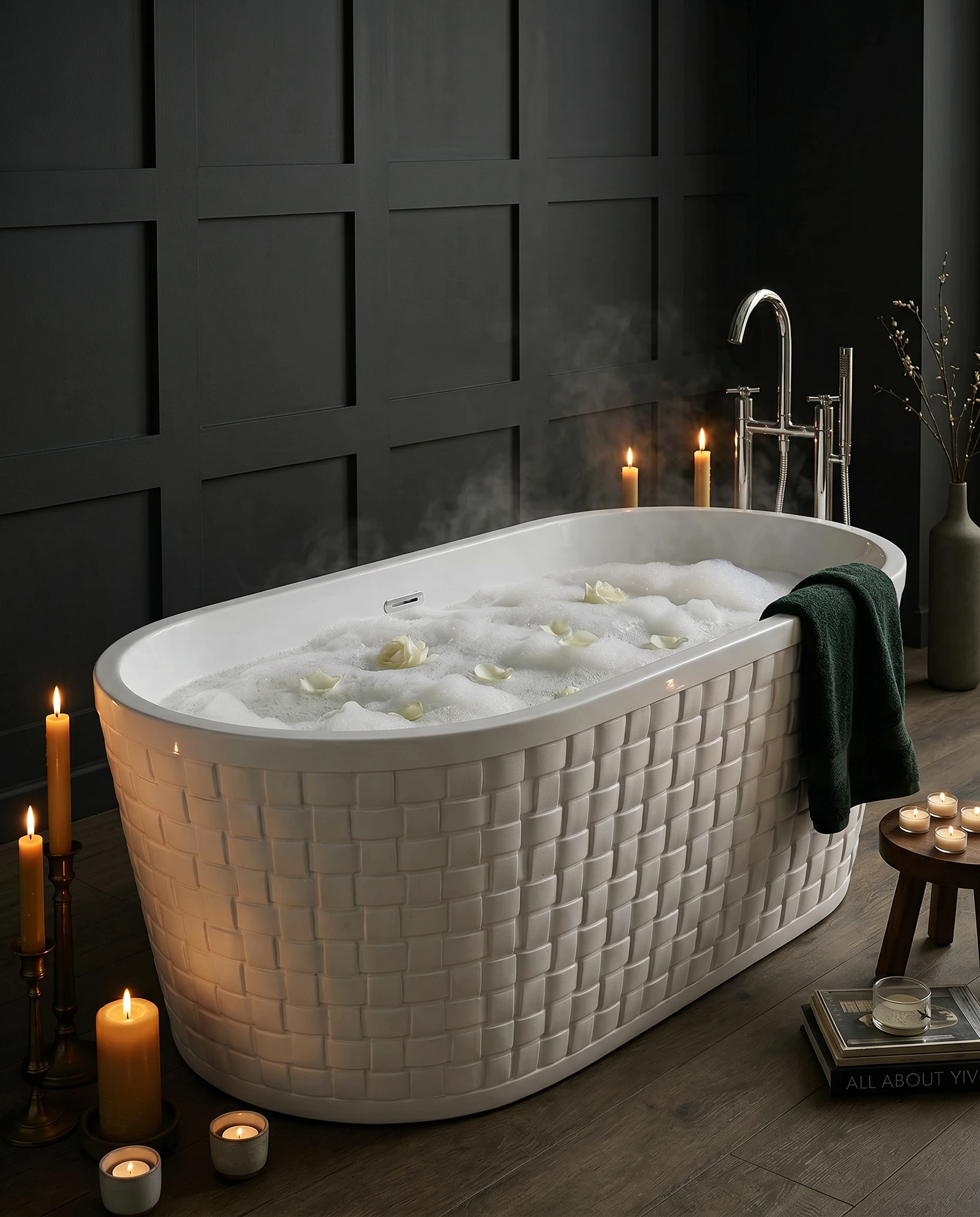
Woven runs the texture in two directions rather than one, producing a basket-like surface that breaks light up more randomly. The Weave is built on that.
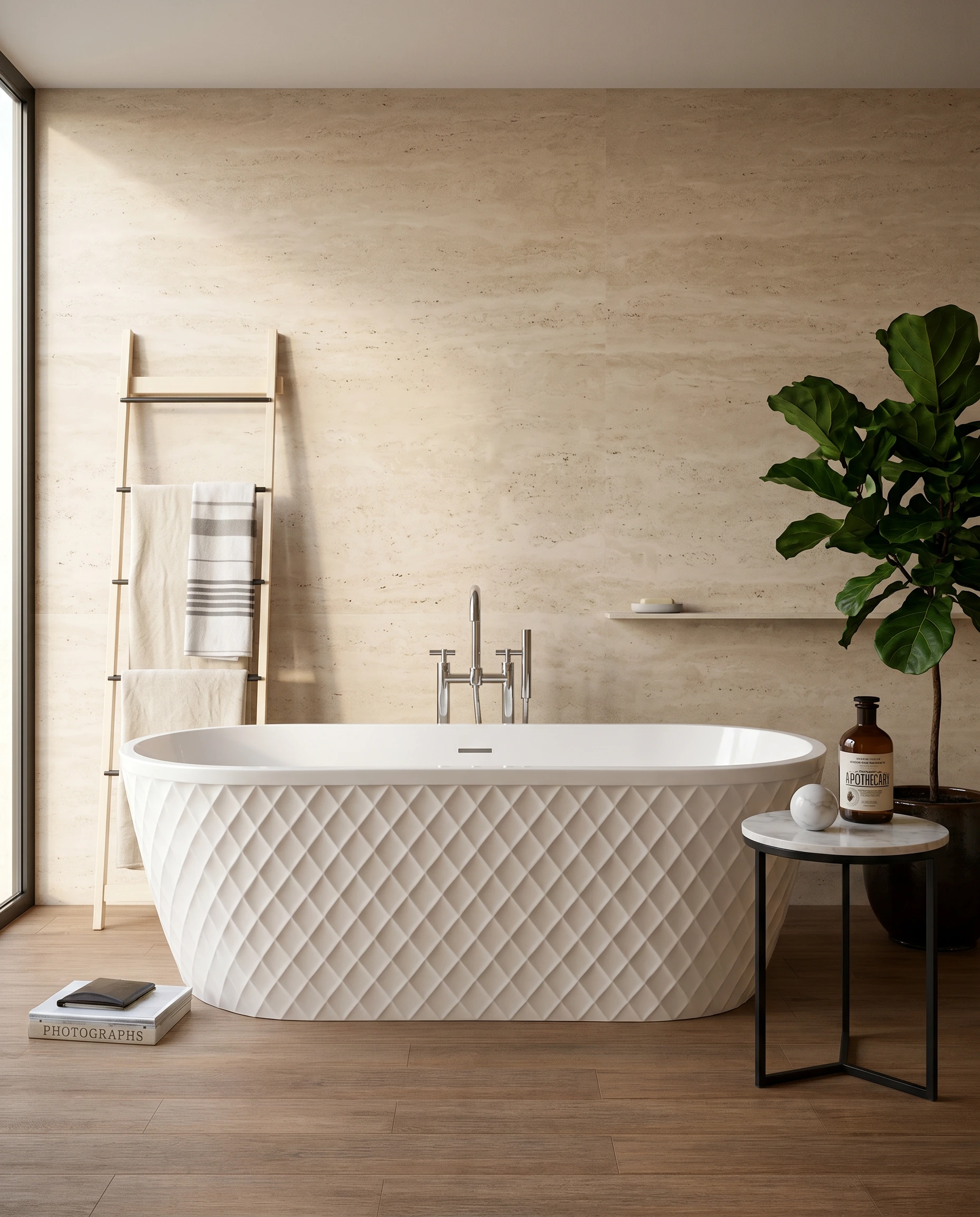
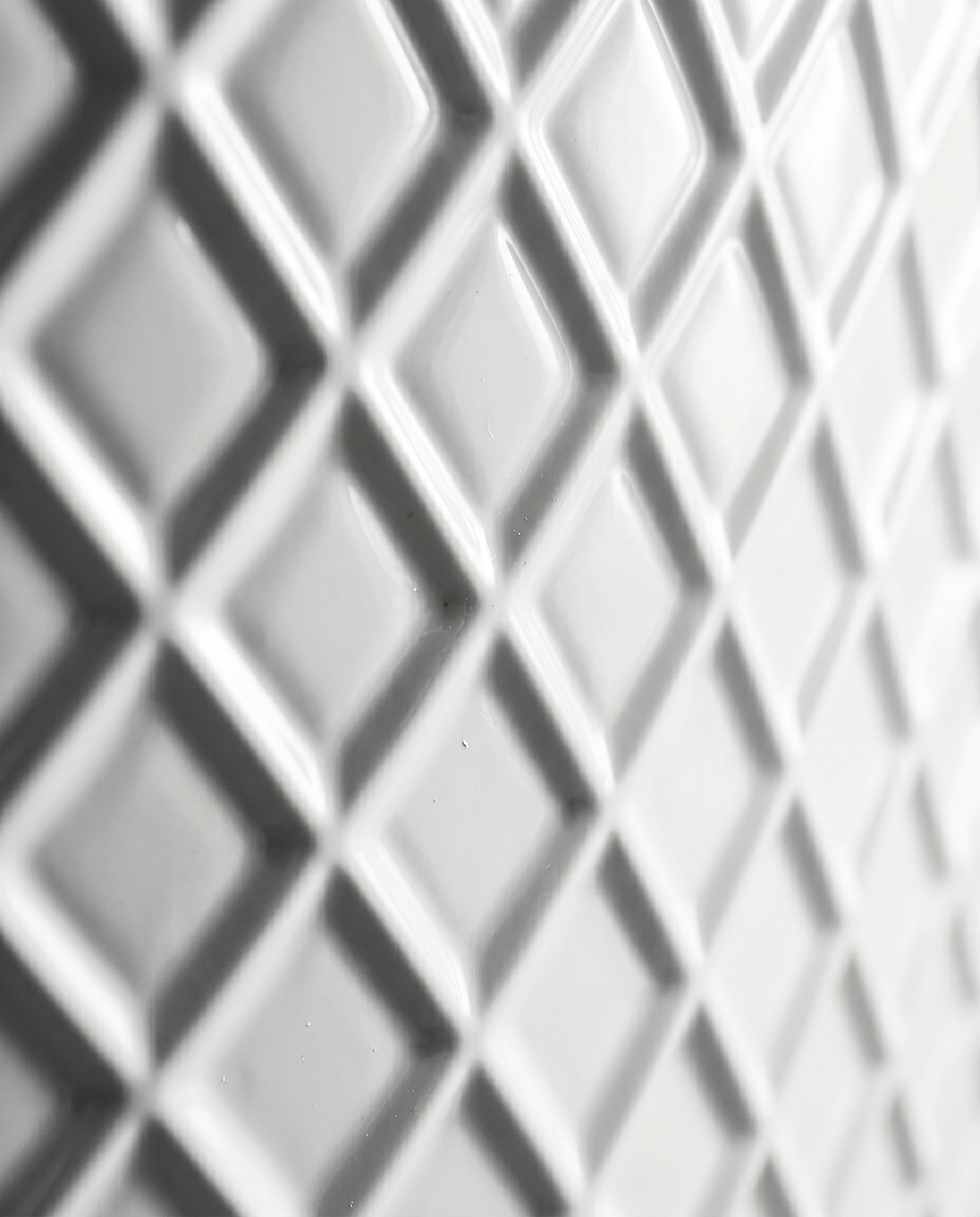
Faceted abandons curves altogether for flat angled planes, so the bath behaves more like cut glass — each facet catching light at a different angle. The Facet does this with a diamond pattern. The Deco takes a third route again: a rippled surface drawn from Art Deco geometry, which reads as softer than faceting and bolder than fluting.
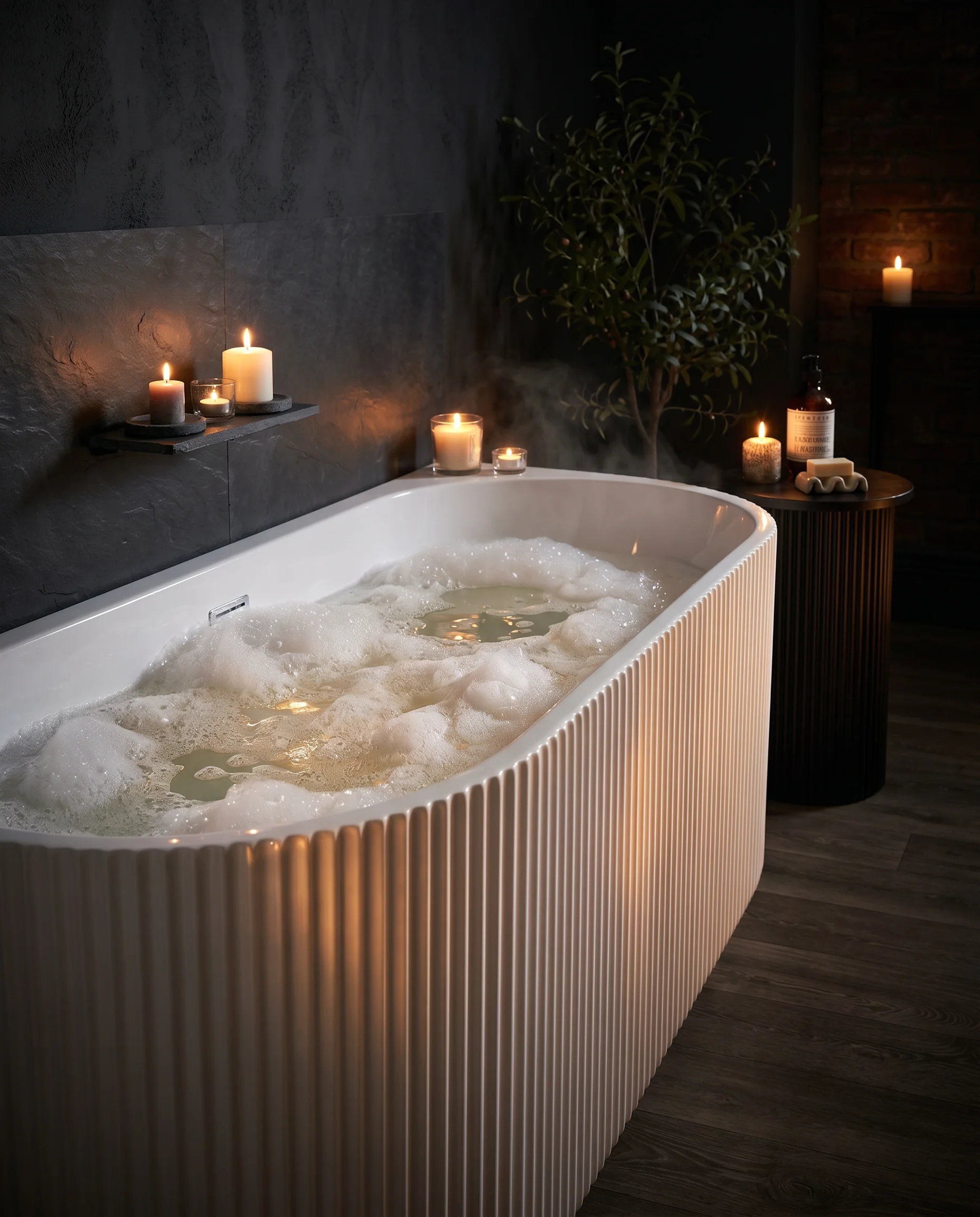
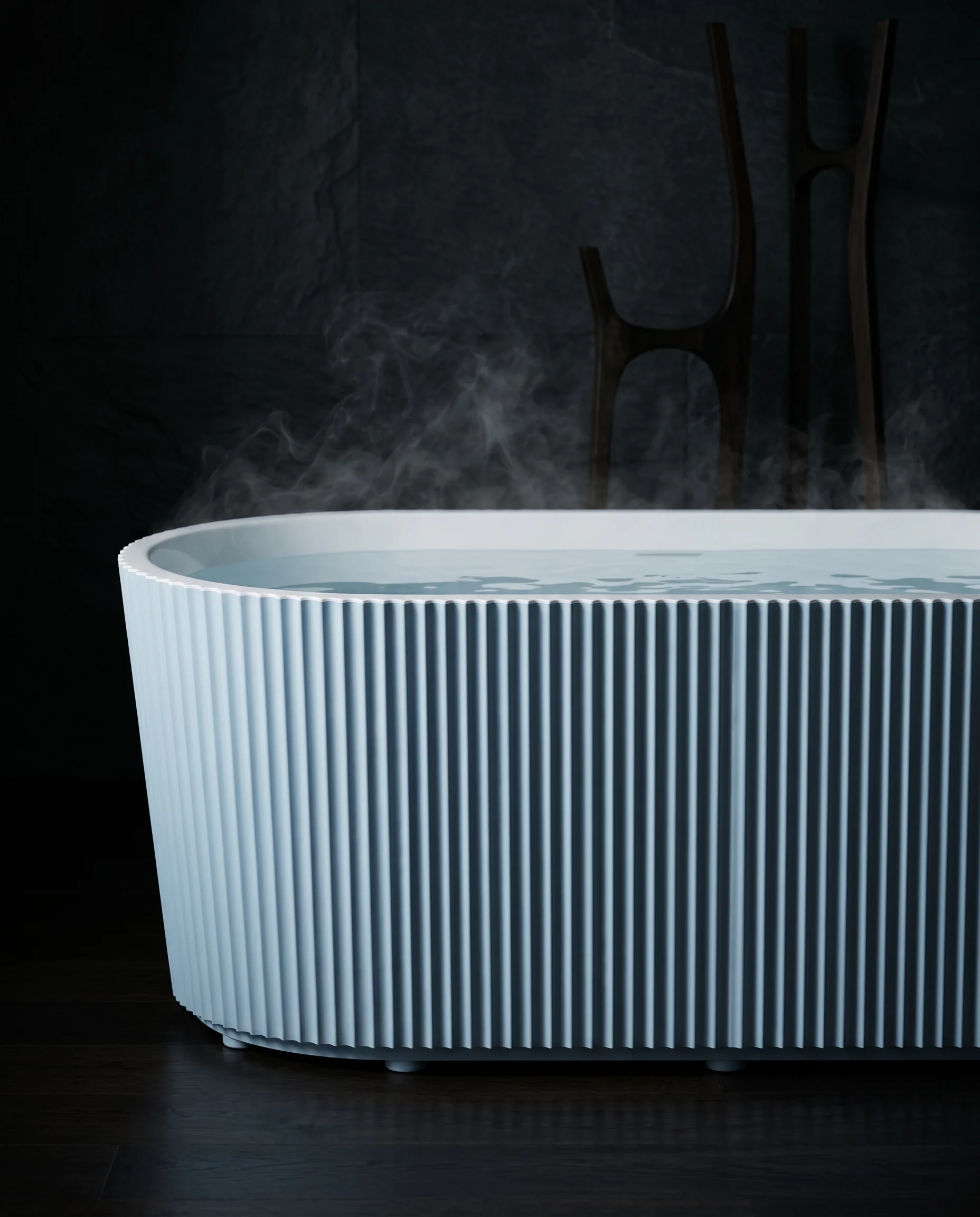
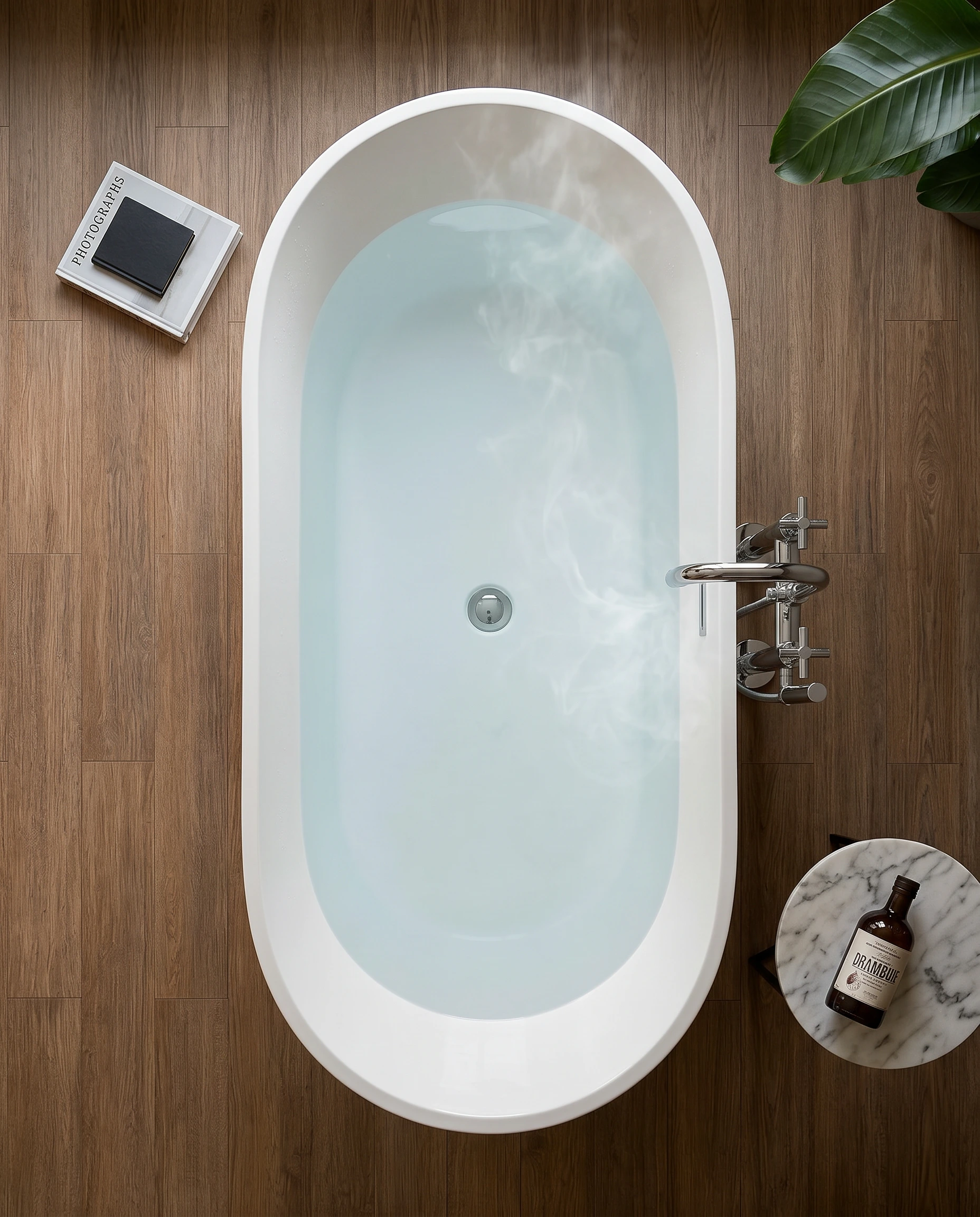
A plain gloss freestanding bath depends entirely on its silhouette. Seen from the side it is a shape; seen from above it is a white oval. A textured bath keeps doing something from every angle, because the surface changes as the light moves across it.
That is genuinely useful in a bathroom with one window, where the light swings through ninety degrees over a day. It is also why these baths photograph well and why they look flat under a single overhead downlight — texture needs raking light from the side to read at all. If the room has one ceiling light and nothing else, a textured bath is the wrong purchase until the lighting is fixed.
Slightly, and less than people expect.
These surfaces are moulded in one piece with no joins or seams, so there is nowhere for dirt to collect in the way it does in a tiled corner. What they do collect is limescale, which dries along the ridges in a hard water area and shows as a chalky line.
The fix is the same as for every other bathroom surface: rinse down and wipe dry after use rather than letting water evaporate on it. A soft cloth follows the ridges fine. Abrasive pads are what cause real damage — they dull the high points of the texture and leave a visible matt stripe.
Small bathrooms. Finer, denser texture. A tight reeded pattern reads as a material rather than a pattern from across a small room, which keeps it calm. Large faceted planes need distance to be understood. See Small Bathroom Ideas for the layout side.
Period properties. Reeding is an old detail — it appears on Georgian joinery and Victorian glass — so it sits comfortably with original features in a way a smooth modern oval does not. Art Deco rippling has the same advantage in a 1930s house.
Plain, hard-surfaced rooms. If the tiling is large format and the walls are flat, the bath is the only place softness is going to come from. Texture earns its keep most in rooms that have none elsewhere.
Most textured baths are freestanding, which puts the texture on display from every side. The Reede is the exception — it is a back-to-wall design, so it sits flush against a wall and takes wall or corner mounted taps.
That is worth knowing before you buy: a back-to-wall bath solves the tap problem and saves floor space, at the cost of one hidden side. In a narrow bathroom that is usually the right trade.
One textured object is a feature; three is a busy room. If the bath is reeded, the tiling should usually be plain, and the metalwork should be simple.
Warm metal suits texture particularly well, because the ridges catch the light the same way the finish does — see Brushed Brass Bathroom Ideas. For the fuller styling argument, How To Style A Fluted Freestanding Bath, and for the material question, resin baths.
A freestanding bath whose outer surface carries vertical grooves or ridges rather than being smooth. Strictly, fluting means concave grooves and reeding means convex ridges — most baths sold as fluted are actually reeded, because raised ridges shed water better.
Marginally. The surface is moulded in one piece with no seams, so dirt has nowhere to lodge, but limescale dries along the ridges in a hard water area and shows more than it would on a flat surface. Rinsing and drying after use handles it; abrasive pads are what cause lasting damage.
Reeding and fluting are centuries-old architectural details rather than a recent invention, which is the main argument against them dating. They have been in and out of fashion repeatedly and have never stopped being used.
Fluted and reeded surfaces are made of curves — rounded grooves or ridges running in one direction. A faceted surface is made of flat angled planes meeting at edges, so it reflects light in hard-edged segments rather than soft gradients. Faceted reads as sharper and more architectural.
Yes, if the texture is fine rather than bold. A tight reeded pattern reads as a material at close range, which keeps a small room calm. Large facets need viewing distance to make sense and can feel crowded in a compact space.
Light from the side rather than directly overhead. Texture only reads when light rakes across it — a single central downlight flattens a reeded surface completely. A wall light, a window to one side, or anything low and directional makes the difference.
Not on the rim of a freestanding one — these are not tap-drilled, so they need a floorstanding or wall-mounted filler. The back-to-wall Reede is the exception and is designed for wall or corner mounted taps.