Is Fluted Bathroom Design Still A Trend? | Elani
Fluted surfaces draw from classical architecture, not a seasonal cycle. Why the look has real staying power in 2026.
August 10, 2026
4 minutes
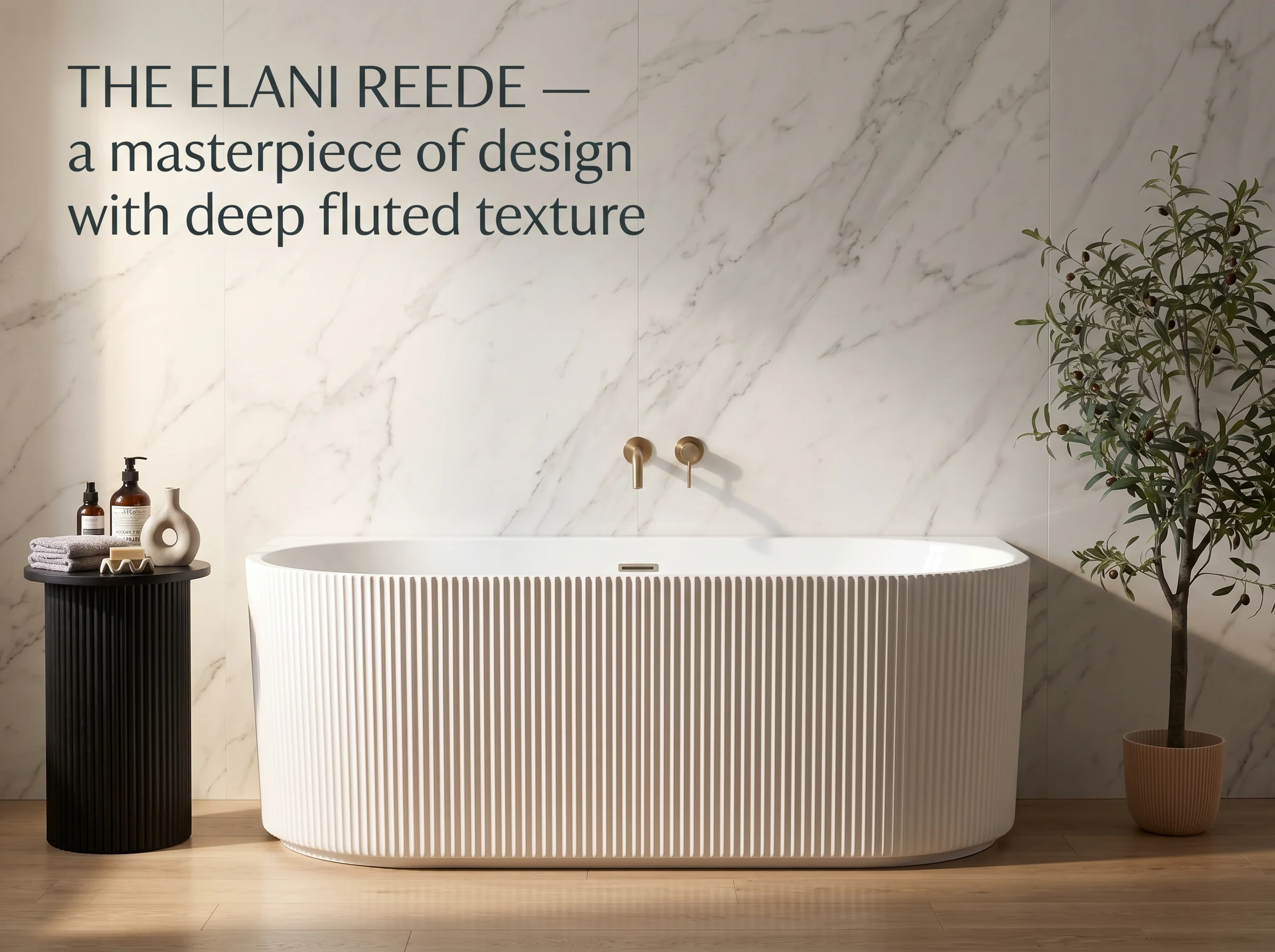
Fluted surfaces draw from classical architecture, not a seasonal cycle. Why the look has real staying power in 2026.
August 10, 2026
Every strong design moment eventually invites the same question — is this considered, or is it simply current.
No — fluted bathroom design is not a passing trend. Fluted surfaces draw from classical architecture, a design language in continuous use for centuries. The current interest in fluted baths and bathroom surfaces is a revival of a durable formal principle, not a seasonal one.
Last updated 23 August 2026 · Elani Journal
Vertically channelled, ribbed surfaces have appeared in architecture since antiquity — in columns, in furniture, in decorative stonework — long before "fluted" became a term used in bathroom design specifically. What's happening now is a contemporary application of a formal principle with real precedent, which is a different thing to a surface pattern invented for a single design season.
The specific products and colourways shift — the particular baths, tiles, and panels considered current will look different in five years, as they always do. What doesn't change is the underlying preference for textured, vertically-channelled surfaces in considered interiors, which has held for centuries rather than seasons. That's the distinction worth holding onto: the application dates, the principle doesn't.
Fluted reads best as a single statement surface — a bath, a vanity front, or a feature wall — rather than applied everywhere at once. Large format, minimally patterned tiles work well alongside it, since the fluting is the room's texture and the surrounding surfaces are more effective when they stay quiet rather than compete.
Pair fluted surfaces with warm, natural materials — stone, brass, timber — rather than anything overtly of-the-moment, and it will age the way classical architectural details always have. It's the pairing that dates fastest in any trend cycle, not the fluted form itself, so keeping the surrounding palette timeless is what protects the room long-term.
The Elani Reede — with its deeply grooved vertical fluting — is the definitive example in the Classic Collection, available in both fully freestanding and back-to-wall formats. For the full guide to styling fluted surfaces, see Fluted Bathroom Design. Prefer to compare it against other textures first? See Fluted, Woven Or Faceted.
Very likely — because the design language draws on centuries of architectural precedent rather than a single design cycle, it's a safer long-term bet than most surface trends. What's more likely to shift is the specific colourway or pairing, not the fluted form itself.
Typically, yes — fluted baths and surfaces cost more than plain equivalents, reflecting the more complex manufacturing process. The premium is generally in line with other considered, non-mass-market finishes rather than being disproportionate.
Yes — fluted can work particularly well in a small bathroom, since the vertical channels create a sense of height in a way a flat surface doesn't.
One fluted statement piece is usually enough. Pairing it with simpler, calmer surfaces elsewhere — plain tile, smooth stone — lets the fluting read as the room's texture rather than competing with other pattern.