Fluted Bathroom Design — Why It's Here To Stay | Elani
Fluted surfaces have become one of the defining details of the 2026 bathroom. Here's why they work and how to use them with confidence.
May 18, 2026
4 minutes
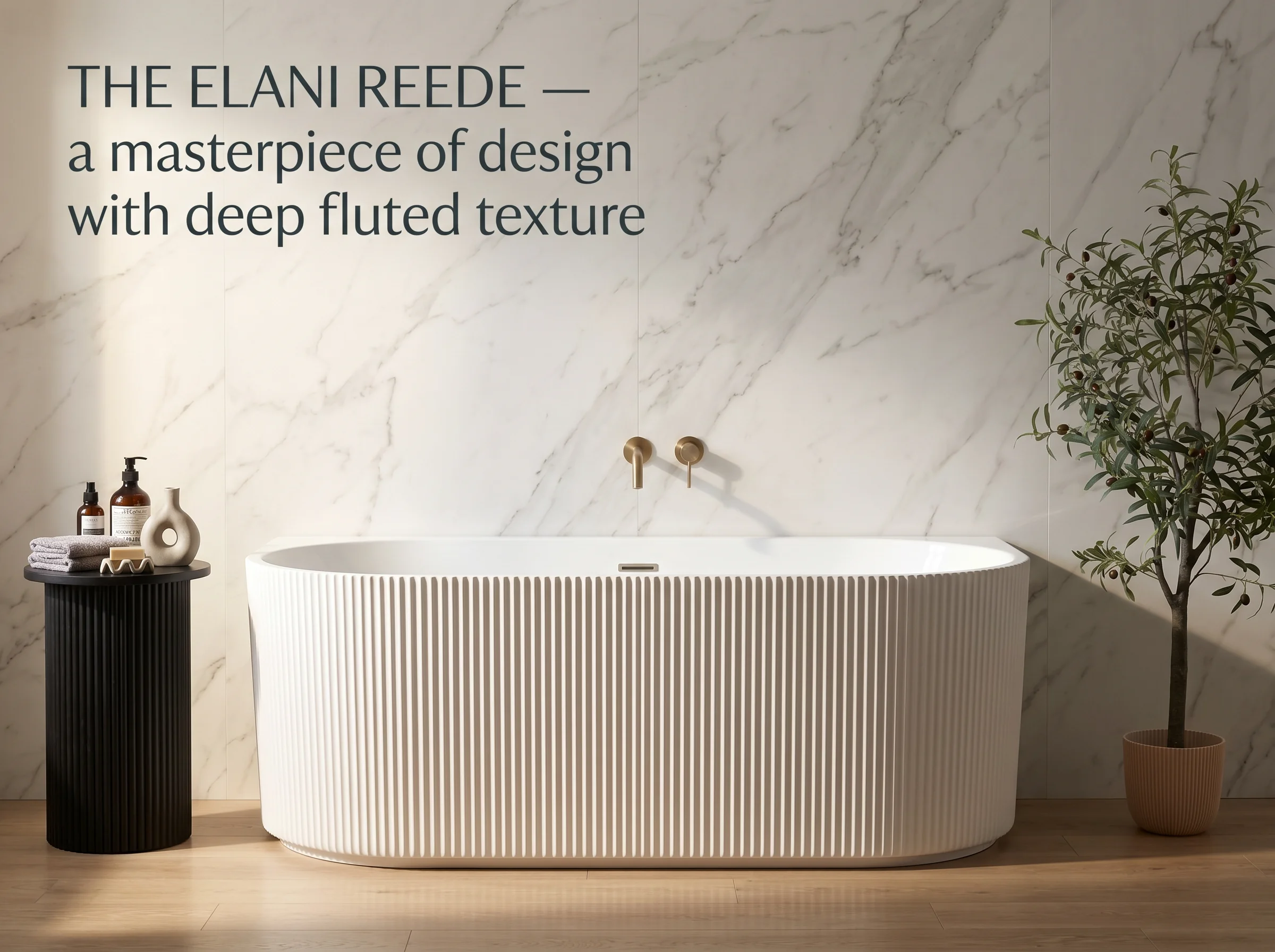
Fluted surfaces have become one of the defining details of the 2026 bathroom. Here's why they work and how to use them with confidence.
May 18, 2026
Some trends arrive loudly and leave just as quickly. Fluted design is not one of them.
The rhythmic, vertical grooves of fluted surfaces have been appearing across bathroom interiors for several years now — on walls, vanity units, furniture, and increasingly on baths themselves. And unlike many design trends that peak and retreat, fluted texture has demonstrated something rare: genuine longevity.
The reason is simple. Fluting is not new. It is ancient. And things that have endured for thousands of years in architecture and design tend not to disappear after a few seasons.
Last updated 24 August 2026 · Elani Journal

Fluted design is a series of parallel vertical grooves originally used in classical Greek and Roman architecture, now applied as a decorative surface texture to bathroom tiles, vanity units, and freestanding baths.
Fluting refers to a series of parallel vertical grooves carved or moulded into a surface. It originates in classical Greek and Roman architecture — the columns of the Parthenon are perhaps the most famous example — where it was used to add visual lightness and rhythm to heavy stone structures.
In contemporary bathroom design, fluting has been reinterpreted as a surface texture applied to everything from wall tiles and shower panels to vanity units, mirrors, and now freestanding baths. The principle remains the same — vertical rhythm, light and shadow, a sense of considered craft.

Fluted design works in bathrooms because it adds texture and depth without introducing colour, plays beautifully with changing light, bridges traditional and contemporary styles, and reads as considered rather than assembled.
It adds depth without colour. One of the challenges of the bathroom is that it is often a neutral space — white, stone, grey. Fluting introduces visual interest and texture without introducing colour, keeping the space calm whilst avoiding the flatness that an all-smooth interior can suffer from.
It plays with light beautifully. The vertical grooves of a fluted surface catch and redirect light in a way that changes throughout the day. Morning light creates sharp shadow definition. Evening light softens the texture into something almost sculptural. No other surface treatment responds to light quite the same way.
It bridges traditional and contemporary. Fluting has roots in classical architecture but reads as completely contemporary in a modern bathroom. It is one of the rare design details that works equally well in a period property and a new build — a versatility that few trends can claim.
It adds perceived value. Fluted surfaces look considered and crafted. They communicate that a space has been designed rather than assembled. In a bathroom especially — where the quality of materials and finishes is immediately apparent — fluting elevates the entire room.

Fluted texture can be introduced through a feature wall, a vanity unit, a bath panel, a fully fluted freestanding bath, or smaller accessories — ranging from a subtle accent to a full room statement.
Fluted Feature Wall. The most common application. Large format fluted wall panels or tiles behind the bath or basin create an immediate focal point. Keep the rest of the walls plain to let the texture breathe.
Fluted Vanity Unit. A fluted vanity front is one of the most impactful single changes you can make to a bathroom. It transforms a functional piece of furniture into a design statement. Works particularly well in matte finishes — sage green, navy, warm white.
Fluted Bath Panel. For those with a built-in bath, a fluted bath panel is a simple and relatively affordable way to introduce the texture without a full bathroom renovation.
Fluted Freestanding Bath. The most immersive way to bring fluted design into the bathroom. When the bath itself carries the texture, the entire room organises around it. The Elani Reede takes this approach — deeply grooved vertical fluting on a back-to-wall freestanding form that brings one of interior design's most coveted surfaces to the bath itself.
Fluted Accessories. For a more subtle introduction, fluted soap dispensers, toothbrush holders, and storage vessels bring the texture into the bathroom without committing to a full renovation. An accessible starting point that still makes a meaningful difference.
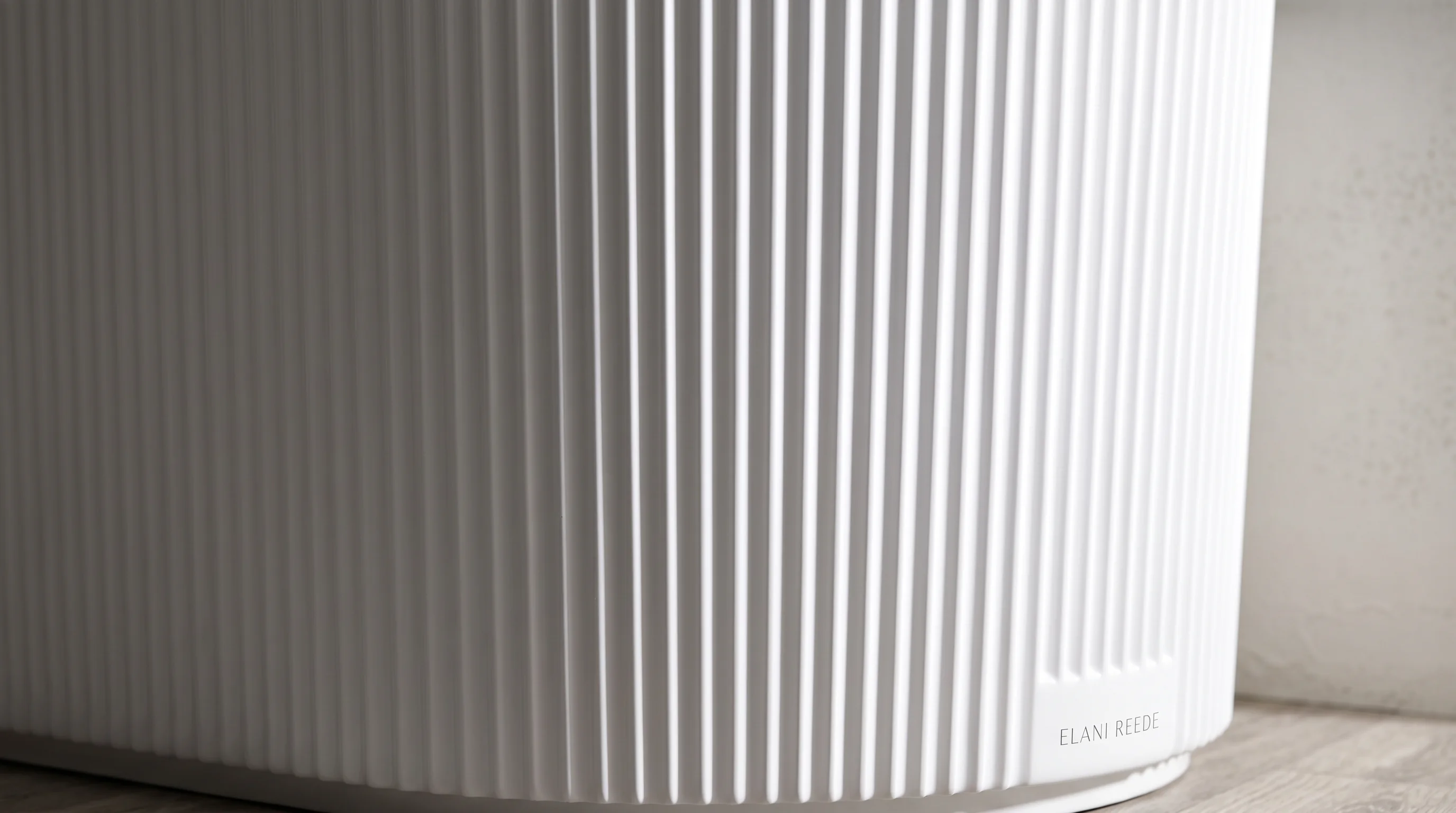
Fluted surfaces pair best with smooth marble or stone, limewash or plaster walls, and warm timber, and work least well alongside other strong textures like exposed brick or heavily patterned tile.
Fluting works best when it is the dominant texture in a space rather than one of many competing surfaces. Pair it with:
Smooth marble or stone — the contrast between the rhythmic grooves and the organic veining of natural stone is one of the most successful combinations in contemporary bathroom design.
Limewash or plaster walls — the soft, matte depth of a limewash wall complements fluted surfaces beautifully without competing for attention.
Warm timber — wooden floors, shelving, or accessories bring warmth to a fluted bathroom that can otherwise feel cool and architectural.
Avoid pairing fluted surfaces with other strong textures like exposed brick, heavily patterned tiles, or woven materials — they compete rather than complement.

The Elani Reede brings fluted design to the freestanding bath in its most considered form. Deeply grooved vertical fluting runs the full height of the bath exterior, catching light beautifully and adding a sense of height and presence to any bathroom it inhabits.
As a back-to-wall design, the Reede combines the visual sophistication of fluted texture with the practical flexibility of wall or corner mounted taps — making it as functional as it is beautiful.
A fluted bathroom uses surfaces with repeating vertical grooves — most commonly a fluted freestanding bath, but also extending to fluted tiles, fluted vanity panels, and fluted wall cladding. The term comes from classical architecture, where fluted columns featured the same parallel vertical channels. In a bathroom, the grooves catch and move light as the angle changes through the day, giving the surface a texture that a smooth equivalent cannot replicate.
Yes. The grooves on a fluted bath exterior are decorative — they do not affect the interior bath space, water capacity, or comfort. The surface is the same material (typically acrylic, stone resin, or composite) as a plain bath, and cleans in the same way. The only practical difference is that cleaning in the grooves takes slightly more attention than a smooth exterior surface.
Large-format stone tiles — travertine, limestone, or pale sandstone — are the most considered pairing. The natural variation in the stone provides visual interest without competing with the fluting. Avoid small mosaic tiles or heavily patterned tiles, which fight the disciplined repetition of the vertical grooves. Plain, warm-toned tiles in large format let the bath's texture be the room's detail.
No. Fluted surfaces draw from classical architecture — a design language that has been in continuous use for centuries. The current interest in fluted baths and bathroom surfaces is a revival of a durable formal principle, not a seasonal trend. The specific products and colourways change, but the underlying preference for textured, vertically-channelled surfaces in bathrooms is structural rather than cyclical.
Clean a fluted bath with a soft cloth or sponge and mild bathroom cleaner. Work along the grooves rather than across them to remove any product build-up. Avoid abrasive cleaners or scouring pads, which can scratch the surface. For stone resin baths, avoid bleach-based products. The grooves themselves do not collect significantly more residue than a flat surface under normal use.