How To Fit A Bath Tap — Deck, Wall Or Floor | Elani
Deck-mounted, wall-mounted or floorstanding. The fitting differs entirely, and one of them has to be decided before the floor goes down.
September 21, 2026
5 minutes
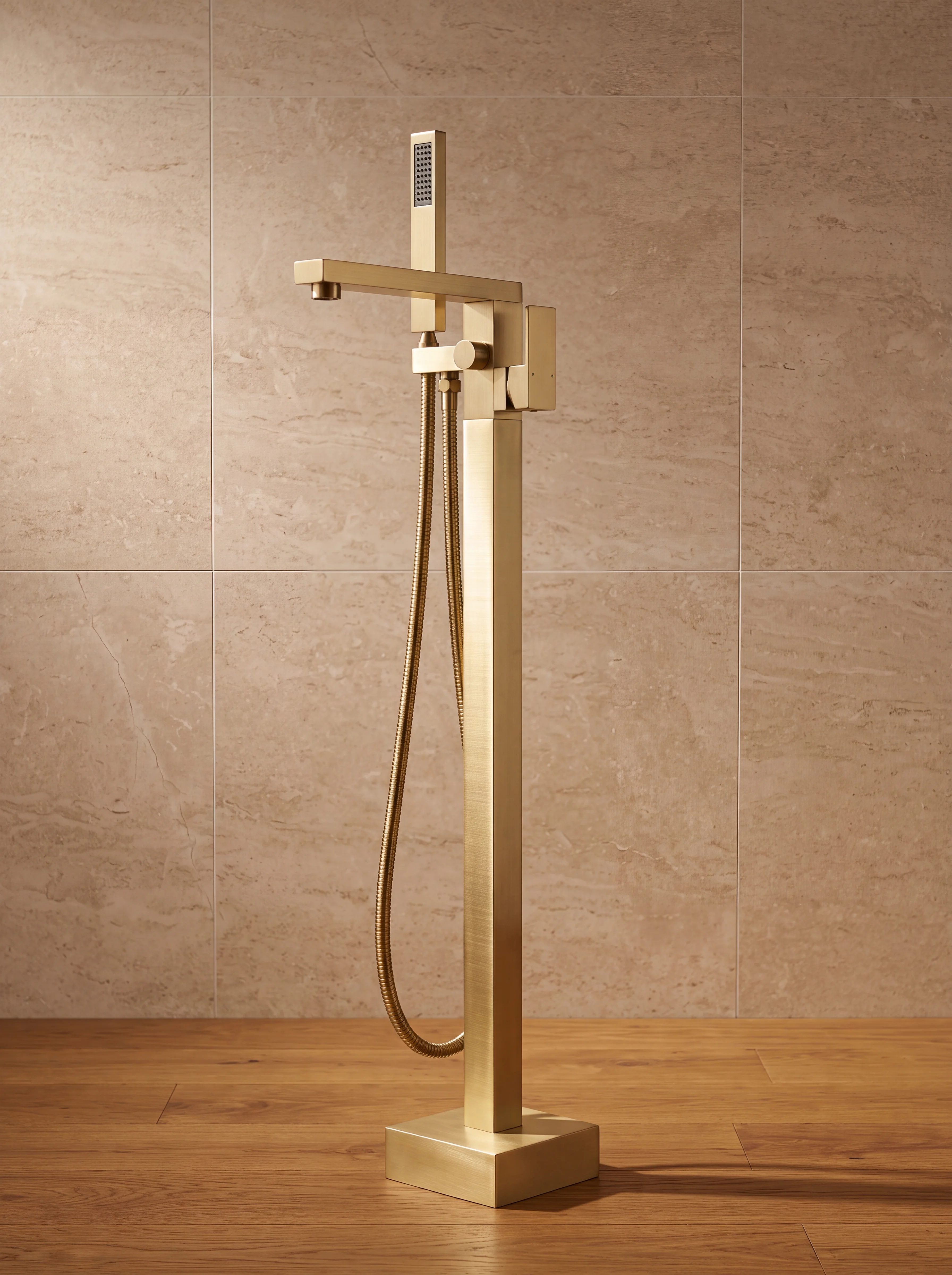
Deck-mounted, wall-mounted or floorstanding. The fitting differs entirely, and one of them has to be decided before the floor goes down.
September 21, 2026
Fitting a bath tap is either a straightforward afternoon or a job that needed deciding six months ago, and which one depends entirely on where the tap stands.
There are three mountings, and they are not three styles of the same job. They are three different jobs.
Featuring the Elani bath fillers.
Last updated 21 September 2026 · Elani Journal
Deck-mounted sits on the rim of the bath, through pre-drilled tap holes. The pipework arrives under the bath. This is the one most people can do themselves.
Wall-mounted comes out of the wall above the bath. The pipework is chased into the wall and has to be in place before tiling. Reversing this decision means taking tiles off.
Floorstanding rises from the floor beside a freestanding bath. The supply comes up through the floor, which means it has to be planned before the floor is laid.
Worth saying plainly, because it is the expensive mistake.
A floorstanding bath filler needs two pipes coming vertically out of your floor, in exactly the right position relative to a bath that has not been delivered yet. Once the floor is tiled, screeded or boarded, moving those pipes means lifting it.
So the order of work is: choose the bath, position it, set the tap position, run the pipework, then lay the floor. Not the other way round. If a fitter asks where the bath is going before the floor goes down, this is why.
Get the position from the tap's own specification rather than guessing — the distance from the bath rim and the height of the pipe stubs both matter, and a filler standing 40mm off is visible forever.
The Doré and Noir fillers are both floorstanding, so both need this planning.
Two things catch people out.
Tap holes. Many freestanding baths are supplied undrilled, deliberately — because they are designed for a floorstanding or wall filler. Some are drilled for one hole, some for two at 180mm centres. A two-hole tap will not fit a single-hole bath, and drilling a finished bath yourself is a good way to ruin it.
Rim thickness. Deck-mounted taps come with a threaded shank of a given length. A thick stone-resin or cast rim can be deeper than the shank, in which case the fixing nut has nothing to bite on. Check the rim depth against the tap's specification before buying.
A bath tap has a job a basin tap does not: filling a large volume in a reasonable time.
Flow rate is quoted in litres per minute, and a bath filler wants a healthy one or you will be waiting. That figure depends on your system. A combi or an unvented cylinder runs at mains pressure and will usually be fine. A gravity-fed system — a cold tank in the loft and a hot cylinder — runs at low pressure, and a tap specified for high pressure will trickle.
Check the minimum pressure the tap requires against what your system delivers, before you buy rather than after. This is the single most common reason a new bath tap disappoints.
The one worth attempting yourself.
Isolate the water at the isolation valves or the stopcock, and open the existing tap to drain the pipe.
Remove the old tap — undo the flexible tails or compression nuts underneath, then the backnut holding it down. Expect this to be the hard part; a backnut that has been in place fifteen years in a damp space will resist. A basin wrench earns its money here.
Fit the new one before the bath is boxed in if you possibly can. Access underneath a fitted bath ranges from awkward to impossible, and it is far easier to attach the tails to the tap on the bench than lying under it.
Seat it on its washer or seal, tighten the backnut evenly, connect the tails, and turn the water on slowly with a dry cloth underneath so you can see any weep immediately.
Wall-mounted and floorstanding both involve pipework in the structure of the room, and both are worth paying for — not because the connections are difficult but because the positioning is unforgiving and the consequences of getting it wrong are buried under tiles or floor.
Deck-mounted is a reasonable DIY job if you can isolate the water and reach the underside of the bath. If the bath is already boxed in with no access panel, that calculation changes.
A deck-mounted tap, usually yes — it needs the water isolating, a basin wrench for the backnut and access to the underside of the bath. Wall-mounted and floorstanding fillers involve pipework inside the wall or floor and are worth paying a plumber for, mainly because the positioning has to be exact and cannot be adjusted later.
Often not. Many are supplied undrilled because they are designed to pair with a floorstanding or wall-mounted filler. Check before ordering the tap — a two-hole deck tap will not fit an undrilled bath, and drilling a finished bath is best left to the manufacturer.
Before the floor is laid. The supply comes vertically out of the floor in a position set by both the bath and the tap's own specification. Once the floor is tiled or boarded, moving them means lifting it, so the bath position has to be settled first.
Enough to fill the bath without a long wait, which depends on your system rather than the tap alone. Mains-pressure systems such as a combi or unvented cylinder are usually fine. Gravity-fed systems run at low pressure, so check the tap's minimum pressure requirement before buying.
Usually a mismatch between the tap and the system pressure, or a flow restrictor fitted inside the tap. Check the minimum pressure the tap is specified for against your system. On a gravity-fed setup a high-pressure tap will always underperform.
Slightly — there is a base plate on the floor that collects dust and needs wiping, and in hard water areas the column shows water marks. In exchange you get nothing on the bath rim at all, which is usually the reason people choose one.
Next: What Tap Goes With A Freestanding Bath? and Freestanding Bath Taps — The Complete Guide. If yours is dripping rather than missing, see How To Fix A Dripping Tap.