Bathroom Renovation Mistakes To Avoid | Elani
The five most common bathroom renovation mistakes UK homeowners make — and how to avoid each one before work starts.
August 24, 2026
5 minutes
The five most common bathroom renovation mistakes UK homeowners make — and how to avoid each one before work starts.
August 24, 2026
Last updated 24 August 2026 · Elani Journal
The most common bathroom renovation mistakes are planning too fast, underestimating storage, skipping ventilation, tiling over old tiles, and choosing looks over how the room performs day to day. Each is avoidable with the right sequence of decisions before work starts — see How To Plan A Bathroom Renovation for that sequence in full.
Rushing straight to choosing a bath, tiles, and taps before the layout and budget are settled is the single most common cause of a renovation running over. Decisions made in the wrong order tend to get undone — a bath ordered before the plumbing layout is confirmed, tiles bought before the wall they're going on is decided.
The fix is sequencing, not slowing down: settle the layout and budget first, order long-lead items early, and choose the visible pieces — bath, tap, mirror, accessories — once everything they depend on is fixed. See How Long Does A Bathroom Renovation Actually Take? for how that sequence breaks down week by week.
Storage gets deprioritised in favour of the bath, the tiles, and the tap, and it's almost always the thing homeowners regret cutting once the renovation is finished. A bathroom with nowhere to put toiletries, towels, and cleaning products looks cluttered within weeks, no matter how considered the rest of the room is.
Wall-hung vanity units and recessed niches solve this without eating into floor space, which matters disproportionately in the smaller bathrooms typical of UK homes — see Small Bathroom Ideas for layout approaches built around exactly this constraint.
A bathroom without adequate extraction develops damp, mould, and a shortened lifespan for grout, sealant, and paint — often within the first year. It's an easy thing to under-spec because it's invisible in a showroom, but it's one of the most expensive mistakes to fix retroactively once tiling and flooring are down.
Building regulations set a minimum extraction rate for a reason. If a wet room or walk-in shower is part of the renovation, ventilation matters even more, because there's more surface area staying wet for longer after each use.
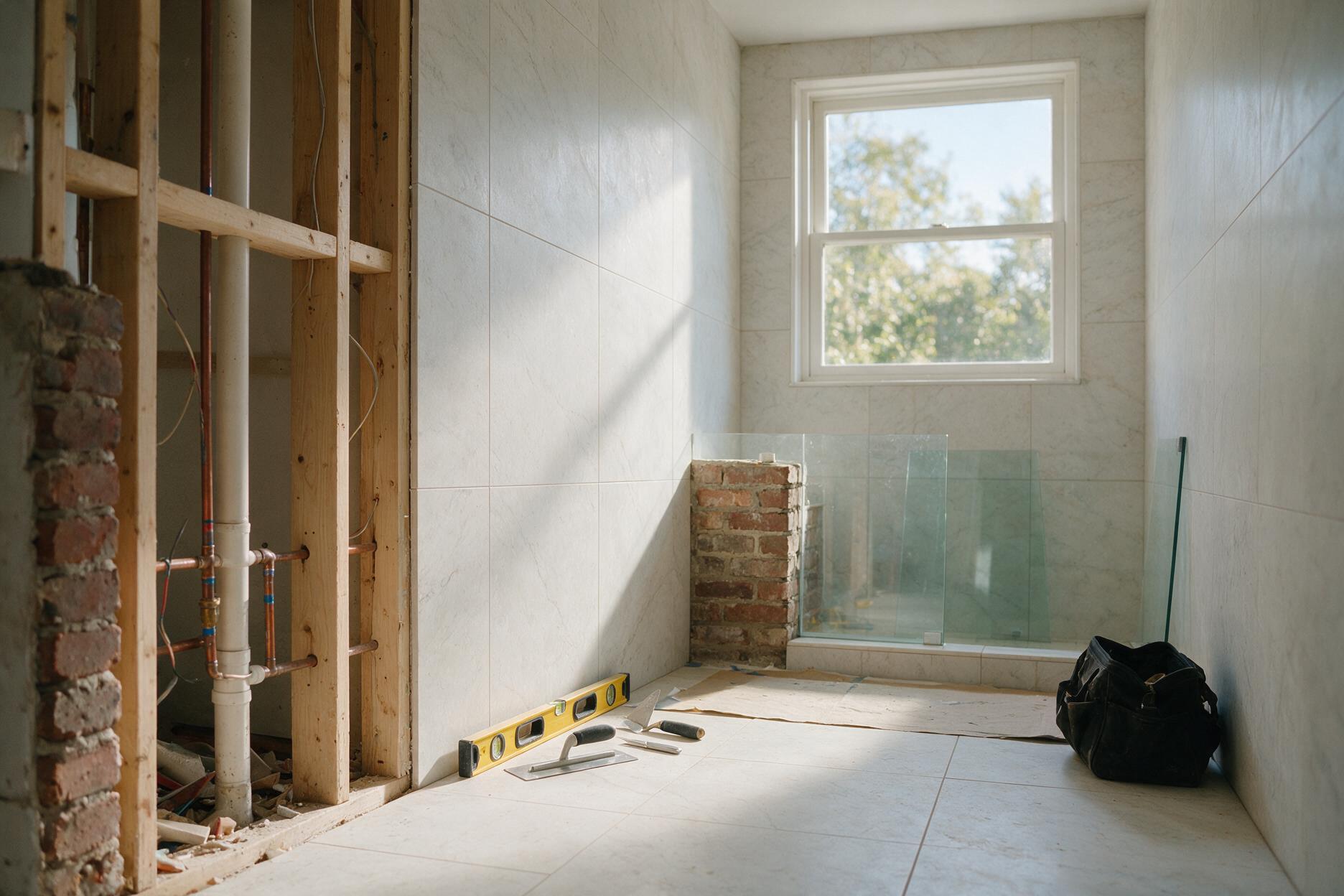
Tiling directly over existing tiles is sometimes offered as a cost-saving shortcut, and it's rarely worth taking. It adds height that can affect door clearance and skirting lines, and — more importantly — it hides whatever condition the wall behind the old tiles is actually in, including damp or movement that should be addressed before new tiles go up, not sealed behind them.
Stripping back to the substrate costs more upfront but avoids finding a hidden problem years into a renovation that's already finished and lived in.
A bathroom photographed well in a moodboard doesn't always function well in daily use. Polished chrome that shows every water spot, a basin tap with the wrong spout height for the basin it's paired with, a floor finish that's beautiful but dangerously slippery when wet — these are the mistakes that only become obvious after the renovation is finished and lived in for a few weeks.
The practical test: before finalising a finish or fitting, ask how it performs under daily use, not just how it looks in a single photograph. Matte finishes over polished ones, ceramic disc cartridges over basic ones, non-slip flooring in wet zones — small decisions that don't show up in a mood board but shape how the room actually feels to live with.
Poor sequencing — decisions made out of order, or long-lead items like bespoke baths and tiles not ordered early enough to arrive when needed. Planning the sequence properly before work starts avoids most delays.
It's possible but rarely advisable. It hides the condition of the wall behind the old tiles and adds height that can cause clearance issues with doors and skirting. Stripping back to the substrate is the safer long-term choice.
More than feels necessary at the planning stage. Storage is consistently the thing homeowners wish they'd prioritised more once a renovation is finished and daily use begins.
Yes. Inadequate extraction leads to damp and mould, often within the first year, and it's one of the most expensive things to fix after tiling and flooring are already down.
Planning your own renovation? Start with How To Plan A Bathroom Renovation for the full sequence, or How Long Does A Bathroom Renovation Actually Take? for a realistic timeline.