Is Travertine Still On Trend For Bathrooms? | Elani
Travertine has been used in bathing spaces since Roman times. Why it's less a 2026 trend than a permanent material choice.
August 10, 2026
4 minutes
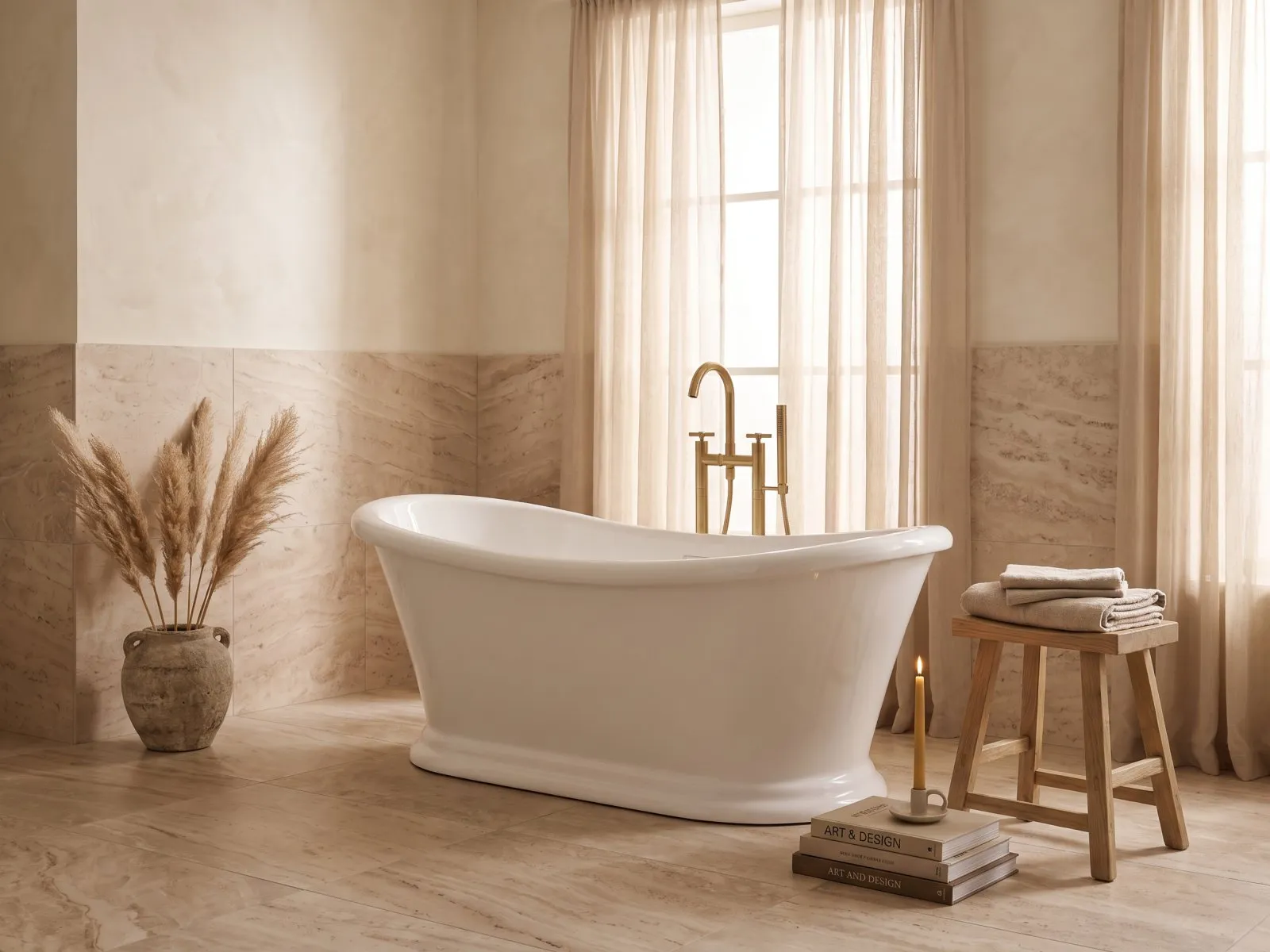
Travertine has been used in bathing spaces since Roman times. Why it's less a 2026 trend than a permanent material choice.
August 10, 2026
Some materials go in and out. Others were never really "in" to begin with — they're simply always there, waiting to be rediscovered.
Travertine is not a passing trend in bathroom design. It has been used in bathing spaces since Roman times, and its current prominence in considered UK bathrooms reflects a return to genuine natural materials rather than a seasonal aesthetic. As long as buyers continue prioritising warm, tactile, natural surfaces over printed or synthetic alternatives, travertine's place is secure.
Last updated 23 August 2026 · Elani Journal
Travertine's association with bathing spaces goes back further than almost any other stone used in interiors today — it was the material of choice for Roman baths, and has remained in continuous architectural use ever since. That's a very different kind of longevity to a stone that became fashionable in the last design cycle.
What has changed recently is how it's used — large format slabs with minimal grout lines, honed rather than glossy finishes, and pairing with warm brass or matte black hardware rather than the cooler schemes travertine was once set against. That's a shift in application, not in the material's underlying appeal.
The trade-off worth knowing before committing: travertine is porous and needs sealing on installation, with re-sealing roughly every 1–2 years in a wet environment to resist staining and etching from acidic products. Maintained properly, it performs well and ages the way most people actually want stone to age — developing character rather than looking tired.
Compared with marble, travertine is generally more forgiving — its natural variation and matte, fossil-marked texture hides minor wear better than marble's smoother, more uniform surface. Compared with porcelain tile made to look like stone, travertine costs more and asks more in maintenance, but offers a genuine material depth that printed surfaces can't fully replicate.
For the full palette and material guide this pairs with, see Warm Neutral Bathroom Ideas, and for the pieces that suit a travertine bathroom, our Quiet Luxury Bathroom Design guide.
Yes — it should be sealed on installation and re-sealed roughly every 1–2 years in a wet environment to resist staining and etching from acidic products.
Typically, yes — natural stone carries a premium over porcelain in both material and installation cost, though porcelain now offers convincing travertine-look alternatives for anyone wanting the aesthetic with less maintenance.
Honed travertine has a smooth, matte, low-sheen finish; polished travertine is glossier and more reflective. Honed is generally preferred for bathroom floors, since it offers better grip underfoot.
Polished travertine can be slippery when wet. Honed travertine offers noticeably better traction, which is why it's the more common choice for bathroom floors specifically.