How To Clean A Matt Black Tap Without Ruining It | Elani
Abrasives and limescale remover dull a matt black finish permanently. Warm soapy water, a soft cloth and drying after use is the whole routine.
August 24, 2026
4 minutes
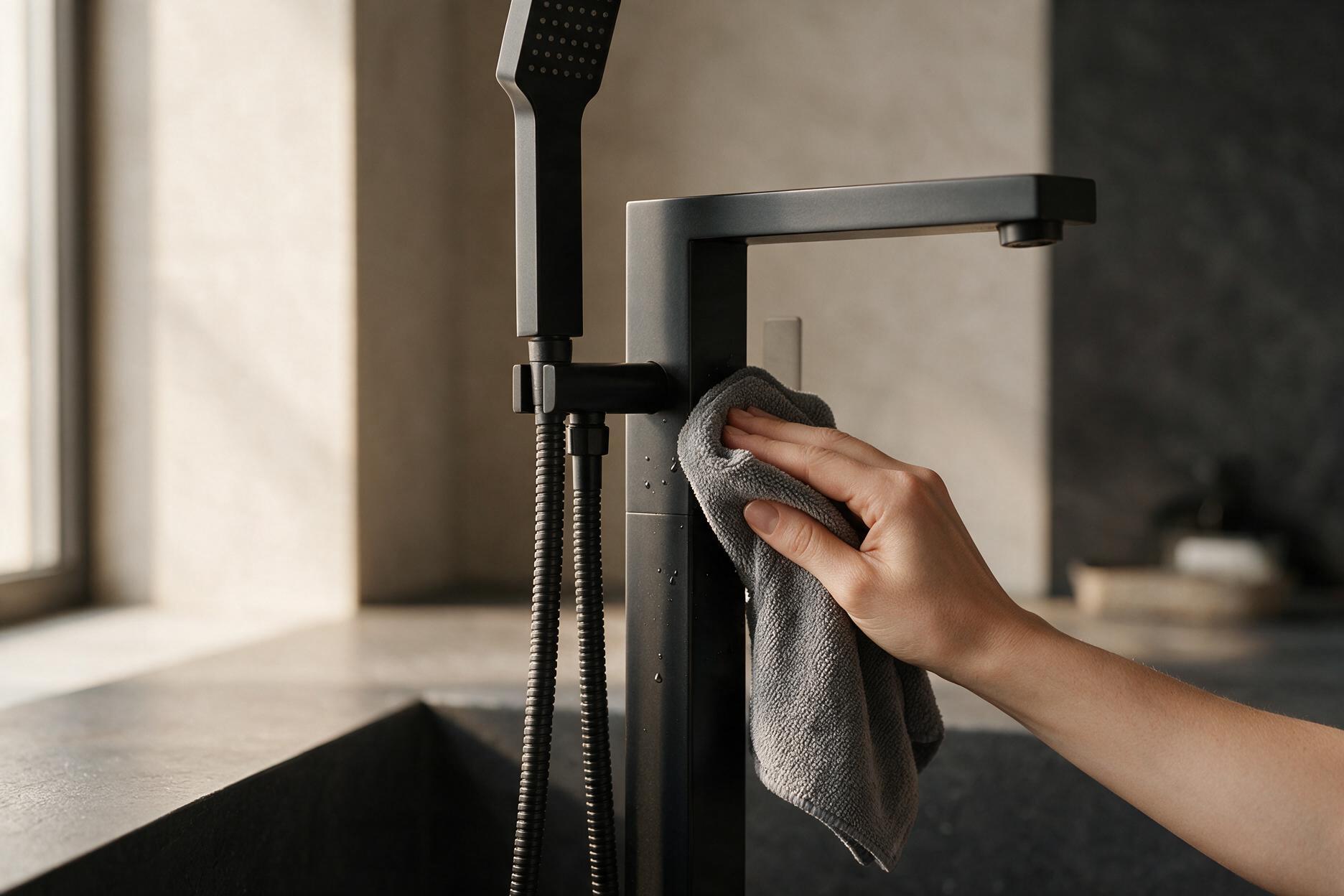
Abrasives and limescale remover dull a matt black finish permanently. Warm soapy water, a soft cloth and drying after use is the whole routine.
August 24, 2026
Last updated 24 August 2026 · Elani Journal
Clean a matte black tap with warm water, a few drops of mild washing-up liquid and a soft microfibre cloth, rubbed gently in circular motions, then rinsed and dried immediately. Anything acidic, abrasive or bleach-based — including vinegar, which gets recommended constantly for other finishes — will strip a PVD matte black coating faster than almost anything else in the bathroom.
Chrome and polished nickel reflect light, which means watermarks and light limescale get lost in the glare. Matte black absorbs light instead, which is exactly why it reads as considered rather than clinical — but it also means every water spot, soap streak and dust mark sits visibly against the surface. It isn't that matte black marks more easily than other finishes, covered in full in Matte Black Bathroom Ideas. It's that nothing hides it.
Warm water and a mild, non-abrasive soap on a microfibre or soft cotton cloth is enough for genuine day-to-day cleaning — a pack of microfibre cloths from M&S or Sainsbury's is all you need, and a small bottle of Fairy washing-up liquid from Asda or Tesco covers everything else. Work in small circular motions rather than long wipes, which can leave streaking on a matte surface, then rinse with clean water and dry immediately with a separate cloth. The drying step matters more than the cleaning step — most of what makes a matte black tap look tired is water left to evaporate on the surface rather than dirt.
Elani's matte black taps and accessories — Noir, Sable, the Edge set — use a PVD (physical vapour deposition) finish, which is a genuinely bonded layer of colour rather than paint or lacquer sitting on top of the metal. It's more durable than either of those, but it isn't indestructible. Avoid bleach, vinegar, citrus-based cleaners, and anything sold as a descaler or limescale remover, all of which are acidic enough to dull or strip the coating over repeated use — if limescale is the issue rather than everyday grime, see how we handle it on brushed brass for the same underlying principle. Skip anything abrasive too — scouring pads, steel wool, and even an old toothbrush can leave fine scratches that show up as a dull patch rather than a scratch mark, because they burnish the matte texture into something closer to satin.
The single most effective habit is keeping a small cloth near the tap and giving it a quick wipe after use, particularly in hard water areas where mineral deposits are what actually cause most of the visible marking people blame on the finish itself. A tap wiped dry every time rarely needs anything more than that. For more on choosing and living with matte black elsewhere in the room, see Does Matte Black Go Out Of Fashion In Bathrooms? And if you're weighing up whether a genuine PVD finish is worth the extra cost over a basic chrome tap, see Bathroom Tap Prices Explained.
Not inherently — PVD coatings are typically harder-wearing than chrome plating. The risk comes from abrasive cleaning tools rather than everyday use, so the finish itself isn't the fragile part.
No. Vinegar is one of the most commonly recommended DIY cleaners for limescale on other finishes, but its acidity will dull and eventually strip a PVD coating. Stick to warm water and mild soap.
A genuine PVD finish, kept away from acidic and abrasive products, holds its colour for years under normal bathroom use. Fading is almost always a sign of harsh cleaning products rather than age on its own.
Painted or lacquered finishes sit on top of the metal and can chip or wear through with contact. PVD is a bonded coating applied under vacuum, which is why it's the standard for genuinely durable matte black bathroom hardware — including everything in the Elani range.
Noir — Floorstanding Bath Filler, Matte Black. Shop now →
Sable Basin Tap — Matte Black. Shop now →
Edge — Matte Black Bathroom Set. Shop now →