Are Blue Bathrooms The Next Big Colour Trend? | Elani
Soft, muted blues with grey and mineral undertones are replacing brighter nautical shades. How to use the trend without it dating in five years.
August 23, 2026
4 minutes
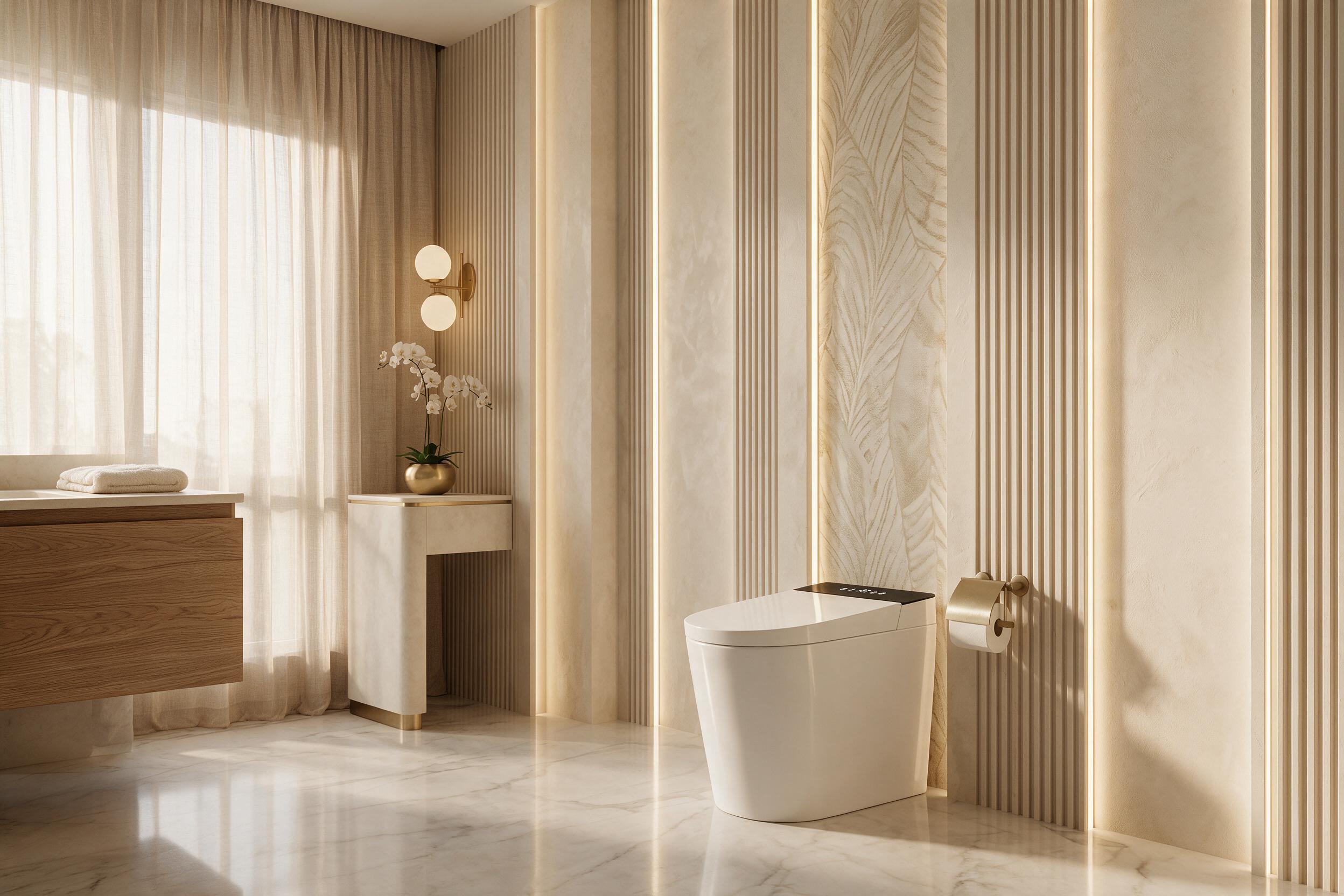
Soft, muted blues with grey and mineral undertones are replacing brighter nautical shades. How to use the trend without it dating in five years.
August 23, 2026
Green had its moment. Warm neutrals are still having theirs. The colour building the most genuine momentum heading into 2026's colder months is blue — though not the blue most people picture first.
Navy as backdrop, Onyx as centrepiece.
Last updated 23 August 2026 · Elani Journal
The bright, nautical blues that once defined "blue bathroom" are largely out. What's replacing them is softer and considerably more sophisticated: muted, complex blues with grey, green or mineral undertones, closer to a stormy sky or weathered slate than a swimming pool. It's a shift from decorative to atmospheric — blue as a mood rather than a theme.
Blue works two ways in a bathroom: soft, pale or blue-grey walls create a calming, spa-like atmosphere that's forgiving and easy to change later, while a bold navy feature wall — often behind a freestanding bath — adds dramatic depth and contrast without covering the whole room.
Soft and calming. Pale, powder, or blue-grey walls create a genuinely peaceful, spa-like atmosphere, and read as fresh and light rather than cold — provided they're paired correctly. This is the lower-commitment option: easy to change later, and forgiving of a smaller or darker room.
Bold and dramatic. Deep navy, used on a single feature wall or tiled behind a freestanding bath, adds real depth and contrast without the intensity of covering an entire room. It's a strong choice behind a bath specifically, since the bath itself becomes a bright, sculptural focal point against the dark backdrop.
Blue's biggest risk is reading as cold. The fix: pair blue with white fixtures, neutral flooring, and warm accents — brass, warm-toned wood — to stop the room tipping into clinical. A gloss white bath against a soft blue or navy wall, finished with brushed brass taps and accessories rather than chrome, keeps the warmth in the room that blue alone can't provide.
A white, sculptural bath — Ondine, Isla, or Reverie all work — reads as the bright centrepiece against a navy or soft blue wall. Bring warmth back in with brushed brass fittings from the Aurum Collection. For a bolder, more graphic pairing, a matte black bath like Onyx against a deep navy wall leans into the drama rather than softening it.
Only if it's paired poorly. Blue combined with white fixtures, neutral flooring and warm metal accents reads as calming rather than cold. The mistake to avoid is pairing blue with other cool tones throughout.
Soft, pale blue works as a wall colour across the whole room and suits smaller or darker bathrooms particularly well. Navy is more often used as a feature — one wall, or the area behind a freestanding bath — because full-room navy can read heavy in a room without strong natural light.
The muted, mineral-toned blues currently trending are less likely to date than the brighter, more decorative blues of previous years, since they read closer to a neutral than a strong colour statement.
You don't need a blue bath at all — in fact, most of the strongest examples of this trend pair a white or black bath with blue walls rather than a coloured bath itself. The wall or tile does the colour work; the bath provides contrast.
See also: Green Bathroom Ideas and Warm Neutral Bathroom Ideas.