Does Brushed Brass Tarnish? PVD vs Plated | Elani
Quality brushed brass is PVD-coated and will not tarnish. Plated and lacquered brass will. How to tell which you are buying before it dulls in year three.
August 10, 2026
4 minutes
Quality brushed brass is PVD-coated and will not tarnish. Plated and lacquered brass will. How to tell which you are buying before it dulls in year three.
August 10, 2026
It's the question worth asking before you commit to any warm metal finish — because "brass" quietly covers a wide range of manufacturing processes, and not all of them hold up in a bathroom.
Cheap brass fittings have earned the finish a reputation it doesn't fully deserve. The way brass is finished changes everything about how it performs over years of steam, water, and cleaning.
No — genuine brushed brass PVD does not tarnish. The coating is bonded to the metal at a molecular level, which means it resists tarnishing, corrosion, and discolouration for the life of the fitting. This is different to lacquered or electroplated brass, which can dull, tarnish, or peel over time in a wet environment.
Last updated 23 August 2026 · Elani Journal
PVD stands for physical vapour deposition — a process that bonds a thin layer of metal to the base fitting at a molecular level, inside a vacuum chamber, rather than applying a coating on top of the surface afterwards. The result is a finish that is genuinely part of the metal, not a layer sitting over it.
Lacquered brass works differently. A clear protective top coat is applied over polished brass to slow tarnishing, but that coating wears thin with repeated cleaning and steam exposure, and once it's compromised, the brass underneath tarnishes exactly as untreated brass would. Electroplated finishes carry a similar risk — a thin plated layer that can wear through with use.
Clean with a soft cloth and warm soapy water, and dry the surface immediately rather than leaving water to sit — this matters more for water spotting than for the PVD coating itself, which isn't damaged by water. Avoid abrasive cloths, bleach-based products, and limescale removers, all of which can strip or scratch even a genuine PVD coating over time.
If a piece looks dull, resist reaching for metal polish. PVD brushed brass isn't designed to be buffed like solid polished brass, and abrasive polishing can damage the finish rather than restore it. In the vast majority of cases, a soft cloth and warm water brings the surface back — genuine wear after years of use isn't something a polish reverses.
Brushed brass PVD is best used on the pieces that get the most handling and water exposure in a bathroom — taps, towel rails, soap dispensers, and mirror frames — since that's where a durable, molecularly bonded finish earns its value over a lacquered alternative.
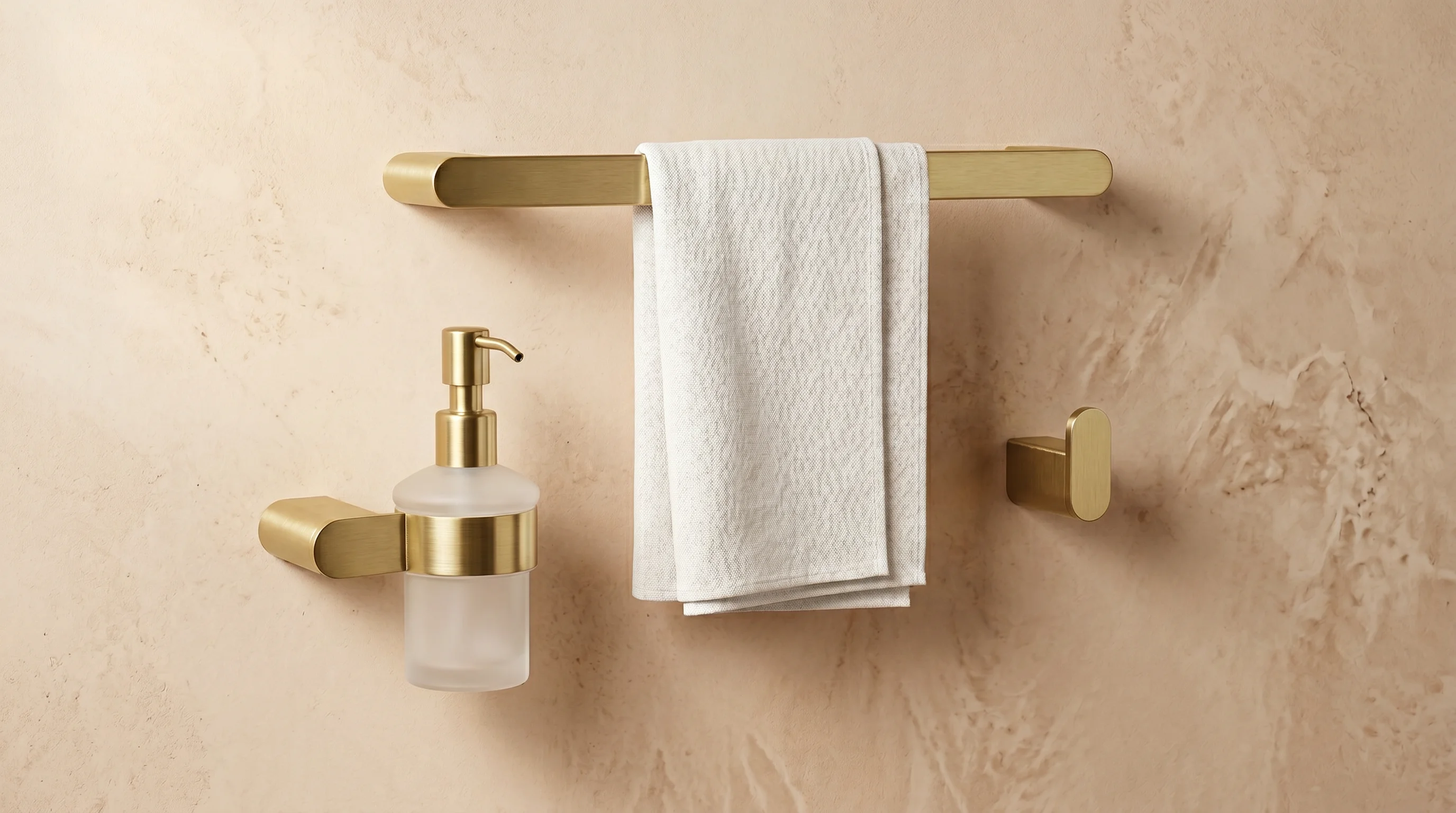
The Elani Aurum Collection — soap dispenser, towel rail, and robe hooks — is finished in genuine brushed brass PVD, as is the brushed brass Circa mirror. These are the pieces that see the most handling and water exposure in a bathroom, which is exactly where a genuine PVD finish earns its price over a lacquered alternative.
For the full picture on where and how to use the finish throughout a bathroom, see our guide to brushed brass bathroom ideas.
Hard water doesn't cause the PVD coating itself to tarnish, but it can leave limescale deposits on the surface if water isn't dried off — these look similar to tarnishing but are simply mineral buildup. Remove with a soft cloth and water rather than a limescale remover, which can damage the coating.
PVD coatings are typically rated for decades of normal domestic use, since the coating is molecularly bonded rather than applied as a surface layer. Under ordinary bathroom conditions — regular cleaning, no abrasive products — it should outlast most other elements of the room.
The two are broadly comparable in durability, but PVD brass tends to hide wear — fingerprints, water spots, minor scratches — more effectively than chrome's high-shine surface, which shows every mark.
Yes. The two finishes sit in different tonal families without either being reflective, so used deliberately — one for larger fixtures, one as an accent — the contrast reads as intentional rather than accidental.