How To Create A Spa Bathroom At Home | Elani
The spa bathroom is 2026's defining trend. From freestanding baths and smart toilets to materials and lighting — our complete UK guide.
June 9, 2026
5 minutes
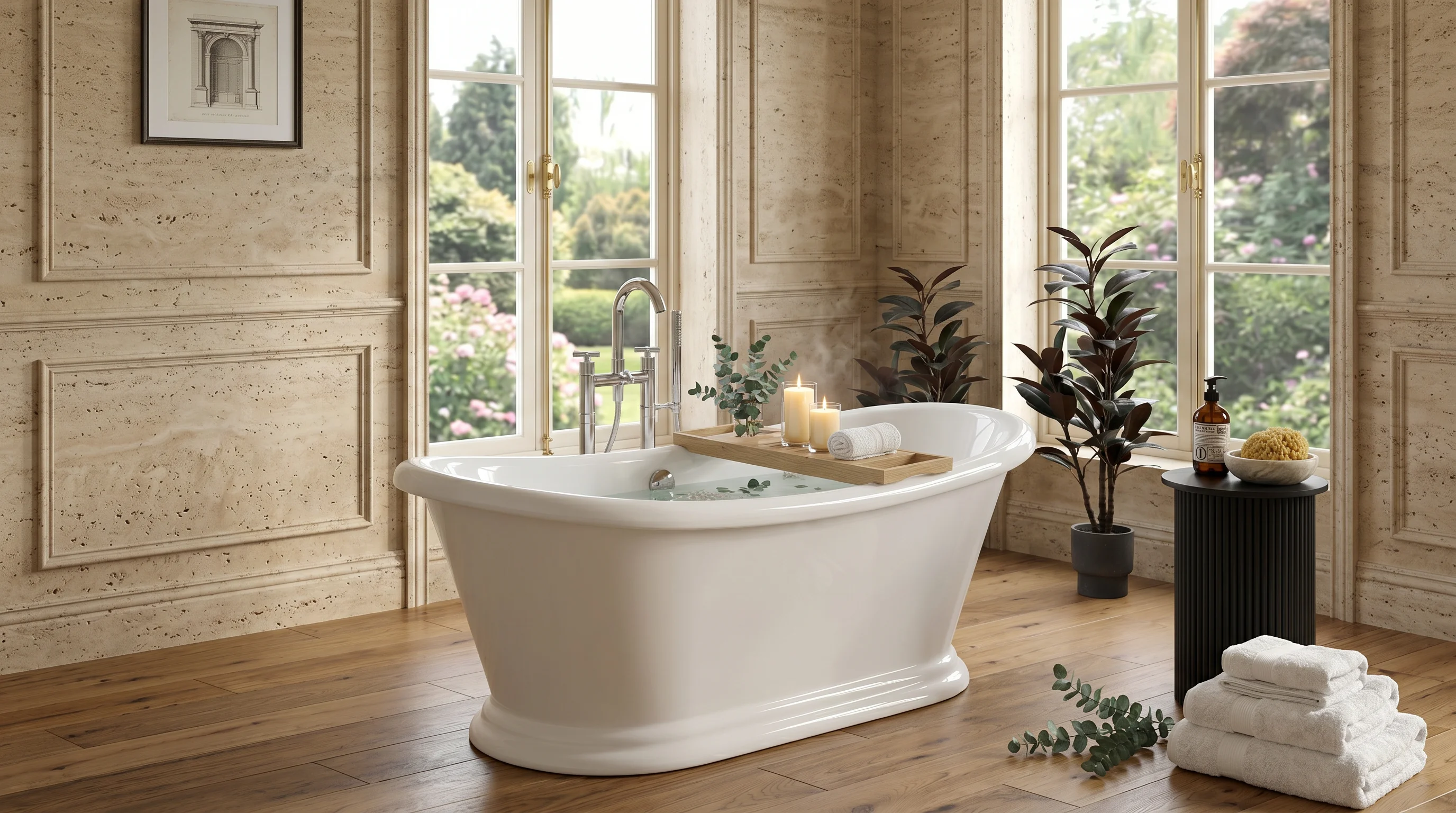
The spa bathroom is 2026's defining trend. From freestanding baths and smart toilets to materials and lighting — our complete UK guide.
June 9, 2026
There is a difference between a bathroom that works and a bathroom that restores.
The first is purely functional — a room you pass through. The second is a destination. A place where the day is washed away as much as anything else. In 2026, more UK homeowners than ever are choosing the second kind, transforming their bathrooms into private spa retreats that prioritise calm, comfort, and genuine wellbeing.
The good news is that creating a spa bathroom is less about expense and more about intention. Here is how to do it properly. Browse our full spa-style bath collection for baths built with exactly this in mind.
Last updated 24 August 2026 · Elani Journal
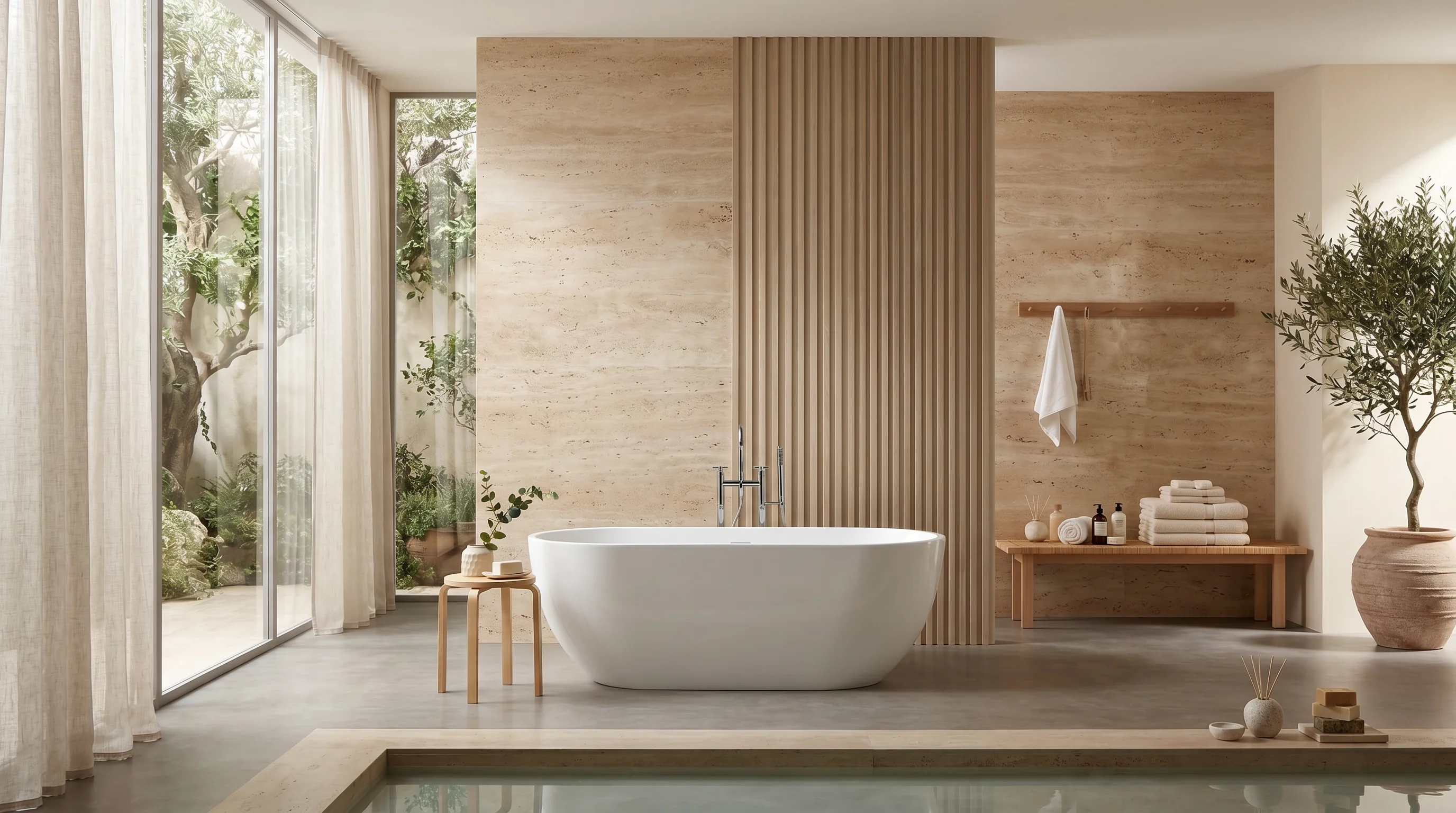
A spa bathroom feels like a spa because of what's absent, not what's added — restraint, quality light, and warm materials matter more than any single feature.
Before choosing a single product, it helps to understand what actually makes a spa feel like a spa. It is rarely any one feature. It is the absence of clutter, the quality of light, the warmth of materials, and the sense that every element has been chosen deliberately.
A spa bathroom is calm because nothing in it is fighting for attention. That principle — restraint over abundance — should guide every decision that follows.
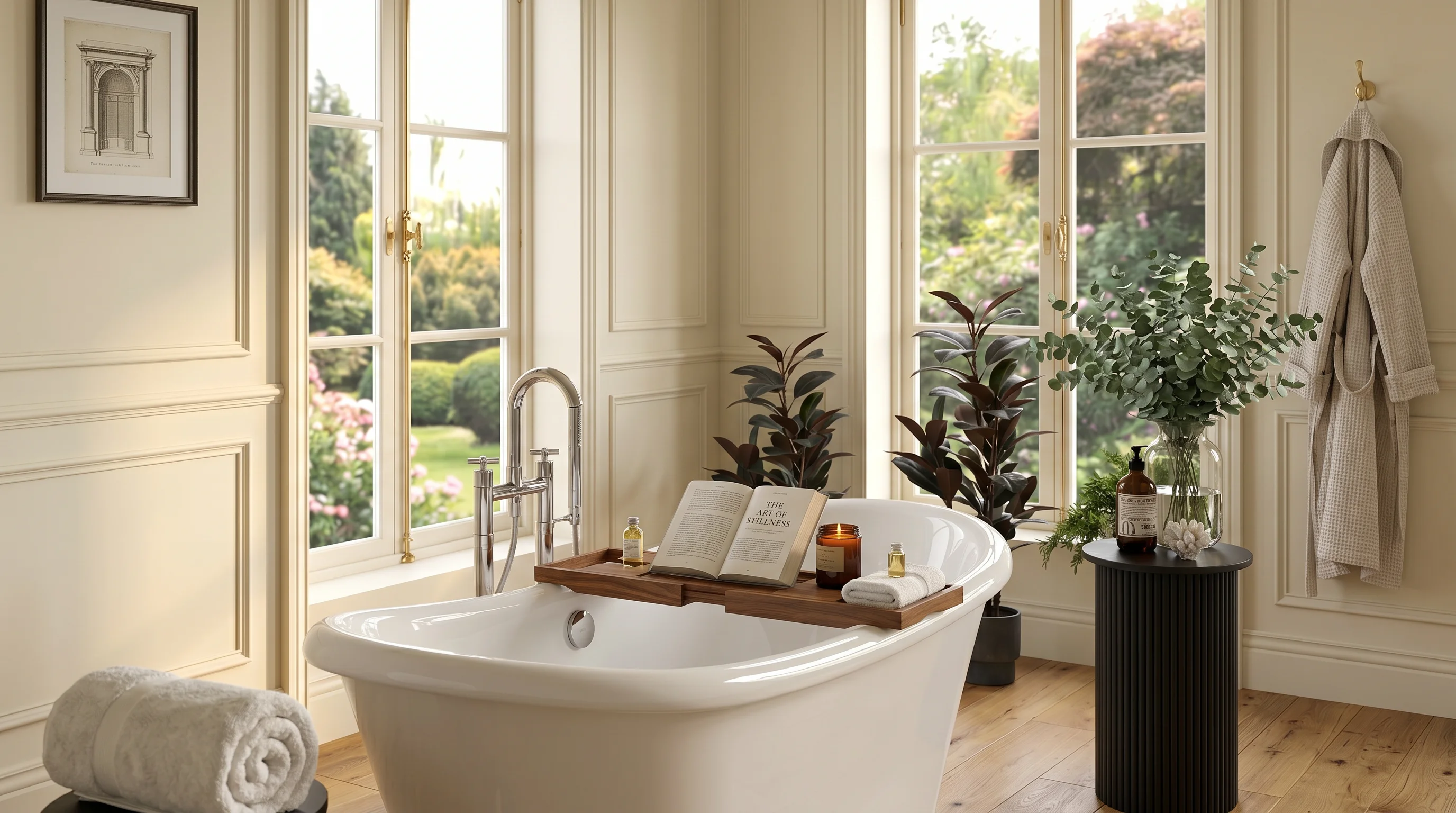
The single most transformative addition to a spa bathroom is a freestanding bath with generous, deep proportions, positioned where it has room to breathe rather than crowded into a corner.
Nothing says spa quite like a freestanding bath. It is the single most transformative element you can introduce, turning bathing from a quick routine into a genuine ritual.
For a spa atmosphere, choose a bath with generous proportions and a deep, comfortable interior. Clean, organic forms work best — a bath that feels sculptural and considered rather than purely functional. The Elani Forme and Crest both offer the kind of refined silhouette that anchors a spa bathroom beautifully, while the deep immersion of a 180 litre capacity bath makes the experience genuinely restorative. For a bolder spa statement, the translucent Aquaire and monolithic Onyx bring the same sense of ritual with far more visual drama.
Position the bath where it can breathe — ideally near a window with natural light, or as a clear centrepiece with space around it. A freestanding bath crowded into a corner loses much of its spa quality.
The two comfort upgrades that most define a modern spa bathroom are a smart toilet with heated seat and warm water cleansing, and a heated towel rail.
The modern spa bathroom is increasingly defined by technology that disappears into the experience. Nothing breaks spa-like calm faster than cold, clinical fixtures — and few upgrades transform the daily experience as much as intelligent comfort systems.
A smart toilet is the clearest example. Heated seat, warm water cleansing, air drying, and a considered design that looks like a deliberate piece rather than a purely functional fixture — these features bring genuine hotel-spa comfort into the everyday bathroom. The Elani Aura was designed for exactly this purpose, combining spa functionality with a clean, refined aesthetic that suits the calm of a wellness space.
Heated towel rails are the other essential. The simple luxury of a warm towel after a bath is one of the most spa-like touches available, and one of the most affordable to introduce.
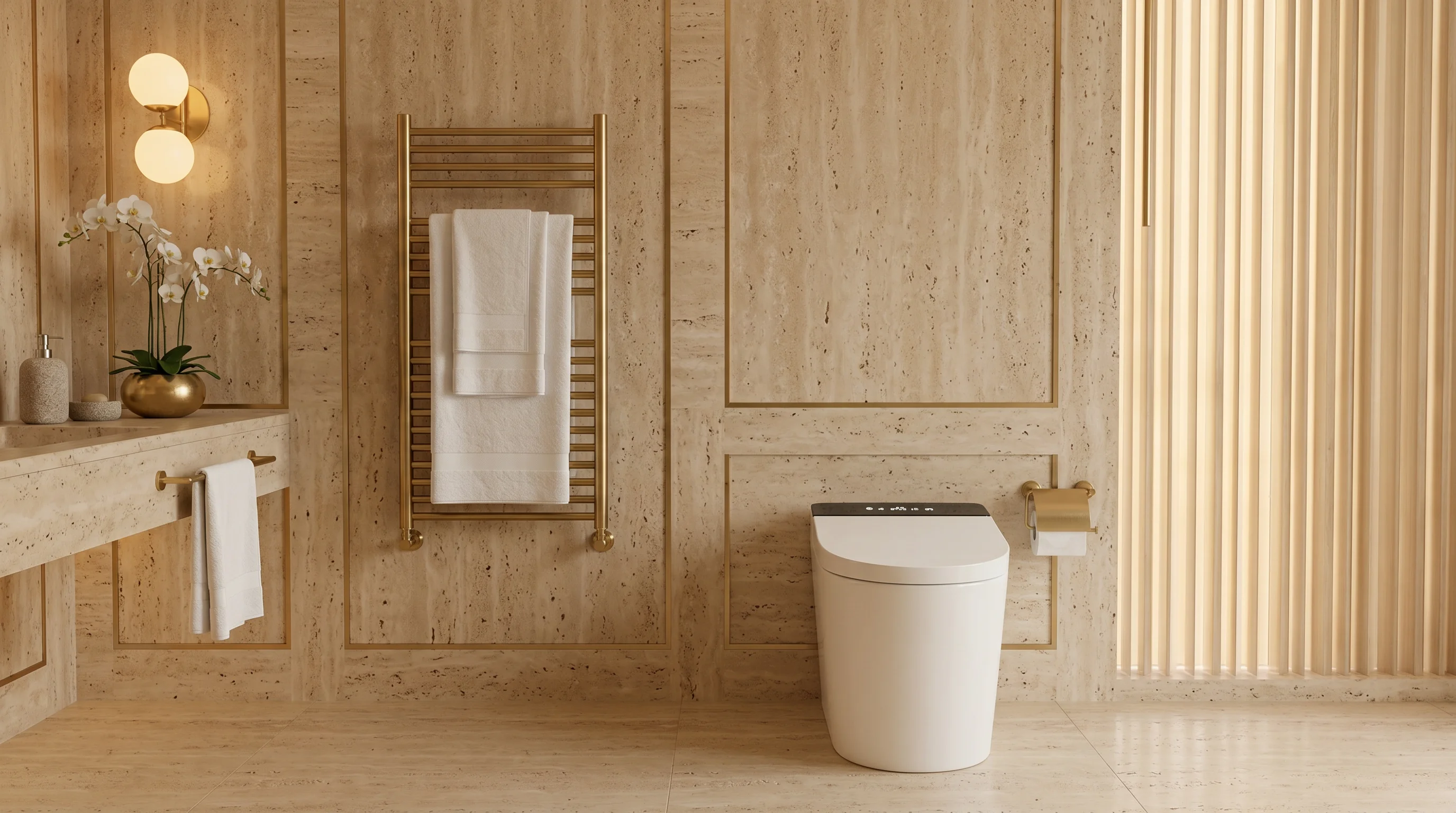
Natural stone, warm timber, limewash walls, and soft neutral tones create the tactile warmth a spa bathroom needs — travertine in particular defines the 2026 spa look.
The cold, all-white bathroom is the opposite of a spa. Warmth is essential — and it comes from materials as much as temperature.
Natural stone, warm timber, limewash or plaster walls, and soft neutral tones create the tactile, grounded feeling that defines a spa interior. Travertine, in particular, has become a defining material of the 2026 spa bathroom — its warm tone and subtle texture bring an organic calm that cooler materials cannot replicate.
Layer these with natural textures — a timber bath tray, a woven basket, linen towels, a stone soap dispenser — and the bathroom begins to feel less like a utility room and more like a retreat.

Spa-like lighting means warm-toned, dimmable, layered light sources — wall sconces and concealed LED strips rather than a single bright overhead fixture.
Lighting is perhaps the most underestimated element of a spa bathroom. A single bright ceiling light is the enemy of calm.
Instead, layer your lighting. Warm-toned bulbs rather than cool white. Dimmable where possible. Wall lights or sconces at eye level rather than harsh overhead spots. Candlelight for the evening. The goal is soft, warm, adjustable light that can shift from practical in the morning to restful at night.
If you are renovating, consider concealed LED strip lighting behind mirrors or beneath vanity units — it creates a soft ambient glow that feels distinctly spa-like.
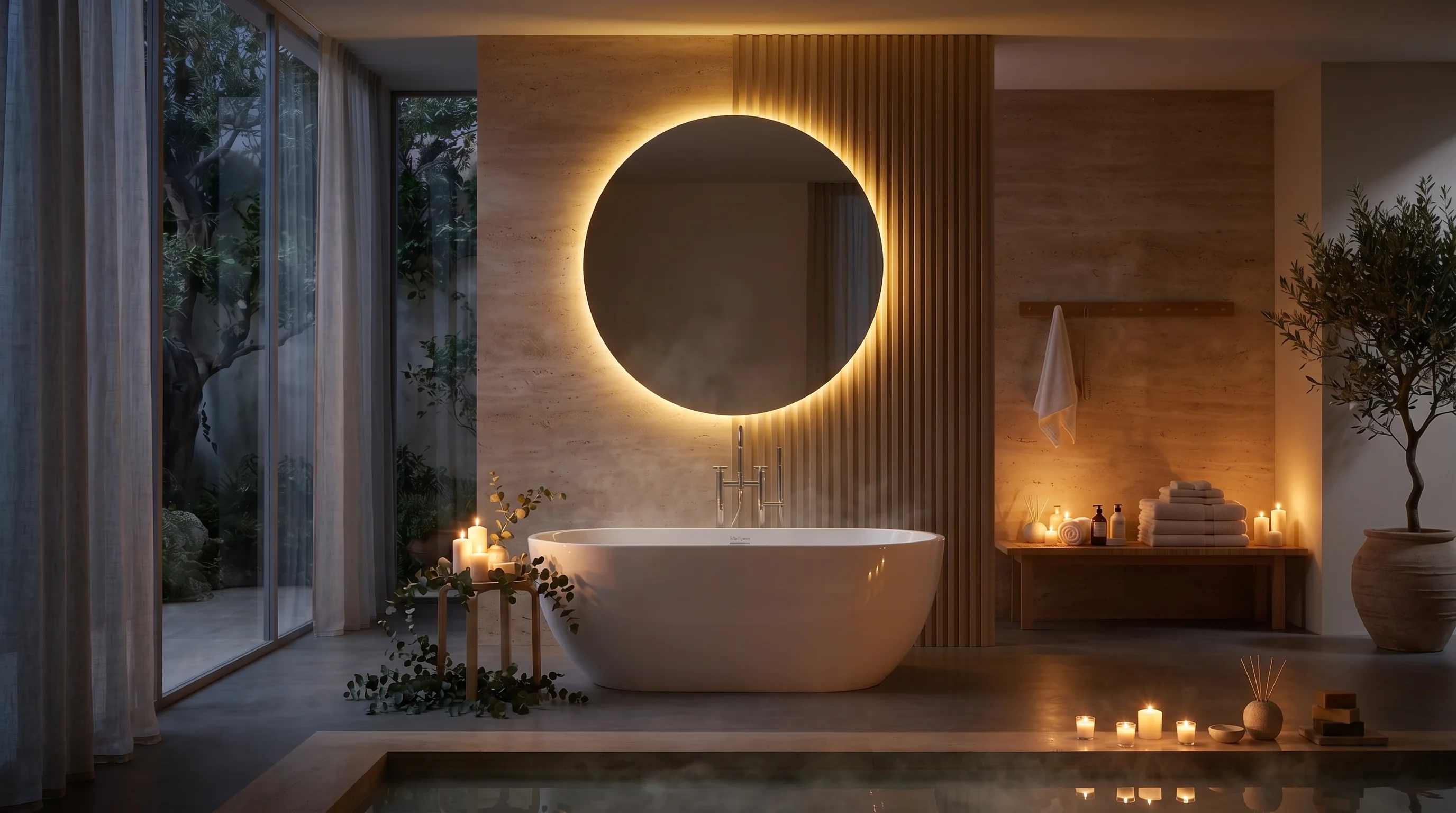
A spa bathroom stays calm by concealing everything that can be concealed, leaving only a few deliberate objects on display.
The single biggest difference between a domestic bathroom and a spa is clutter. Spas are calm because they are empty of visual noise.
Conceal everything that can be concealed. Built-in storage, vanity units, and recessed niches keep products out of sight. What remains on display should be deliberate — a single stem in a vase, a stack of folded towels, a considered soap dispenser. The Elani Solo and Aurum dispensers are designed for exactly this — functional pieces refined enough to remain on display.
If a spa bathroom feels effortless, it is because a great deal of thought has gone into hiding everything that would otherwise disrupt the calm.
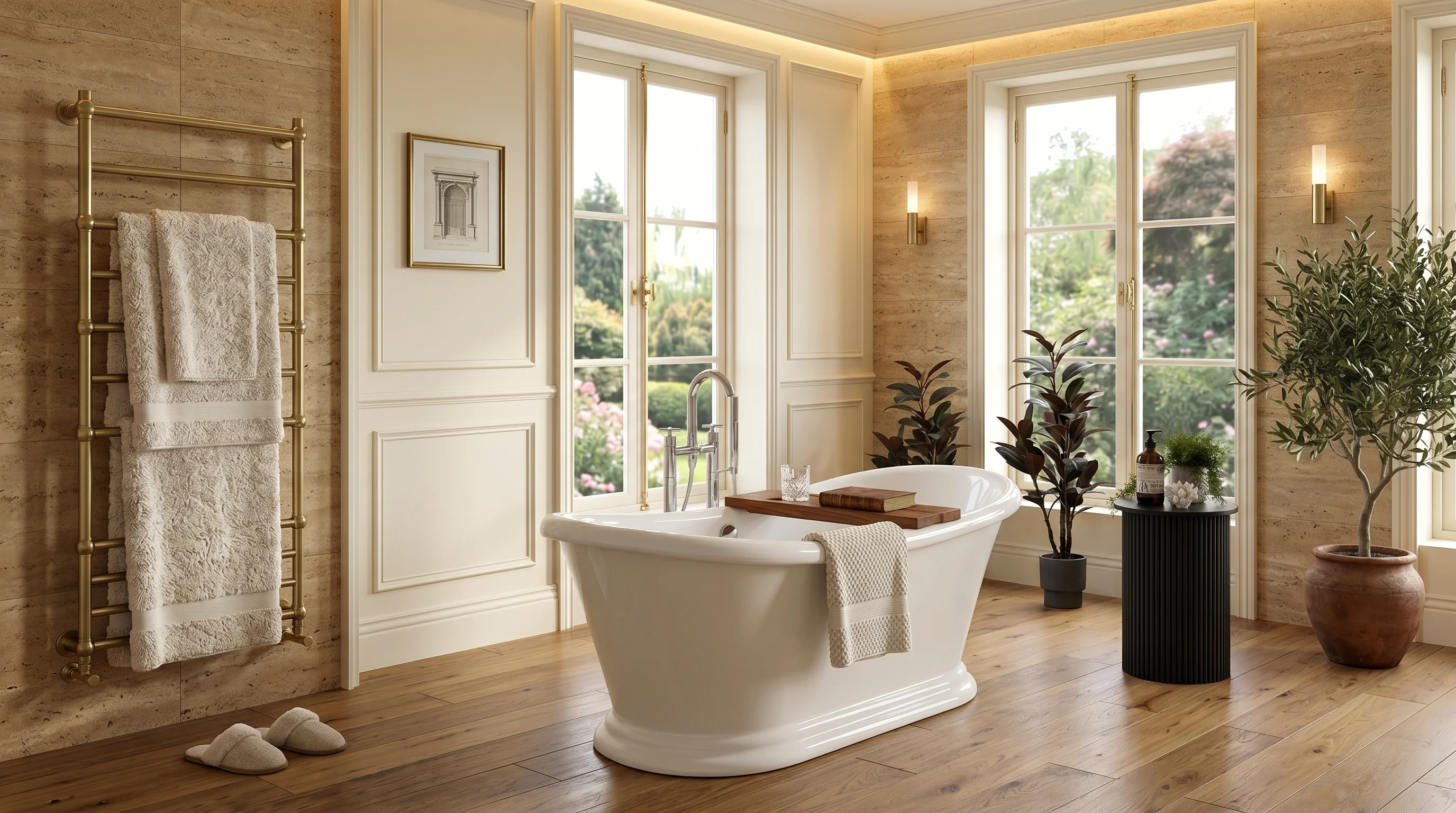
The final layer is the sensory detail that completes the experience:
A diffuser or quality candle for scent. Eucalyptus hung in the shower for its spa-like aroma. Plush, oversized towels. A bath tray for a book and a glass of wine. A bath mat that feels good underfoot. Plants that thrive in humidity — ferns, pothos, or a small olive tree — to bring life and softness to the space.
None of these are expensive. All of them contribute to the sense that the bathroom is a place to slow down rather than rush through.
A complete spa bathroom does not need to happen at once. Start with the elements that make the biggest difference:
First, the bath — the centrepiece everything else is built around. Then the materials and lighting that set the mood. Then the comfort technology — a smart toilet or heated towel rail. Finally the details and accessories that complete the sensory experience.
Built thoughtfully over time, the result is a bathroom that does more than function. It restores.
Explore The Spa Bath Collection → or The Full Elani Collection →