Back To Wall Bath Ideas — Style & Practicality | Elani
Back to wall baths offer the elegance of freestanding design with concealed plumbing and practical tap placement. The complete UK guide.
May 26, 2026
4 minutes

Back to wall baths offer the elegance of freestanding design with concealed plumbing and practical tap placement. The complete UK guide.
May 26, 2026
A back to wall bath is a freestanding-style bath fixed flush against a wall, letting taps mount to the wall or a deck instead of the floor and pipework run concealed behind it — giving you the drama of a freestanding design with an easier install and a smaller footprint. This guide covers the styles, sizing, and how to style one.
The freestanding bath is one of the most aspirational pieces in bathroom design. But for many bathrooms — and many homeowners — a fully freestanding design presents a practical challenge. Where do the taps go? How do you manage the plumbing? Will it work in a smaller space?
The back to wall bath answers every one of those questions.
It offers the visual drama of a freestanding design whilst sitting flush against a wall — allowing taps to be wall or deck mounted, plumbing to be concealed, and floor space to be used more efficiently. For the considered bathroom that demands both beauty and practicality, the back to wall bath is often the most intelligent choice. Browse the full Elani back-to-wall collection.
Last updated 24 August 2026 · Elani Journal
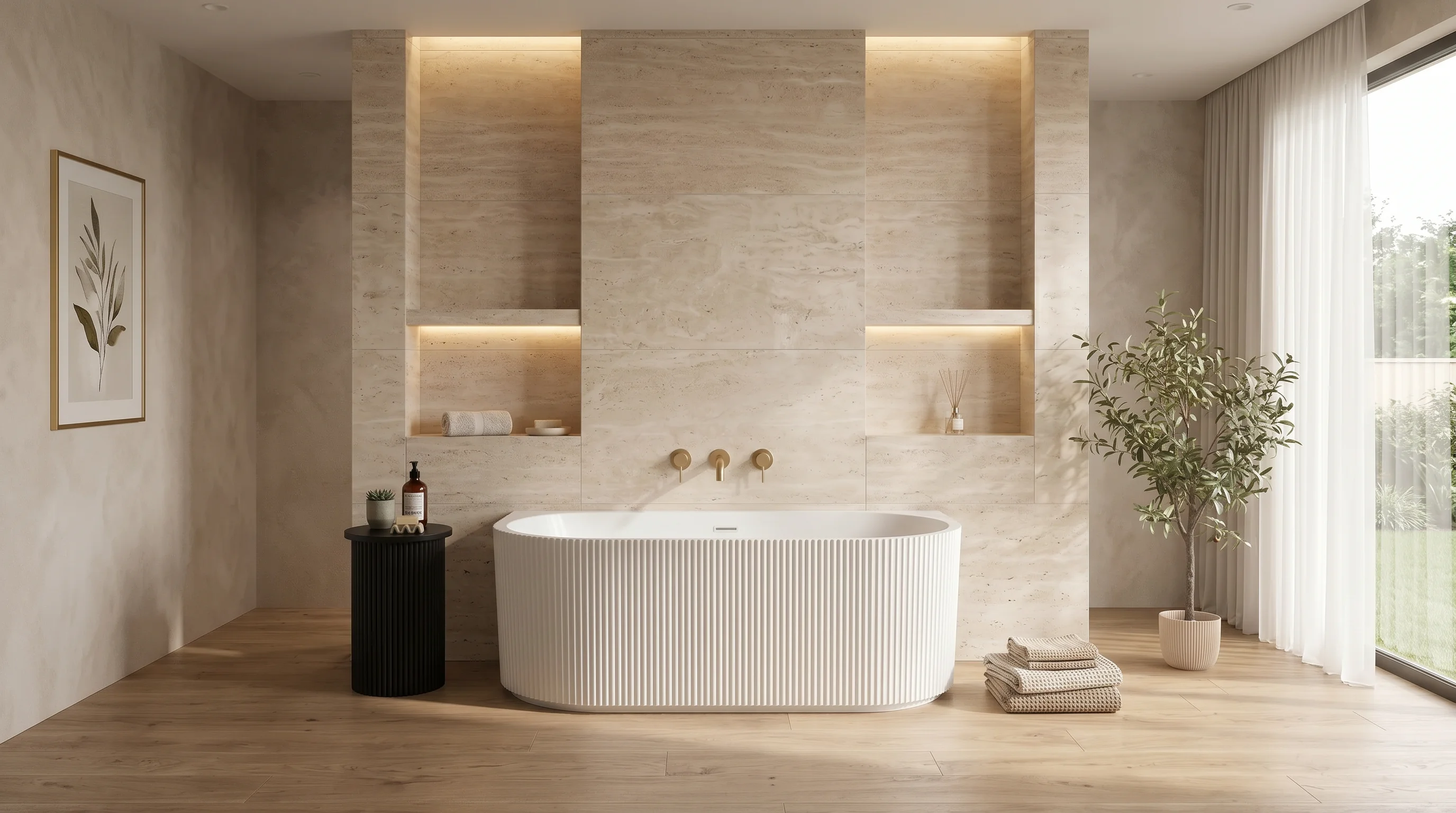
A back to wall bath is a freestanding bath designed to sit with one end or side flush against a wall. Unlike a fully freestanding bath which floats freely in the room, a back to wall design uses the wall as both a practical and aesthetic anchor.
The result is a bath that looks as considered and deliberate as any freestanding design — but with the added benefit of concealed plumbing, wall mounted taps, and a more efficient use of floor space.
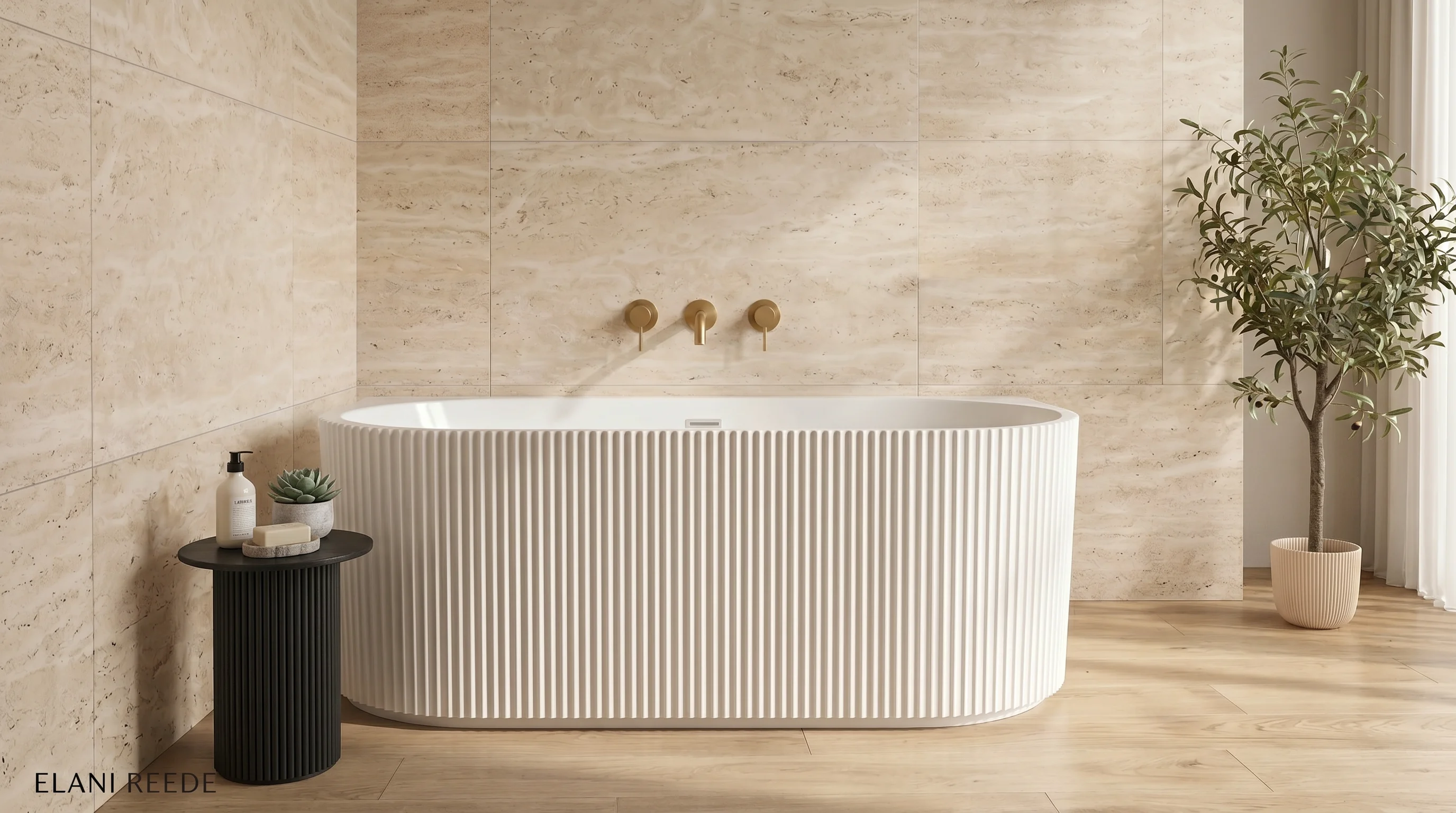
Back to wall baths offer four main practical benefits: concealed plumbing behind the wall, flexible wall or deck-mounted tap placement, more efficient use of floor space, and easier cleaning around the bath.
Concealed Plumbing - With a back to wall bath the pipework runs behind the wall rather than across the floor. The result is a cleaner, less cluttered bathroom with no exposed pipes detracting from the overall aesthetic.
Wall Or Deck Mounted Taps - Rather than requiring a floor standing tap — which adds cost and complexity — a back to wall bath allows taps to be mounted directly on the wall or on a deck above the bath. This gives far greater flexibility in tap choice and placement.
More Efficient Use Of Space - By sitting against a wall rather than floating freely, a back to wall bath requires clearance on fewer sides. In a medium sized bathroom this can make the difference between a bath that feels right and one that overwhelms the space.
Easier Cleaning - With one side of the bath against the wall there is simply less surface area to clean around. A practical consideration that becomes more relevant over time.

Back to wall baths come in four main styles: fluted and textured for a bold statement, oval and curved for a softer classic look, D-shape for maximum space efficiency, and slipper for a traditional silhouette.
Fluted & Textured - The most on trend back to wall design right now. Deeply grooved vertical fluting or bold geometric texture on the exposed sides of the bath creates a striking focal point against the wall. The Elani Reede — with its deeply grooved vertical fluted exterior — is the definitive example of this style. Contemporary, considered, and completely distinctive.
Oval & Curved - A softer, more classic interpretation of the back to wall format. Clean curved lines sit flush against the wall whilst maintaining the organic warmth of a traditional freestanding form. Versatile enough to work in both contemporary and transitional bathrooms.
D-Shape - The most practical back to wall format. A flat back sits perfectly flush against the wall whilst the curved front faces into the room. Maximises internal bathing space whilst minimising the overall footprint — ideal for medium sized bathrooms. The Elani Anse is built exactly to this brief.
Slipper - A classical slipper silhouette in a back to wall format combines heritage design with modern practicality. The raised back sits against the wall whilst the graceful curved front creates the distinctive slipper profile. Traditional in character, intelligent in execution.
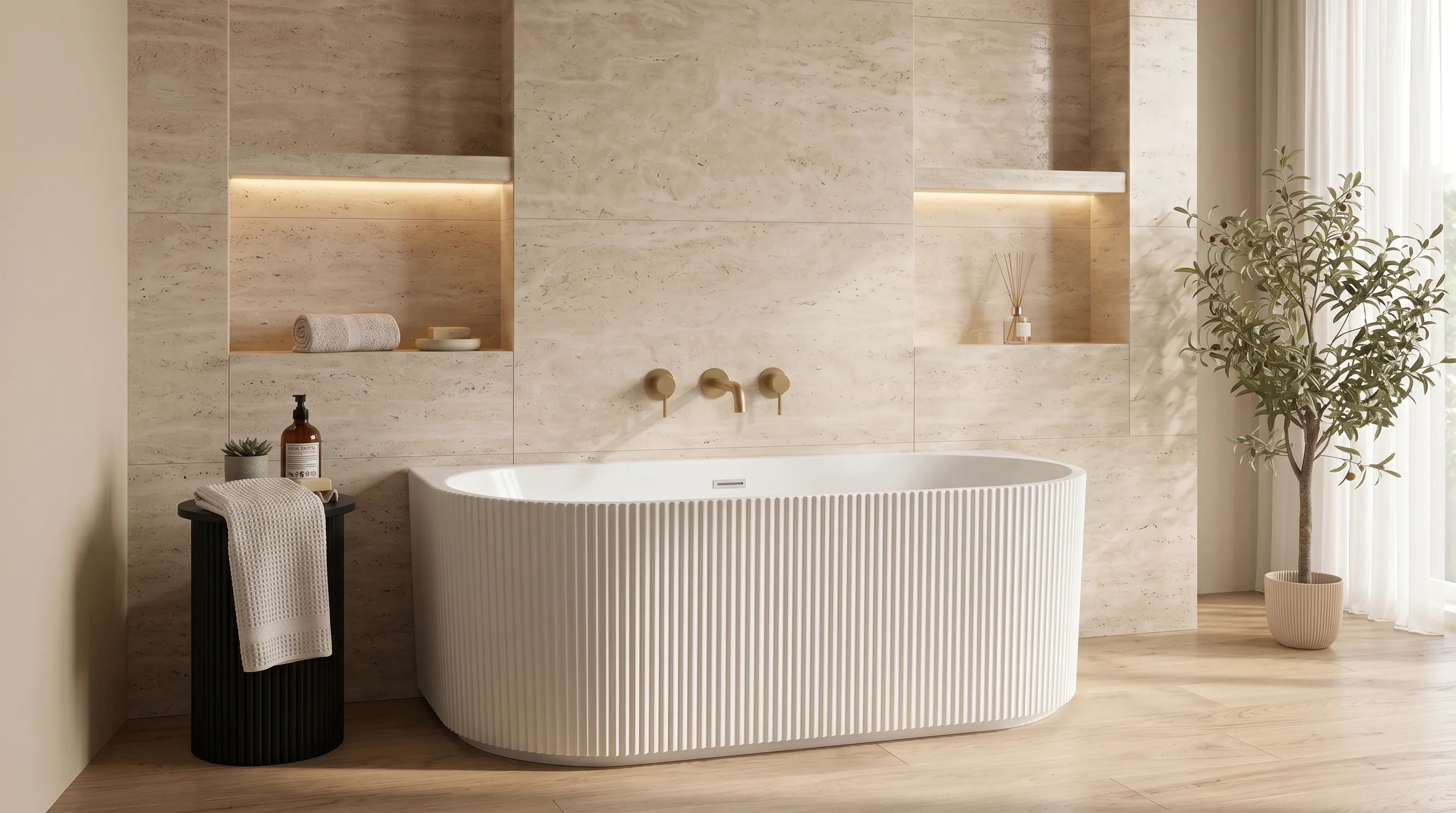
Style a back to wall bath around four elements: a considered feature wall behind it, a wall-mounted tap in a coordinating finish, an integrated shelf or niche for storage, and a clear, uncluttered floor.
Feature Wall - The wall behind a back to wall bath is one of the most impactful surfaces in the bathroom. Large format stone tiles, fluted wall panels, limewash plaster, or bold paint — the back to wall bath frames the wall and turns it into a feature. Choose a finish that complements rather than competes with the bath itself.
Wall Mounted Tap - A wall mounted tap above a back to wall bath creates a clean, uncluttered look that a floor standing tap cannot achieve. Choose a finish that coordinates with your other bathroom hardware — brushed brass, chrome, or matte black all work well depending on your scheme.
Integrated Shelf Or Niche - With the bath against the wall there is a natural opportunity to incorporate a recessed shelf or niche above or beside it. A practical addition that adds architectural interest and provides storage for bath products without cluttering the space.
Keep The Floor Clear - One of the greatest advantages of a back to wall bath is the clean floor space it creates. Resist the temptation to fill it — the negative space around the bath is as important as the bath itself.
Back to wall baths follow the same sizing principles as freestanding designs but with one key difference — the length of the bath runs along the wall rather than projecting into the room.
As a general guide:
Always allow a minimum of 600mm clearance on the open sides of the bath and confirm your plumber's requirements for wall mounted tap installation before ordering.
The Elani Classic Collection includes several dedicated back to wall designs. The Reede is available in both a standard and corner format, its deeply grooved vertical fluting catching light beautifully and adding a sense of height and presence to any bathroom. The Arête combines crisp architectural edges with softened corners in a compact 1500mm footprint, while the Anse takes the D-shape format above and pairs it with a smooth, restrained surface built for a wall-mounted tap.
All three are UK based and delivered within 3–5 working days, backed by a 7 year manufacturer's warranty as standard. See the full back-to-wall collection.